Why this matters in 2026: Buyers are moving beyond flat promotional pouches. “Structure” has become a retail signal—helping cosmetic bags look premium, stay organized, and hold their shape in travel and daily use. Table of contents
- Why flat pouches are fading
- What “retail-ready structure” means
- Best materials for structured travel cosmetic bags
- A buyer’s spec sheet (with recommended ranges)
- OEM/ODM customization ideas that sell
- Cost drivers & how to control budget
- QC & testing checklist for bulk orders
- FAQ
1) Why flat pouches are fading (and structure is winning)
Flat cosmetic pouches became popular because they are simple to produce and easy to ship. But many retail and brand buyers now treat them as “disposable”—they wrinkle, collapse in photos, and don’t protect the contents. In contrast, structured travel cosmetic bags deliver a more premium unboxing moment, better shelf presence, and higher repeat use—especially for travel kits, gift sets, and subscription boxes.
What customers expect today
- Organization: compartments, pockets, brush holders
- Durability: reinforced panels + better zippers
- Travel readiness: wipeable linings, leak resistance, easy access
- Premium details: cleaner stitching, hardware, logo finishing
What structure changes for brands
- Pricing power: structured bags justify higher retail price points
- Campaign performance: GWP gifts feel “worth keeping”
- Brand exposure: longer product lifespan = more logo impressions
- Lower returns: fewer complaints about deformation and weak zippers
2) What “retail-ready structure” means (the 3 non-negotiables)
Not every “boxy” bag is truly structured. Procurement teams should evaluate what’s inside the panels—not just the silhouette.
2.1 Reinforced panels that hold shape
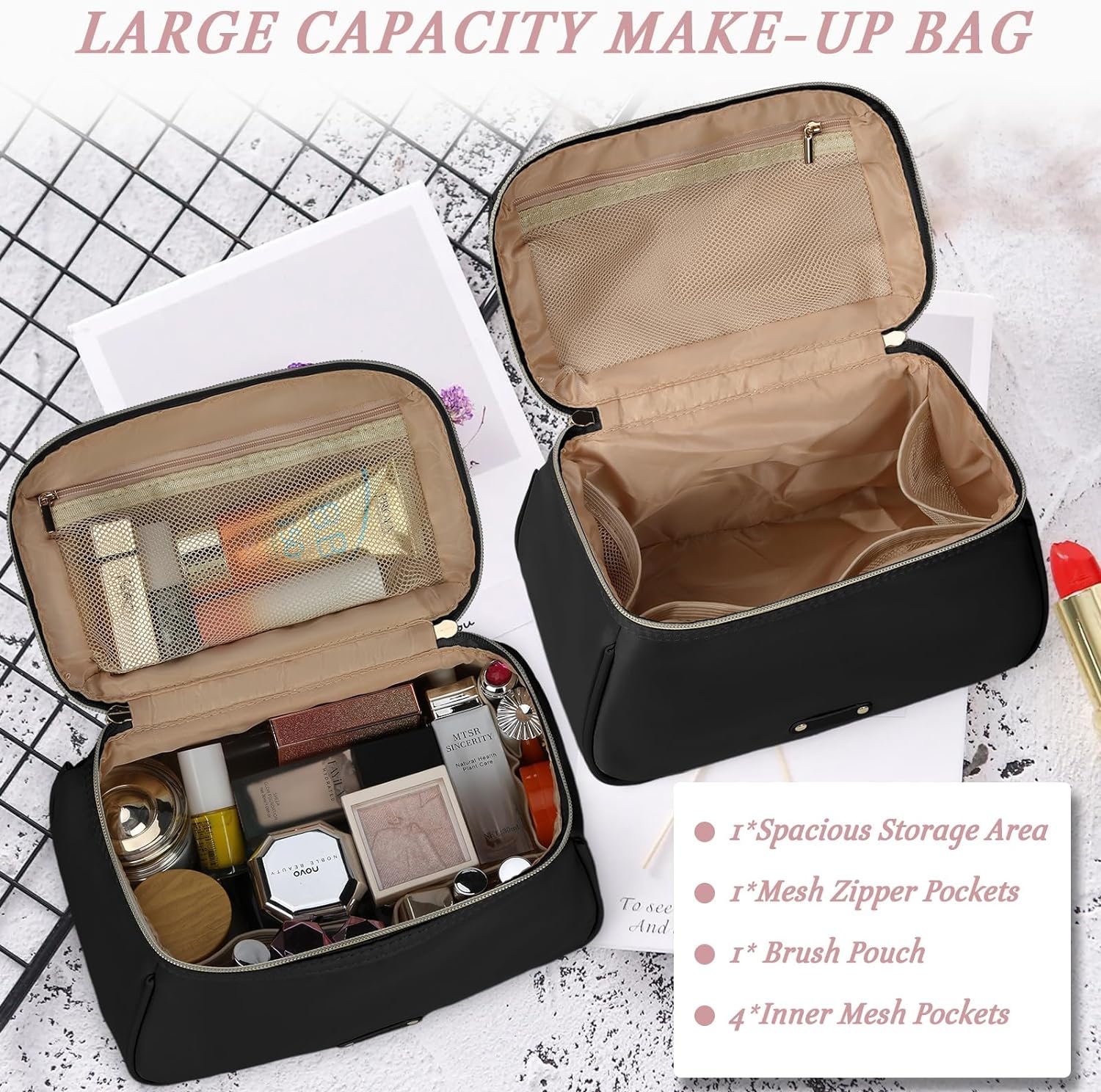
The quickest way to tell a retail-ready bag: it stands upright and keeps its form when empty. This typically comes from a smart combination of: foam interlining, thickened lining, and a supportive bottom panel.
2.2 Multi-compartment layout that improves usability
The most requested 2026 layouts convert the bag from a “container” into an “organizer.” Think dual-zip openings, transparent inner pockets, brush slots, and elastic bands to secure bottles.
2.3 Durable zippers that protect brand reputation
Zippers fail first—especially under travel stress. Smooth glide, stable stitching, and quality pullers matter. Custom zipper heads can also boost perceived value without changing the bag’s core pattern.
3) Best materials for structured travel cosmetic bags
Material selection should match your brand positioning (mass retail vs premium), selling channel (online vs store), and use case (toiletry vs makeup vs mixed). Below is a practical matrix to help buyers choose.
| Material | Best for | Pros | Watch-outs |
|---|---|---|---|
| PU Leather Premium look | Gift sets, mid-to-premium retail, beauty brand kits | Wipe-clean, strong visual texture, easy color matching, good structure | Choose quality PU + backing; confirm scratch resistance & edge paint durability |
| Waterproof Polyester / Nylon Volume-friendly | Large wholesale programs, travel organizers, sports & outdoor | Lightweight, cost-efficient, strong color/print options | Need reinforced panels to avoid “floppy” feel; confirm coating performance |
| PVC / Clear TPU Travel compliance | Airport-friendly kits, visibility-driven SKUs | Easy to see contents, easy cleaning, strong travel appeal | PVC can stiffen/crack in cold; TPU often nicer feel but costlier |
| Eco-positioned fabrics (recycled polyester, canvas) | Sustainability campaigns, lifestyle brands | Great storytelling, branding-friendly, good repeat use | Canvas needs lining for wipe-clean; recycled claims require documentation |
Tip: If your customer journey relies on “premium unboxing,” PU + structured panels is often the safest combination. If your program is cost-driven, waterproof polyester + simplified inner layout can balance value and budget.
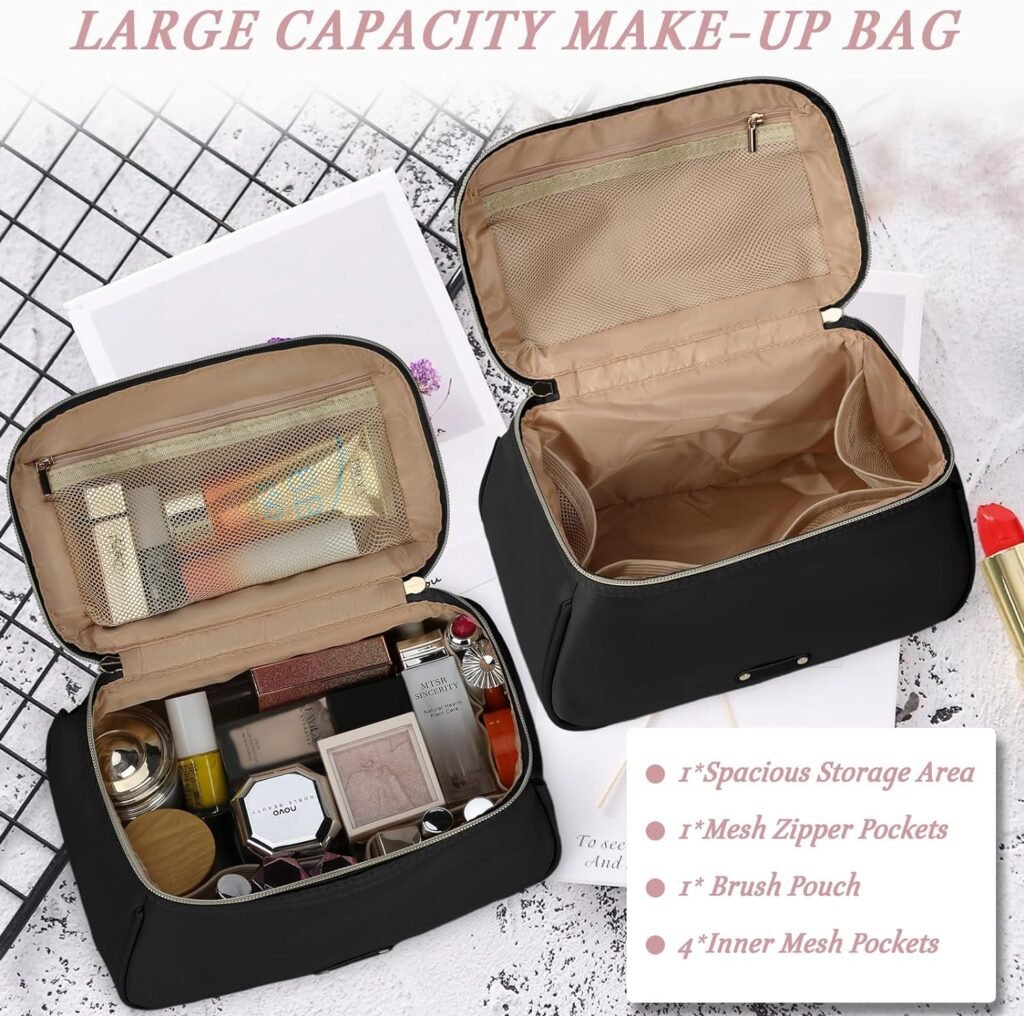
4) A buyer’s spec sheet (recommended ranges)
Clear specs reduce sampling cycles and protect you from “nice sample, weak bulk” problems. Use the list below when you request quotes from a cosmetic bag manufacturer.
Core construction
- Panel reinforcement: foam interlining + bottom support (ask for thickness options)
- Stitching: consistent stitch length; stress points must be backtacked
- Edge finishing: binding or turned seams; avoid exposed raw edges on premium SKUs
Functional layout
- Opening: wide-mouth or dual-zip for visibility
- Interior: at least 1 zip pocket + 2 slip pockets or elastic bands for bottles
- Brush storage: elastic slots or detachable brush panel (optional)
Hardware & trims
- Zippers: choose stable tape + smooth slider; confirm colorfastness
- Pullers: metal pullers increase perceived value; custom pullers for hero SKUs
- Handle: side handle or wrist strap for travel convenience
Lining & care
- Lining: wipe-clean lining (especially for toiletries)
- Leak resistance: consider seam tape or water-resistant coating if required
- Cleaning: request care instruction insert or hangtag for retail programs
5) OEM/ODM customization ideas that actually sell (not just “logo on a bag”)
5.1 Build a bag around your bundle
Instead of selecting a standard size, match the inner volume to your hero products: skincare bottles, compacts, brush sets, or travel minis. This reduces “dead space,” improves packing experience, and creates a more intentional kit.
5.2 Upgrade structure with modular organization
- Removable dividers for flexible storage
- Detachable mini pouch for touch-ups
- Clear pocket zone for quick visibility (brushes, cotton pads, small tools)
5.3 Use logo techniques that match your price tier
Choose finishing based on how the item will be perceived on shelf:
- Entry / promo: silk screen, heat transfer
- Mid-tier: woven label, embroidery
- Premium: debossed PU logo, metal logo plate, custom zipper head
5.4 Packaging that improves conversion
Retail-ready presentation often needs more than a polybag. Consider branded dust bags, color-matched tissue, or a printed insert explaining “how to pack the bag” for travel.
6) Cost drivers (and how to control them without killing the design)
Main cost drivers
- Panel reinforcement: foam thickness, bottom support material
- Internal complexity: number of pockets, dividers, brush holders
- Hardware: zipper quality, pullers, custom molds
- Material choice: PU grade, coatings, eco fabrics documentation
Smart cost controls (buyer-friendly)
- Standardize base colors (fabric + lining) for better material yield and lower MOQ risk
- Simplify inner layout (keep 1 hero pocket + elastic bands) while maintaining structure
- Use “premium details” selectively (e.g., custom puller only on hero SKU)
- Align reinforcement to size (don’t overbuild small pouches)
Pro tip: Ask your factory for a “cost breakdown suggestion,” not just a final price. A transparent partner should offer options (A/B/C) instead of one quote.
7) QC & testing checklist for bulk structured cosmetic bags
Structured bags carry higher expectations. Use this checklist to reduce returns and ensure consistency from sample to production.
Pre-production checks
- Material approval: confirm thickness, grain/texture, coating spec, color standard
- Panel structure: verify foam/interlining thickness and bottom support material
- Logo placement: tolerance range (e.g., ±2–3mm depending on technique)
In-line checks (during production)
- Stitching consistency: no skipped stitches; reinforced corners
- Zipper performance: smooth glide, no wave tape, no stuck slider
- Shape retention: bag stands upright; no panel collapse
Final inspection (AQL or your standard)
- Visual defects: scratches, glue marks, misaligned binding, wrinkled panels
- Function test: open/close 30–50 cycles; handle pull test if applicable
- Odor & cleanliness: especially for PU/PVC; ensure clean interior
- Packing test: drop/stack simulation to confirm structure survives shipping
FAQ: Structured Travel Cosmetic Bag Sourcing
Are structured cosmetic bags worth the higher unit cost?
For most retail programs, yes—because structure typically improves perceived value, reuse rate, and pricing power. If your goal is purely low-cost giveaways, a flat pouch may still fit. But for gift sets, kits, and retail SKUs, structure usually performs better.
What’s the easiest way to “add structure” without redesigning everything?
Start with reinforcement: foam interlining + a bottom support panel. Then upgrade zipper quality. These two changes alone can transform how premium the bag feels.
PU, polyester, or TPU—what’s best for travel?
PU is premium and wipe-clean. Waterproof polyester is lightweight and budget-friendly for volume programs. TPU (clear) is excellent for visibility and travel kits; confirm cold-crack performance if shipping to colder markets.
What info should I send to a factory for accurate quoting?
Send: target size (L×W×H), material preference, reinforcement requirement, inner layout sketch (pockets/dividers), logo technique, zipper requirements, packaging, and target order quantity.
Ready to develop your structured travel cosmetic bag?
If you’re building a 2026 retail SKU, GWP kit, or subscription bag, a structured design can elevate perceived value and improve repeat use. QNBags supports OEM/ODM development—materials, structure options, logo techniques, and packaging—tailored to your market and budget.
Suggested internal links: Custom Service • Cosmetic Bags • Contact
Aries Gu is the founder of Q&N. With over 17 years of experience in cosmetic bag OEM/ODM source factory. He focuses on quality control, efficient communication, and on-time delivery for global cosmetic bag projects.