B2B Sourcing • OEM/ODM Cosmetic Bags • Quality Consistency
Primary keyword: custom cosmetic pouchSecondary: cosmetic pouch manufacturer, OEM/ODM cosmetic bags, cosmetic bag quality controlUse case: private label / wholesale / gift-with-purchase
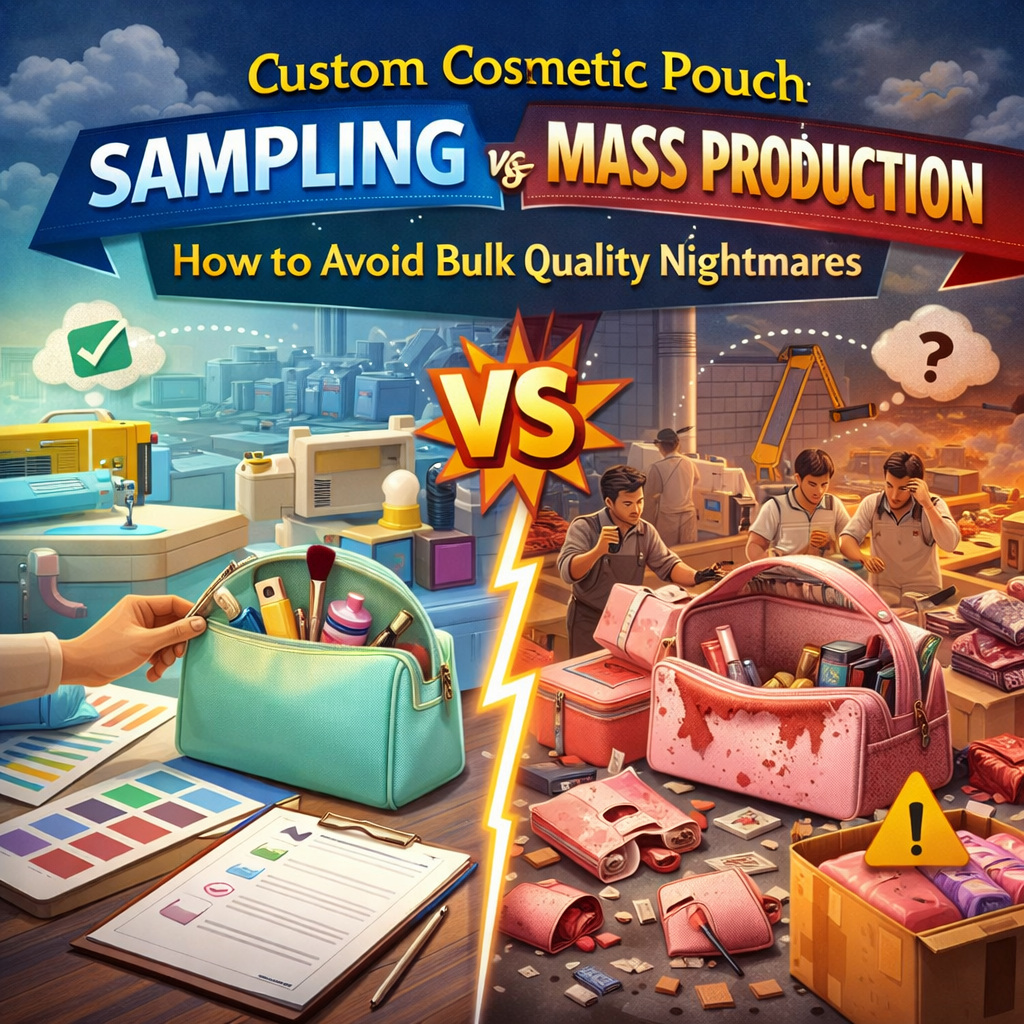
The #1 sourcing trap: a “luxury” sample that can’t be repeated at scale. Bulk production uses different operators, lines, material lots, and speed—so if your specs and QC plan aren’t locked, surprises show up fast. Table of contents
- Why samples look better than bulk
- Top bulk failure points (what buyers miss)
- The spec pack that prevents quality drift
- Sampling-to-bulk process that works
- QC checkpoints + simple test list
- Factory selection checklist (practical)
- FAQ
1) Why samples look better than bulk
A pre-production sample is often made by the factory’s most experienced staff using the best available materials and extra time. In bulk, the same pouch is produced under speed, cost, and throughput constraints. Even small changes—thread tension, seam allowance, zipper supplier, foam thickness—can make a bag feel cheaper.
What changes from sample to bulk
- Material lots: different rolls can vary in thickness, color, hand-feel
- Hardware supply: zipper sliders/tape can change if not specified
- Production speed: faster sewing increases uneven stitching risk
- Operators: multiple lines = variation unless work instructions are clear
- Packaging & shipping: crush marks or wrinkles appear without packing tests
The buyer’s job
- Turn “looks good” into measurable specs
- Lock materials/hardware with approved standards
- Define QC checkpoints before production starts
- Require golden sample + tolerance ranges
- Verify packing method protects shape in transit
2) Top bulk failure points for custom cosmetic pouches
| Failure point | How it shows up | How to prevent it |
|---|---|---|
| Stitching & seam consistency | Wavy seams, skipped stitches, misaligned binding, weak corners | Define stitch length range, backtack points, seam allowance tolerances; in-line checks every batch |
| Zippers & pullers | Stuck slider, rough glide, zipper tape waves, puller scratches | Specify zipper grade, slider type, puller finish; run open/close cycle test |
| Material thickness/hand-feel | Bulk feels thinner/flimsier than sample, weaker structure | Lock material GSM/thickness + backing; approve color swatches per lot |
| Printing & logo finish | Color shift, misplacement, cracking, uneven deboss depth | Provide artwork spec + placement tolerance; require logo test piece approval |
| Lining & edge finishing | Lining wrinkled, exposed raw edges, glue marks, messy inside | Define lining material + color; set cleanliness standard; add final interior inspection |
| Packaging damage | Creases, dents, deformation after shipping | Specify folding method, stuffing, carton strength; do a simple drop/stack simulation |
Fast diagnostic: If bulk issues appear, ask the factory to compare material lot, zipper supplier, and work instructions against the approved sample. Most “mystery problems” come from one of these three.
3) The spec pack that prevents quality drift
The spec pack (tech pack) is your contract for consistency. It reduces guesswork and protects both buyer and manufacturer. If you want your custom cosmetic pouch to match the sample, include the following.
Must-have spec items
- Size & tolerance: L×W×H with ± tolerance
- Material details: type, thickness/GSM, backing, coating, color standard
- Construction: seam allowance, binding method, reinforcement points
- Zippers: grade, tape width, slider type, puller finish
- Lining: material, color, wipe-clean requirement
- Logo: method, artwork file, placement map, tolerance
Nice-to-have (for retail programs)
- Color fastness targets for fabric/print
- Odor standard (especially for PU/PVC)
- Packaging spec (insert card, polybag, stuffing, carton)
- Golden sample definition and storage method
- AQL level or defect classification (critical/major/minor)
Tip: Replace vague terms like “high quality zipper” with measurable references (slider type, finish, cycle test requirement, visual defect limits).
4) A sampling-to-bulk process that works (repeatable in OEM/ODM)
Step 1: Confirm the “golden sample”
Once your final sample is approved, label it as the golden sample and ensure the factory stores it for comparison during production. This becomes the physical standard for shape, stitching, logo, and hand-feel.
Step 2: Pre-production meeting + risk review
- Confirm material lots and backup options (what happens if a material is out of stock?)
- Confirm zipper supplier and approved puller finish
- Review top risks: logo placement, edge finishing, structure, and packing method
Step 3: Pre-production sample (PPS) from bulk materials
A PPS made from the actual bulk material lot is one of the best ways to catch surprises early. Approve PPS before the main production run.
Step 4: First-article inspection (FAI) at line start
Inspect the first batch (first article) from the production line for critical measurements, stitching, and zipper performance. Fix issues before the line runs at full speed.
Step 5: In-line + final inspection
In-line checks prevent a “whole-carton problem.” Final inspection verifies your AQL and packing standards before shipment.
5) QC checkpoints + simple tests (buyer-friendly)
QC checkpoints
- IQC (Incoming material): thickness/hand-feel, color, defects, odor
- In-line: seam quality, edge finishing, logo placement, zipper alignment
- Final: measurements, function tests, cleanliness, packing integrity
Simple tests you can request
- Zipper cycle test: open/close 30–50 cycles; check smoothness and stitching stability
- Handle/strap pull test: pull force test for travel SKUs
- Color rub test: dry/wet rub for dark colors and printed areas
- Drop/stack simulation: verify the pouch keeps shape after shipping stress
- Wipe-clean check: especially for toiletries; confirm lining performance
Defect classification example (keep it simple)
- Critical: broken zipper, sharp hardware, mold/strong odor, big tear
- Major: severe wrinkles/deformation, logo visibly crooked, damaged surface
- Minor: small thread tails, slight color variation within tolerance
Align this with your contract or AQL standard before production starts.
6) Factory selection checklist (to prevent “perfect sample, bad bulk”)
Capabilities to confirm
- In-house QC process with records (not only final inspection)
- Material control (approved suppliers, lot tracking)
- Pattern & sampling team that can translate your spec pack
- Stable production lines and trained operators
- Packaging expertise for structure protection
Questions to ask on day 1
- Can you produce a PPS using the bulk material lot before mass production?
- What happens if the fabric/zipper lot changes—how do you notify buyers?
- How do you control stitch length, seam allowance, and logo placement?
- Can you share an inspection checklist (IQC / in-line / final)?
- What packing method prevents dents and creases in transit?
FAQ
What’s the fastest way to reduce bulk quality risk?
Approve a PPS made from bulk materials, define a golden sample, and run FAI + in-line checks. Most bulk issues are preventable with these three steps.
Why does my bulk order feel thinner than my sample?
Usually it’s a material lot change (thickness/backing), reinforcement difference (foam/interlining), or a lining downgrade. Lock material thickness and reinforcement options in the spec pack.
Do I need third-party inspection?
For first-time suppliers or high-volume retail programs, third-party inspection can be a smart insurance policy. For long-term partners with transparent QC records, in-house QC + agreed AQL may be enough.
Need consistent quality from sample to bulk?
QNBags supports OEM/ODM development for custom cosmetic pouches and travel cosmetic bags—material selection, reinforcement options, logo techniques, and a QC plan designed to keep bulk production aligned with your approved sample.
Suggested internal links: Custom Service • Cosmetic Bags • Contact
Aries Gu is the founder of Q&N. With over 17 years of experience in cosmetic bag OEM/ODM source factory. He focuses on quality control, efficient communication, and on-time delivery for global cosmetic bag projects.