From Concept to Creation: A Practical Guide to Designing Custom Cosmetic Bags for Wholesale Production
Designing a custom cosmetic bag for wholesale production is not just a creative exercise—it is a process that combines user experience design, material engineering, and scalable manufacturing logic.
A successful cosmetic bag must look refined, function smoothly in daily use, and remain cost-controlled and consistent across bulk production. This guide breaks down the full workflow professional brands and OEM/ODM manufacturers use—from initial concept to mass production—so your design is not only attractive, but also production-ready.
Step 1: Start With the End User, Not the Sketch
Before drawing a shape or selecting materials, define who the bag is for and how it will be used.
Key questions to clarify:
- Is the bag designed for daily touch-ups, travel, or gift sets?
- Will it carry liquids (skincare, SPF) or mostly dry makeup?
- Will it be stored in a tote bag, suitcase, or displayed on a vanity?
Then define a short use promise, such as:
A wide-opening, wipe-clean cosmetic bag that stands upright and fits 10–15 daily essentials.
This use promise becomes your design filter. Any feature that does not support it should be removed early.
Step 2: Choose a Design Direction That Works at Wholesale Scale
For wholesale success, the design should be:
- easy to understand visually
- practical for a wide audience
- repeatable in large-scale production
Proven Wholesale Cosmetic Bag Silhouettes
- Classic zip pouch – simple structure, low production risk, ideal for promotions
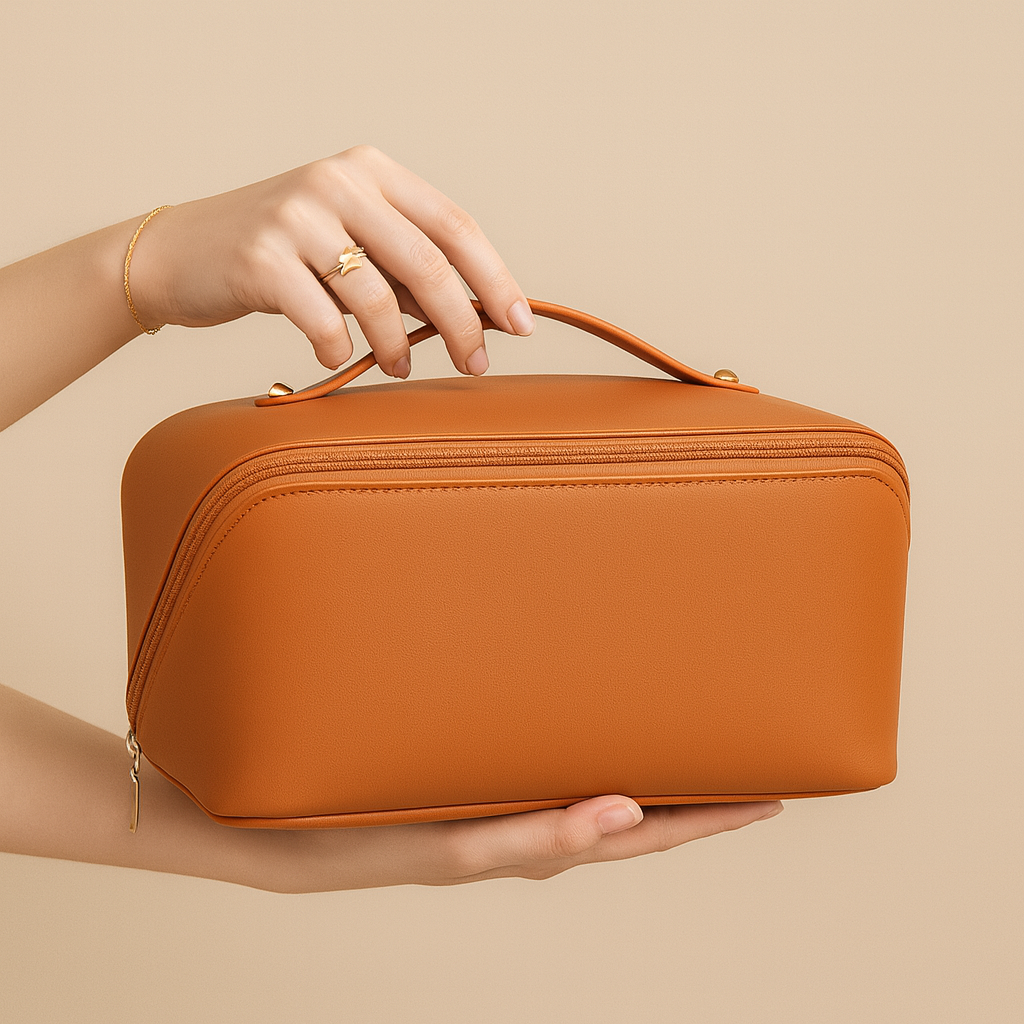
- Stand-up boxy bag – travel-friendly, premium feel, strong perceived value
- Structured vanity case – luxury positioning, suitable for gift sets
For brands aiming at mid-to-premium wholesale markets, boxy standing bags and structured vanity cases consistently perform well. They photograph clearly, hold their shape, and feel substantial in hand.
Step 3: Engineer Size and Capacity to Prevent Returns
Size should be determined by what needs to fit, not guesswork.
A practical approach:
- List all must-fit items (foundation, cleanser, sunscreen, brushes)
- Group items by type: liquids, tools, daily makeup
- Design dimensions for easy access, not just volume
Common Design Mistakes
- Bags that are too short, forcing bottles to lie flat
- Narrow openings that make contents hard to see
- Tall designs without structure that collapse when opened
A well-designed cosmetic bag should be usable with one hand and open smoothly without fighting the zipper.
Step 4: Select Materials Based on Performance, Not Only Appearance
In wholesale production, material choice directly affects cost, durability, and brand positioning.
Outer Material Options
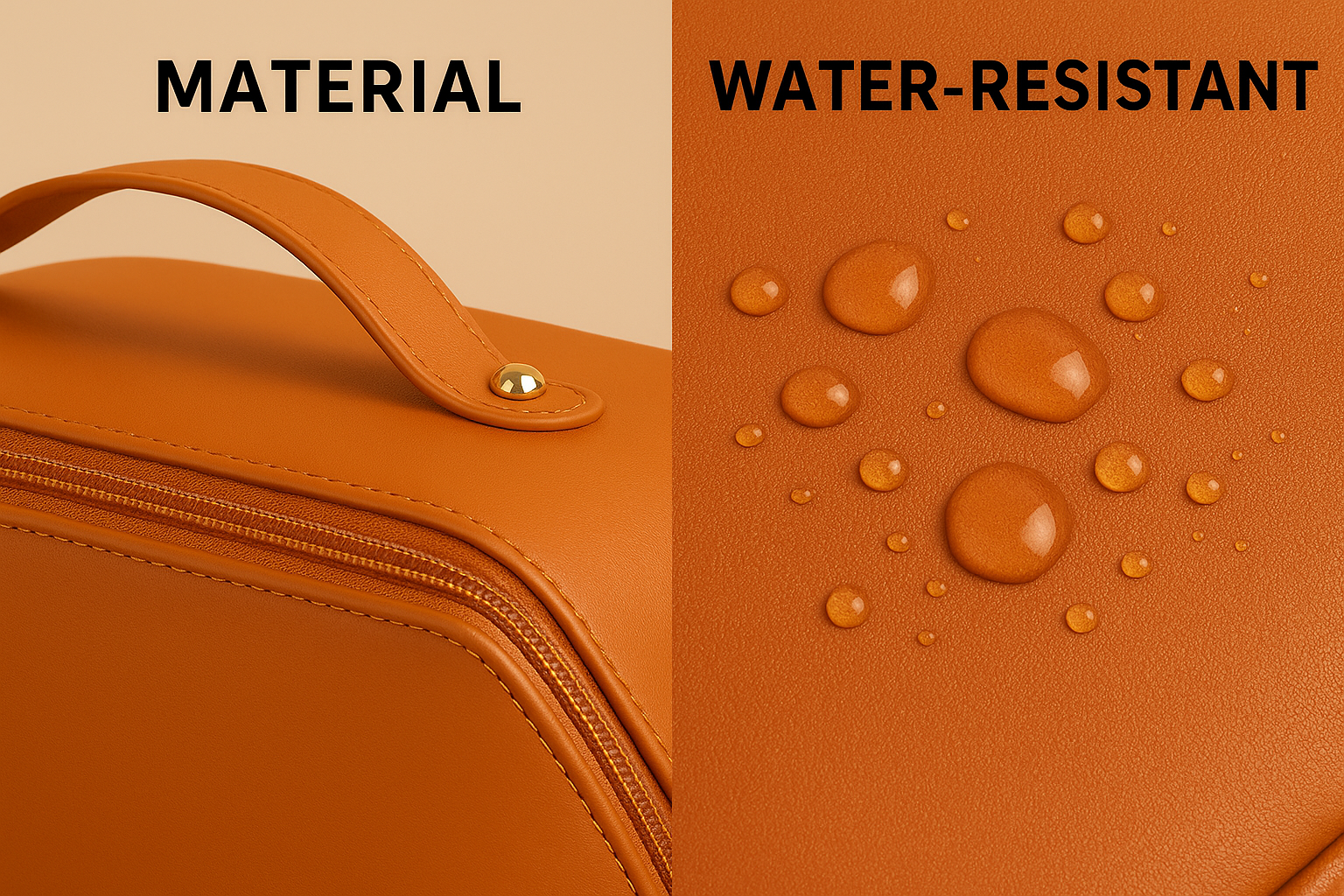
- PU / vegan leather – structured, premium appearance, ideal for debossing or foil logos
- Polyester / nylon – lightweight, durable, scalable, excellent for printed designs
- Cotton canvas – lifestyle aesthetic, requires reinforcement to manage stains and shape
Interior Lining (Often Overlooked)
The lining is critical for cosmetic use. It should be:
- wipe-clean
- light-colored for visibility
- finished with clean seams to prevent fraying
Durability is an important sustainability factor—bags that resist peeling, staining, and tearing are kept longer and generate fewer replacements.
Step 5: Plan Construction With Manufacturing in Mind
This is where a concept becomes production-ready.
Key construction decisions include:
- Structure reinforcement (foam, board, or both)
- Edge finishing (binding or piping for durability)
- Zipper quality (smooth slider, correct gauge, reinforced ends)
- Handle attachment (bartack or box-X stitching at stress points)
For wholesale projects, start with a clean and functional structure. Over-complex pockets or unusual shapes increase defect rates and slow production.
Step 6: Build a Clear Tech Pack (Your Core Production Document)
A tech pack is the foundation of consistent bulk production.
A complete tech pack should include:
- flat drawings (front, back, side, top, interior)
- exact measurements with tolerances
- material specifications (outer, lining, thickness, texture)
- zipper and hardware details
- logo placement and application method
- stitching and seam construction notes
- packaging requirements
A strong tech pack reduces miscommunication and ensures stable quality across batches.
Step 7: Design With Cost Control in Mind
Wholesale pricing depends on:
- material cost
- labor complexity
- hardware usage
- packaging
- production efficiency and MOQ
Cost-Control Strategies Without Sacrificing Quality
- reduce panel count
- standardize zipper types across collections
- limit hardware variations
- highlight one signature detail (custom puller, logo method, or lining print)
The goal is to create a bag for cosmetic essentials that feels premium through execution, not excess complexity.
Step 8: Follow a Professional Sampling Workflow
A structured sampling process typically includes:
- Prototype sample – confirms size, shape, and basic function
- Revised sample – refines usability and details
- Pre-production sample (PPS) – final approval before bulk
- Golden sample – quality reference for mass production
When reviewing samples, test them like a real user:
- open and close the zipper repeatedly
- load the bag fully
- wipe the lining with a damp cloth
- check symmetry, stitching, and edge finishing
Step 9: Define Quality Control Standards for Bulk Orders
Quality control should focus on high-risk points:
- zipper smoothness and alignment
- seam strength at corners and handles
- logo placement accuracy
- color consistency across materials
- lining cleanliness and stitch quality
- packaging condition (dust, dents, creases)
For premium cosmetic bags, consistency itself is the product.
Step 10: Packaging That Protects and Adds Value
Packaging affects both perceived value and shipping safety.
Common wholesale options include:
- OPP polybags
- fabric dust bags
- belly bands with insert cards
- gift boxes for bundled sets
Structured bags often require internal stuffing or support to maintain shape during transit.
FAQ: Custom Cosmetic Bag Design for Wholesale Production
1) Should I start with design or material?
Start with the use case. Material selection should support function, durability, and positioning.
2) What must be included in a tech pack?
Measurements, materials, construction notes, hardware specs, logo placement, and packaging details.
3) How many samples are needed before bulk production?
Typically a prototype, revised sample, and pre-production sample. PPS should never be skipped.
4) How can a cosmetic bag feel luxurious without high complexity?
Focus on structure, zipper performance, clean stitching, premium lining, and one standout detail.
5) What causes most defects in wholesale cosmetic bags?
Over-complex interiors, unclear tech packs, appearance-only material choices, and insufficient sample testing.
6) How can defect rates be reduced in bulk production?
Simplify construction, standardize components, reinforce stress points, and use a golden sample for QC reference.
Aries Gu is the founder of Q&N. With over 17 years of experience in cosmetic bag OEM/ODM source factory. He focuses on quality control, efficient communication, and on-time delivery for global cosmetic bag projects.