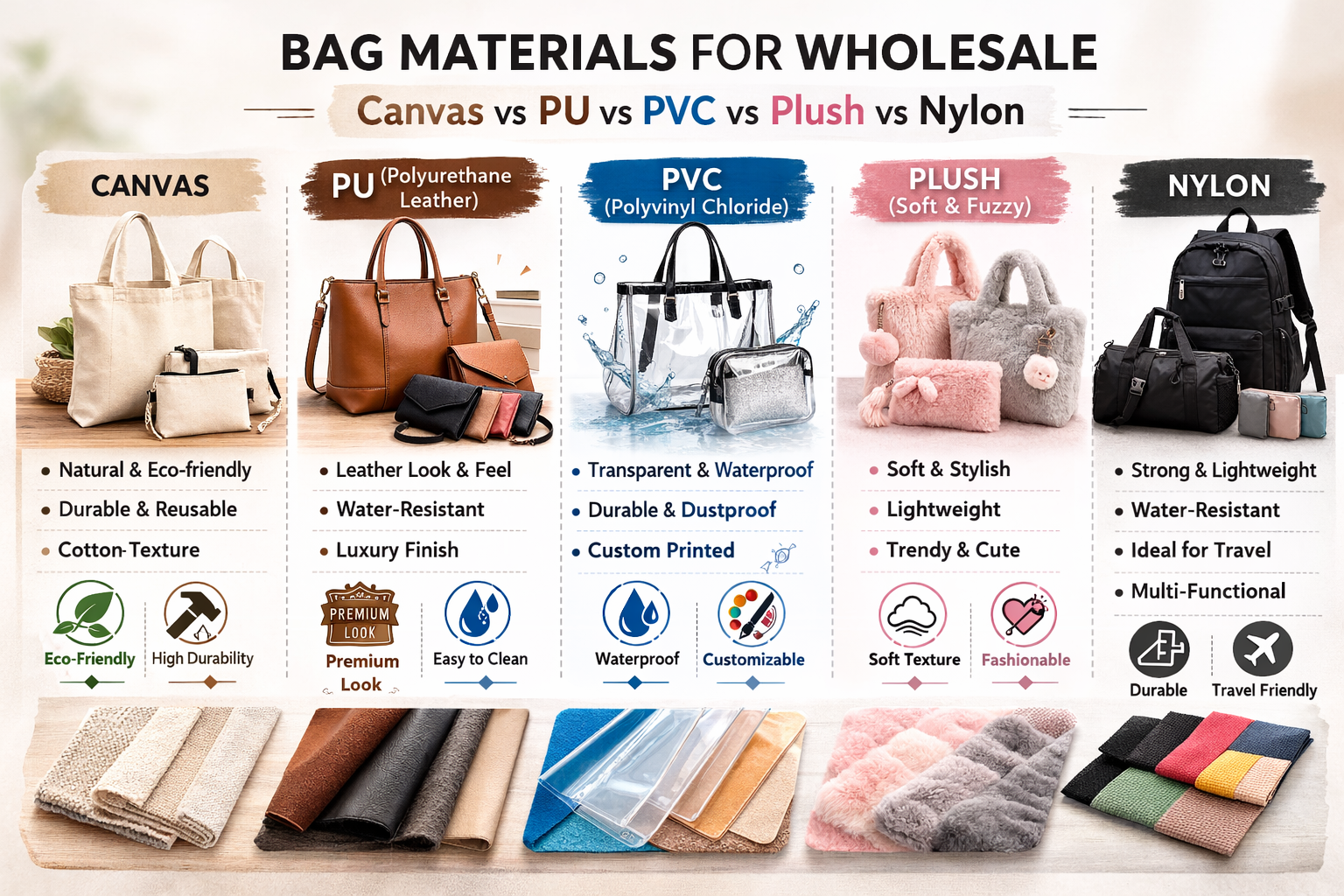
In wholesale sourcing, “material choice” is not a design preference—it drives cost, durability, appearance, and customer satisfaction. The original material guide also highlights that in 2026 buyers increasingly evaluate eco-friendliness, durability, and customization potential when choosing bag materials.
This article upgrades a basic material overview into a B2B decision workflow: use case → positioning/budget → customization → QC & packing standards. You’ll also get a pricing checklist and sample approval points to reduce “sample OK, bulk different” risk.
Quick Navigation
- Why Material Choice Impacts Bulk Success
- 5 Common Materials: Best Use Cases + Selling Angles
- 1-Minute Material Decision Table
- Pricing Factors: Why Quotes Vary So Much
- Sample Approval Points (Retail-Ready vs Pretty Sample)
- Bulk Inspection Checkpoints by Material
- FAQ
Why Material Choice Impacts Bulk Success
Material selection determines how fast your product sells, how long it lasts, and whether it matches your target market. In 2026, wholesale buyers tend to weigh sustainability, durability, and customization more heavily than before.
5 Common Materials: Best Use Cases + Selling Angles
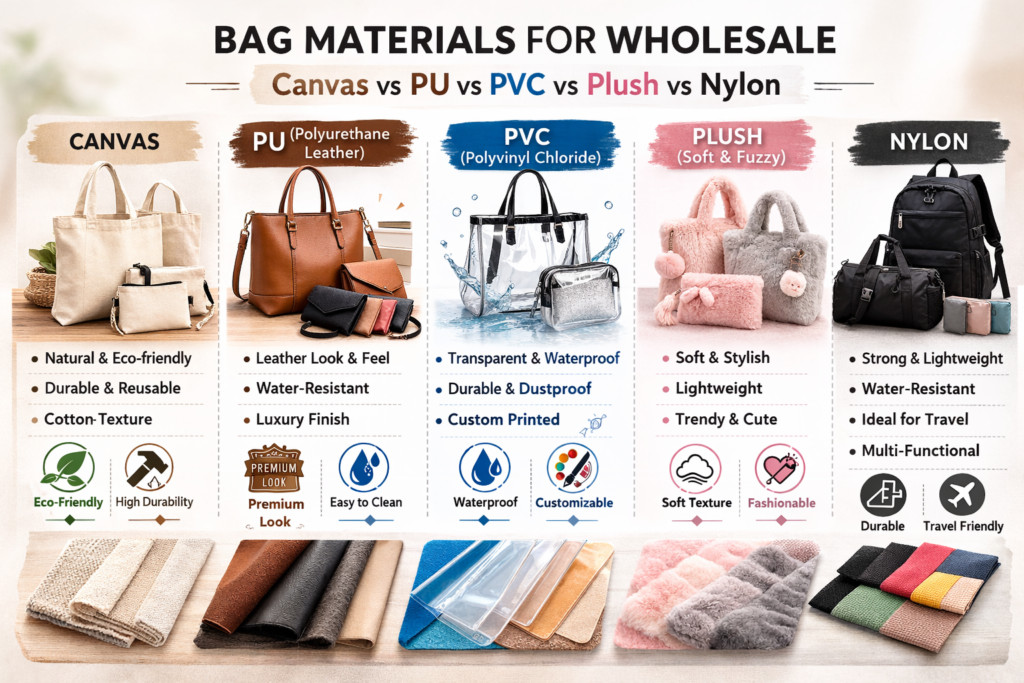
1) Canvas: durable, “natural,” and great for branding
- Advantages: strong and long-lasting; often seen as eco-friendly (natural cotton); easy for printing or embroidery.
- Use cases: totes, shopping bags, school bags.
- Selling angle: treat it as a high-visibility branding surface (big prints, embroidery, patches).
2) PU (polyurethane): “affordable luxury” with flexibility
- Advantages: leather-like look; more cost-effective than genuine leather; scratch/stain resistant and waterproof; supports printing and embossing.
- Use cases: cosmetic bags, handbags, travel pouches.
- Selling angle: premium look + controlled cost—great for gift sets and retail-ready cosmetics accessories.
3) PVC: waterproof, clear or colored, easy to clean
- Advantages: protects from liquids; transparent or colored; wipe-clean maintenance.
- Use cases: cosmetic bags, travel organizers, promotional/event bags.
- Selling angle: clear PVC with bold trim/prints photographs well for e-commerce.
4) Plush: soft, giftable, high perceived value
- Advantages: soft and tactile; higher perceived value; supports embroidery, zippers, and printed linings.
- Use cases: cosmetic pouches, kids’ bags, seasonal promotions.
- Selling angle: “cute + cozy + Instagram-friendly” makes it strong for Q4 gifting and sets.
5) Nylon & Polyester: lightweight, strong, and travel/active evergreen
- Advantages: lightweight and strong; water-resistant; easy to dye for bright colors/patterns.
- Use cases: drawstring bags, gym bags, backpacks.
- Trend note: minimalist designs and recycled fabrics are increasingly common.
(Material advantages, use cases, and trend notes above are based on the LuckystarCreation material guide.)
1-Minute Material Decision Table
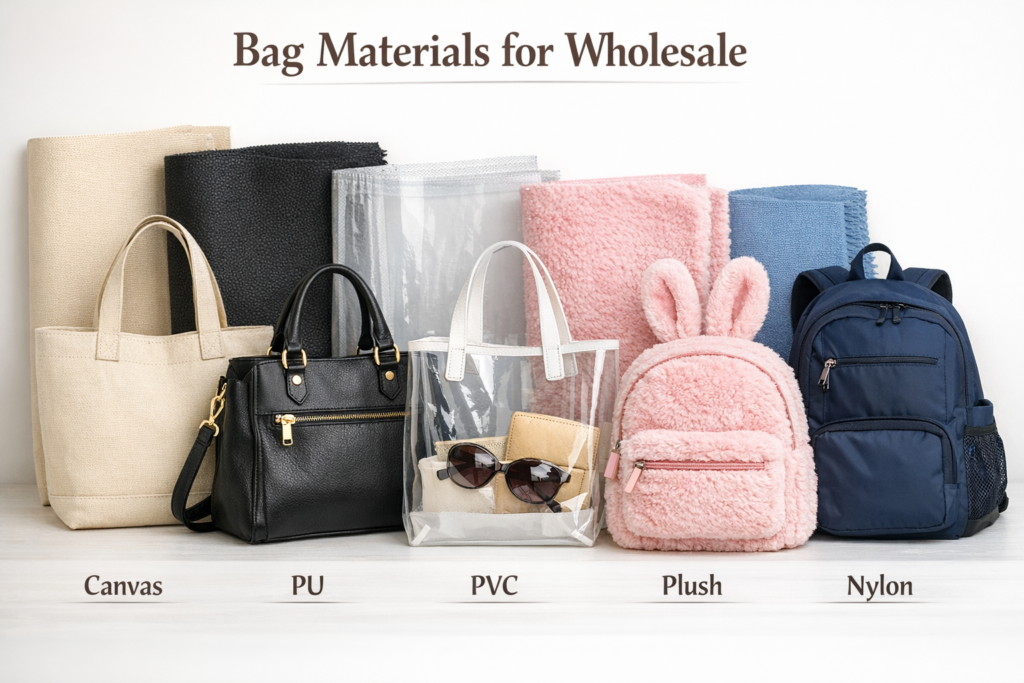
- High visibility & branding (promo, retail packaging, merch) → Canvas
- Premium look with controlled cost (cosmetic bags, gifting hero pouch) → PU
- Waterproof + clear style + easy cleaning (travel, events, giveaways) → PVC
- Giftable, cozy, “cute” aesthetics (sets, seasonal campaigns) → Plush
- Lightweight durability for travel/active → Nylon/Polyester
Pricing Factors: Why Quotes Vary So Much
Even with the same “material name,” pricing differences usually come from:
- Material specs: thickness/weight, surface finish (glossy, matte, embossed, frosted)
- Zippers & hardware: zipper type/smoothness, custom pullers, plating quality
- Construction complexity: compartments, binding method, handles/straps, reinforcements
- Customization method: screen print, heat transfer, emboss, embroidery, patches
- Packing standard: scratch protection film, individual polybag, dividers, carton method
Buyer tip: Don’t ask only “How much is PU/PVC?” Write specs + finishing + packing into your RFQ to get comparable quotes and safer bulk results.
Sample Approval Points (Retail-Ready vs Pretty Sample)
- Appearance: edge finish, corner lay-flat, stitching straightness, logo placement stability
- Function: zipper smoothness, pocket accessibility, stress-point reinforcement
- Repeatability: lock measurable specs (thickness/weight, finishing method, key reinforcements)
- Packing: define scratch protection for clear/easy-scuff surfaces
Bulk Inspection Checkpoints by Material
- Canvas: print/embroidery durability, color difference control, reinforcement for straps
- PU: scratch/stain tolerance, emboss consistency, edge paint/binding cleanliness, crease behavior
- PVC: clarity/haze consistency, scuff control + packing execution, corner cracking risk, odor control
- Plush: shedding/pilling, seam strength, lining print fastness, zipper smoothness
- Nylon/Polyester: abrasion, water resistance, color fastness, zipper cycle, stress-point reinforcement
FAQ
1) What’s the most “universal” material for cosmetic bags?
For broad channel coverage, many buyers choose PU (premium look) or nylon/polyester (lightweight durability). For clear styles and promo/travel use cases, PVC is common.
2) How do I balance sustainability and cost?
Split your line into: high-visibility promo items vs long-life repeat sellers. Canvas works well for branding exposure, while nylon/polyester (including recycled trends) supports long-term durability.
3) Why do PVC clear bag quotes vary so much?
Differences usually come from film thickness stability, binding method, zipper/hardware, and scratch-protection packing standards. Put these into your RFQ to avoid mismatched expectations.
CTA: Want a quote-ready spec instead of vague “material requests”?
Send your target use case, size/structure, material preference, and logo method. We can suggest material options, a sampling plan, and bulk inspection checkpoints aligned to your market.
Aries Gu is the founder of Q&N. With over 17 years of experience in cosmetic bag OEM/ODM source factory. He focuses on quality control, efficient communication, and on-time delivery for global cosmetic bag projects.