A lined cosmetic bag with a zipper is one of the most practical sewing projects for anyone who wants to make a pouch that looks cleaner, works better, and feels more finished. Compared with a simple unlined pouch, a zippered makeup bag with lining offers better structure, a neater interior, and more protection for beauty products, toiletries, and travel essentials.
Whether you are making a small makeup pouch for daily use or developing a larger toiletry bag for travel, adding both a lining and a zipper can instantly improve the final result. These two details may seem simple, but they make a big difference in how the bag looks, holds its shape, and performs over time.
In this guide, we will walk through why lined zipper cosmetic bags are worth making, how to sew one step by step, which fabrics work best, how to choose the right zipper, and what small details can make the bag look more professional.
Introduction
Cosmetic bags come in many styles, but the lined zipper pouch remains one of the most useful and popular options. It works well for makeup storage, skincare organization, travel packing, and everyday handbag essentials. A zipper keeps contents secure, while a lining hides raw seams and gives the inside a cleaner finish.
For beginners, this type of beauty bag is also a good project once basic sewing skills are in place. It teaches useful techniques such as inserting a zipper, sewing a lining, shaping corners, and creating a more structured fabric pouch. For more experienced makers, it is an easy style to customize with different fabrics, sizes, prints, and finishing details.
Why Add a Lining and a Zipper to a Cosmetic Bag?
A lining and a zipper do more than make a pouch look nicer. They improve function as well. The lining helps cover the inner construction, protects the main fabric from direct wear, and makes the cosmetic case feel more complete. It can also make cleaning easier, especially if you choose a wipeable or tightly woven inner fabric.
The zipper adds security. Without it, small beauty items can slip out or become disorganized inside a handbag or suitcase. A zippered closure keeps lip products, brushes, skincare minis, and personal care items in one place. For travel and daily use, that extra control matters.
Together, the zipper and lining also improve structure. A lined makeup bag usually feels more substantial than an unlined one, and a well-installed zipper gives the pouch a cleaner silhouette. If the goal is to create a cosmetic pouch that feels polished and durable, these two elements are worth the effort.
How to Make a Lined Cosmetic Bag with a Zipper
1. Prepare the Main Fabric, Lining, and Interfacing
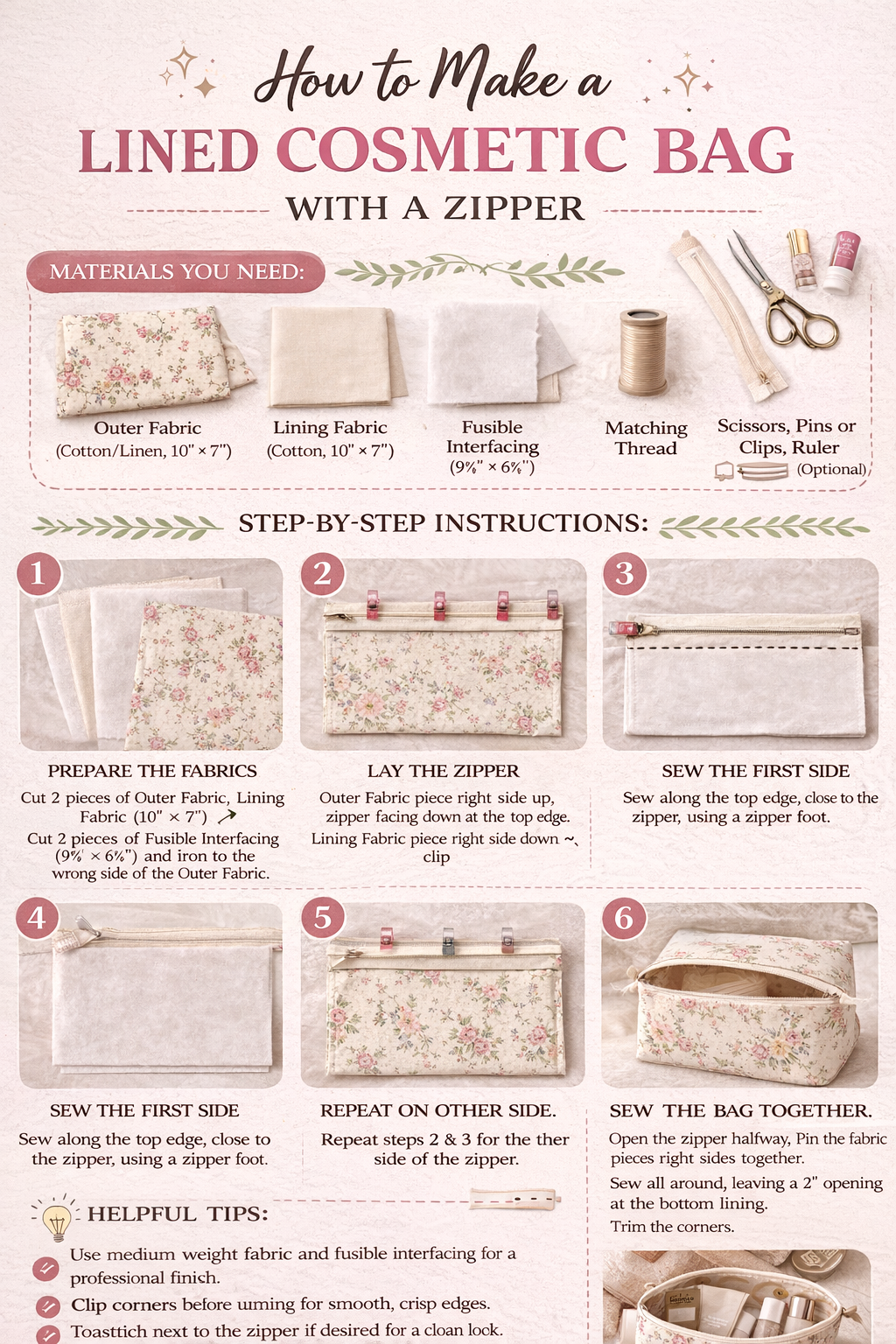
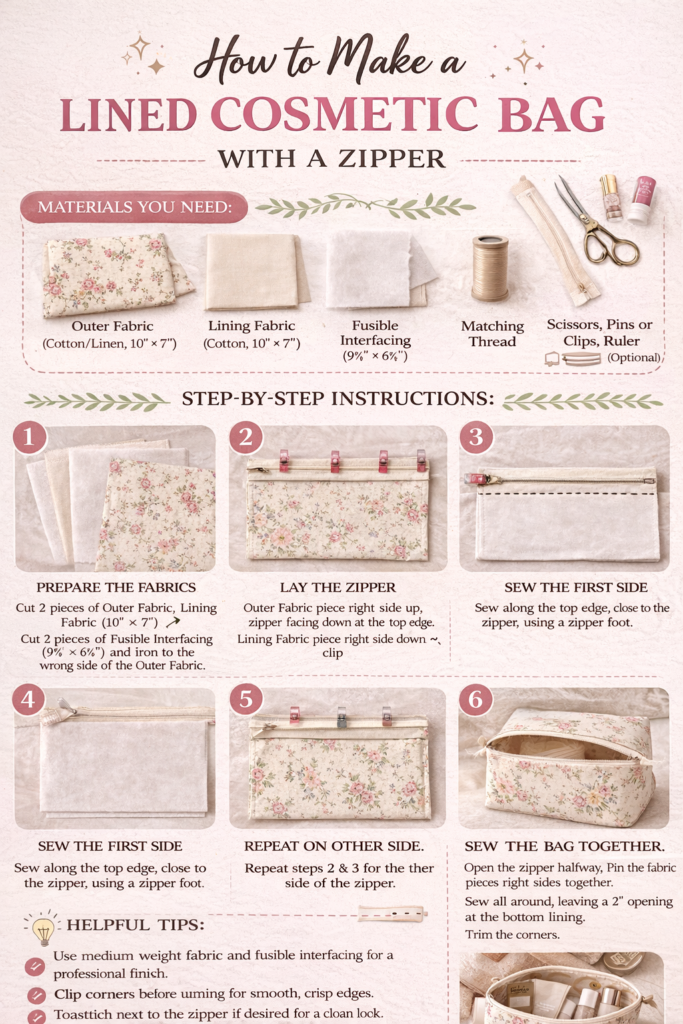
Start by cutting your main outer fabric and lining fabric to the same size. If you want the bag to hold its shape better, add interfacing to the outer fabric or lining, depending on the structure you want. A softly structured pouch usually looks more refined than one that collapses too much.
2. Choose and Measure the Bag Shape
Decide whether you want a flat zipper pouch, a boxed cosmetic bag, or a slightly rounded makeup case. The dimensions should match the intended use. A small beauty pouch for lipstick and compact powder needs a different proportion from a larger toiletry organizer for travel products.
3. Attach the Zipper to the Outer Fabric and Lining
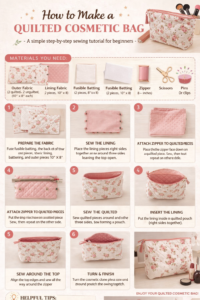
Place the zipper between the main fabric and lining, with the right sides facing the zipper tape. Sew one side carefully, then repeat on the other side. This step is where accuracy matters most. A straight zipper installation helps the whole cosmetic bag look cleaner in the end.
After sewing, pressing the fabric near the zipper can help the opening lie flatter. Some makers also topstitch near the zipper edge for a neater and more secure finish.
4. Sew the Body of the Bag
Once the zipper is attached, open it halfway before sewing the bag closed. This is important because it allows you to turn the pouch right side out later. Match the outer fabric pieces together and the lining pieces together, then sew around the edges, leaving a small gap in the lining for turning.
5. Shape the Bottom if Needed
If you want a roomier cosmetic bag, you can box the corners. This gives the pouch more depth and makes it better for storing makeup, skincare, or travel-size bottles. A boxed base usually makes the bag stand better and gives it a more finished retail-style look.
6. Turn the Bag and Close the Lining Opening
Turn the bag through the gap left in the lining, then stitch the lining opening closed. Push the lining neatly inside the bag and shape the corners carefully. At this point, the project starts to look like a complete lined zipper pouch.
Best Fabrics for a Zipper Cosmetic Bag
The best fabric depends on the type of cosmetic bag you want to make. Cotton canvas is a popular choice because it is easy to sew and holds structure well. Quilted cotton can create a softer, more padded beauty pouch, while nylon or polyester can be practical for lightweight travel use.
For a more premium feel, some makers choose PU, velvet, coated cotton, or textured woven fabrics. However, these materials may require more careful handling depending on thickness and finish. If you are making a toiletry bag that may come into contact with liquids or spills, a wipeable lining is especially useful.
In general, the most successful fabric combinations balance appearance and function. The outer fabric should suit the design style, while the lining should be durable and smooth enough to work well inside the bag.
How to Choose the Right Zipper
The zipper should match both the size of the bag and the overall look you want. A zipper that is too short can make the pouch harder to open, while one that is too bulky may look out of proportion on a small cosmetic case.
Nylon coil zippers are commonly used for makeup bags because they are flexible, practical, and easy to sew. Metal zippers can give a more premium look, but they are usually heavier and may not suit every fabric. For soft beauty pouches and everyday zip bags, coil zippers are often the safer option.
Color also matters. Matching the zipper to the fabric creates a cleaner look, while contrast zippers can make the bag feel more playful or design-led. For a more polished result, the zipper tape, puller, and surrounding fabric should feel visually consistent.
How to Make the Bag Look More Professional
Small details often make the biggest difference. Accurate cutting is one of them. If the panels are uneven, the final pouch may look twisted or unbalanced. Pressing the seams during construction also helps the bag look sharper and better shaped.
Topstitching near the zipper can improve both appearance and durability. Using interfacing where needed can give the bag a more stable form. Clean corner shaping, even seam allowance, and a lining that sits smoothly inside all contribute to a more polished cosmetic pouch.
If you want an even more finished look, consider adding details such as a fabric tab, a branded label, piping, or a coordinated zipper pull. These additions are small, but they can make a simple zip makeup bag feel more thoughtfully made.
Common Problems and How to Fix Them
The Zipper Looks Wavy
This usually happens when the fabric shifts during sewing or the zipper is not aligned properly. Basting or clipping the zipper in place before stitching can help keep everything straighter.
The Lining Feels Too Bulky
If the lining bunches up, the seam allowance may be too wide or the fabric may be too thick for the bag size. Choosing a lighter lining and trimming bulky seams can improve the finish.
The Bag Has No Shape
A cosmetic bag that looks too flat or floppy may need interfacing or a better-suited outer fabric. Adding structure can improve both appearance and usability.
The Corners Look Uneven
Uneven corners often come from inaccurate cutting or turning the bag too roughly. Trim excess bulk and use a blunt tool to shape the corners carefully from the inside.
The Zipper Is Hard to Open
This can happen if the zipper is sewn too close to thick seam areas or if the zipper itself is not suitable for the bag. Choosing a smoother zipper and keeping the ends neat usually helps.
Conclusion
A lined cosmetic bag with a zipper is a practical project that combines function, durability, and a more professional-looking finish. Whether you call it a makeup bag, toiletry pouch, beauty case, or zippered organizer, this style remains one of the most useful fabric bags for daily use and travel.
By adding a lining, choosing the right fabric, selecting a suitable zipper, and paying attention to finishing details, you can create a pouch that feels much more polished than a basic unlined bag. It may take a few extra steps, but the final result is usually worth it.
For anyone learning to sew small bags, this is a very worthwhile project. It teaches core techniques and creates a product that is both attractive and genuinely useful.
How to Make a Lined Cosmetic Bag with a Zipper
A lined cosmetic bag with a zipper is one of the most practical sewing projects for anyone who wants to make a pouch that looks cleaner, works better, and feels more finished. Compared with a simple unlined pouch, a zippered makeup bag with lining offers better structure, a neater interior, and more protection for beauty products, toiletries, and travel essentials.
Whether you are making a small makeup pouch for daily use or developing a larger toiletry bag for travel, adding both a lining and a zipper can instantly improve the final result. These two details may seem simple, but they make a big difference in how the bag looks, holds its shape, and performs over time.
In this guide, we will walk through why lined zipper cosmetic bags are worth making, how to sew one step by step, which fabrics work best, how to choose the right zipper, and what small details can make the bag look more professional.
Introduction
Cosmetic bags come in many styles, but the lined zipper pouch remains one of the most useful and popular options. It works well for makeup storage, skincare organization, travel packing, and everyday handbag essentials. A zipper keeps contents secure, while a lining hides raw seams and gives the inside a cleaner finish.
For beginners, this type of beauty bag is also a good project once basic sewing skills are in place. It teaches useful techniques such as inserting a zipper, sewing a lining, shaping corners, and creating a more structured fabric pouch. For more experienced makers, it is an easy style to customize with different fabrics, sizes, prints, and finishing details.
Why Add a Lining and a Zipper to a Cosmetic Bag?
A lining and a zipper do more than make a pouch look nicer. They improve function as well. The lining helps cover the inner construction, protects the main fabric from direct wear, and makes the cosmetic case feel more complete. It can also make cleaning easier, especially if you choose a wipeable or tightly woven inner fabric.
The zipper adds security. Without it, small beauty items can slip out or become disorganized inside a handbag or suitcase. A zippered closure keeps lip products, brushes, skincare minis, and personal care items in one place. For travel and daily use, that extra control matters.
Together, the zipper and lining also improve structure. A lined makeup bag usually feels more substantial than an unlined one, and a well-installed zipper gives the pouch a cleaner silhouette. If the goal is to create a cosmetic pouch that feels polished and durable, these two elements are worth the effort.
How to Make a Lined Cosmetic Bag with a Zipper
1. Prepare the Main Fabric, Lining, and Interfacing
Start by cutting your main outer fabric and lining fabric to the same size. If you want the bag to hold its shape better, add interfacing to the outer fabric or lining, depending on the structure you want. A softly structured pouch usually looks more refined than one that collapses too much.
2. Choose and Measure the Bag Shape
Decide whether you want a flat zipper pouch, a boxed cosmetic bag, or a slightly rounded makeup case. The dimensions should match the intended use. A small beauty pouch for lipstick and compact powder needs a different proportion from a larger toiletry organizer for travel products.
3. Attach the Zipper to the Outer Fabric and Lining
Place the zipper between the main fabric and lining, with the right sides facing the zipper tape. Sew one side carefully, then repeat on the other side. This step is where accuracy matters most. A straight zipper installation helps the whole cosmetic bag look cleaner in the end.
After sewing, pressing the fabric near the zipper can help the opening lie flatter. Some makers also topstitch near the zipper edge for a neater and more secure finish.
4. Sew the Body of the Bag
Once the zipper is attached, open it halfway before sewing the bag closed. This is important because it allows you to turn the pouch right side out later. Match the outer fabric pieces together and the lining pieces together, then sew around the edges, leaving a small gap in the lining for turning.
5. Shape the Bottom if Needed
If you want a roomier cosmetic bag, you can box the corners. This gives the pouch more depth and makes it better for storing makeup, skincare, or travel-size bottles. A boxed base usually makes the bag stand better and gives it a more finished retail-style look.
6. Turn the Bag and Close the Lining Opening
Turn the bag through the gap left in the lining, then stitch the lining opening closed. Push the lining neatly inside the bag and shape the corners carefully. At this point, the project starts to look like a complete lined zipper pouch.
Best Fabrics for a Zipper Cosmetic Bag
The best fabric depends on the type of cosmetic bag you want to make. Cotton canvas is a popular choice because it is easy to sew and holds structure well. Quilted cotton can create a softer, more padded beauty pouch, while nylon or polyester can be practical for lightweight travel use.
For a more premium feel, some makers choose PU, velvet, coated cotton, or textured woven fabrics. However, these materials may require more careful handling depending on thickness and finish. If you are making a toiletry bag that may come into contact with liquids or spills, a wipeable lining is especially useful.
In general, the most successful fabric combinations balance appearance and function. The outer fabric should suit the design style, while the lining should be durable and smooth enough to work well inside the bag.
How to Choose the Right Zipper
The zipper should match both the size of the bag and the overall look you want. A zipper that is too short can make the pouch harder to open, while one that is too bulky may look out of proportion on a small cosmetic case.
Nylon coil zippers are commonly used for makeup bags because they are flexible, practical, and easy to sew. Metal zippers can give a more premium look, but they are usually heavier and may not suit every fabric. For soft beauty pouches and everyday zip bags, coil zippers are often the safer option.
Color also matters. Matching the zipper to the fabric creates a cleaner look, while contrast zippers can make the bag feel more playful or design-led. For a more polished result, the zipper tape, puller, and surrounding fabric should feel visually consistent.
How to Make the Bag Look More Professional
Small details often make the biggest difference. Accurate cutting is one of them. If the panels are uneven, the final pouch may look twisted or unbalanced. Pressing the seams during construction also helps the bag look sharper and better shaped.
Topstitching near the zipper can improve both appearance and durability. Using interfacing where needed can give the bag a more stable form. Clean corner shaping, even seam allowance, and a lining that sits smoothly inside all contribute to a more polished cosmetic pouch.
If you want an even more finished look, consider adding details such as a fabric tab, a branded label, piping, or a coordinated zipper pull. These additions are small, but they can make a simple zip makeup bag feel more thoughtfully made.
Common Problems and How to Fix Them
The Zipper Looks Wavy
This usually happens when the fabric shifts during sewing or the zipper is not aligned properly. Basting or clipping the zipper in place before stitching can help keep everything straighter.
The Lining Feels Too Bulky
If the lining bunches up, the seam allowance may be too wide or the fabric may be too thick for the bag size. Choosing a lighter lining and trimming bulky seams can improve the finish.
The Bag Has No Shape
A cosmetic bag that looks too flat or floppy may need interfacing or a better-suited outer fabric. Adding structure can improve both appearance and usability.
The Corners Look Uneven
Uneven corners often come from inaccurate cutting or turning the bag too roughly. Trim excess bulk and use a blunt tool to shape the corners carefully from the inside.
The Zipper Is Hard to Open
This can happen if the zipper is sewn too close to thick seam areas or if the zipper itself is not suitable for the bag. Choosing a smoother zipper and keeping the ends neat usually helps.
Conclusion
A lined cosmetic bag with a zipper is a practical project that combines function, durability, and a more professional-looking finish. Whether you call it a makeup bag, toiletry pouch, beauty case, or zippered organizer, this style remains one of the most useful fabric bags for daily use and travel.
By adding a lining, choosing the right fabric, selecting a suitable zipper, and paying attention to finishing details, you can create a pouch that feels much more polished than a basic unlined bag. It may take a few extra steps, but the final result is usually worth it.
For anyone learning to sew small bags, this is a very worthwhile project. It teaches core techniques and creates a product that is both attractive and genuinely useful.
Aries Gu is the founder of Q&N. With over 17 years of experience in cosmetic bag OEM/ODM source factory. He focuses on quality control, efficient communication, and on-time delivery for global cosmetic bag projects.