#Factory Walkthrough • #Daily Production • OEM/ODM for Brands
Inside Our Cosmetic Bag Production Line: Real Workshop Walkthrough
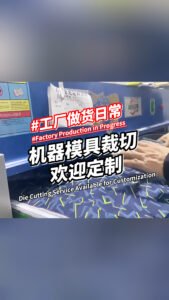
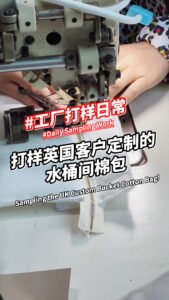
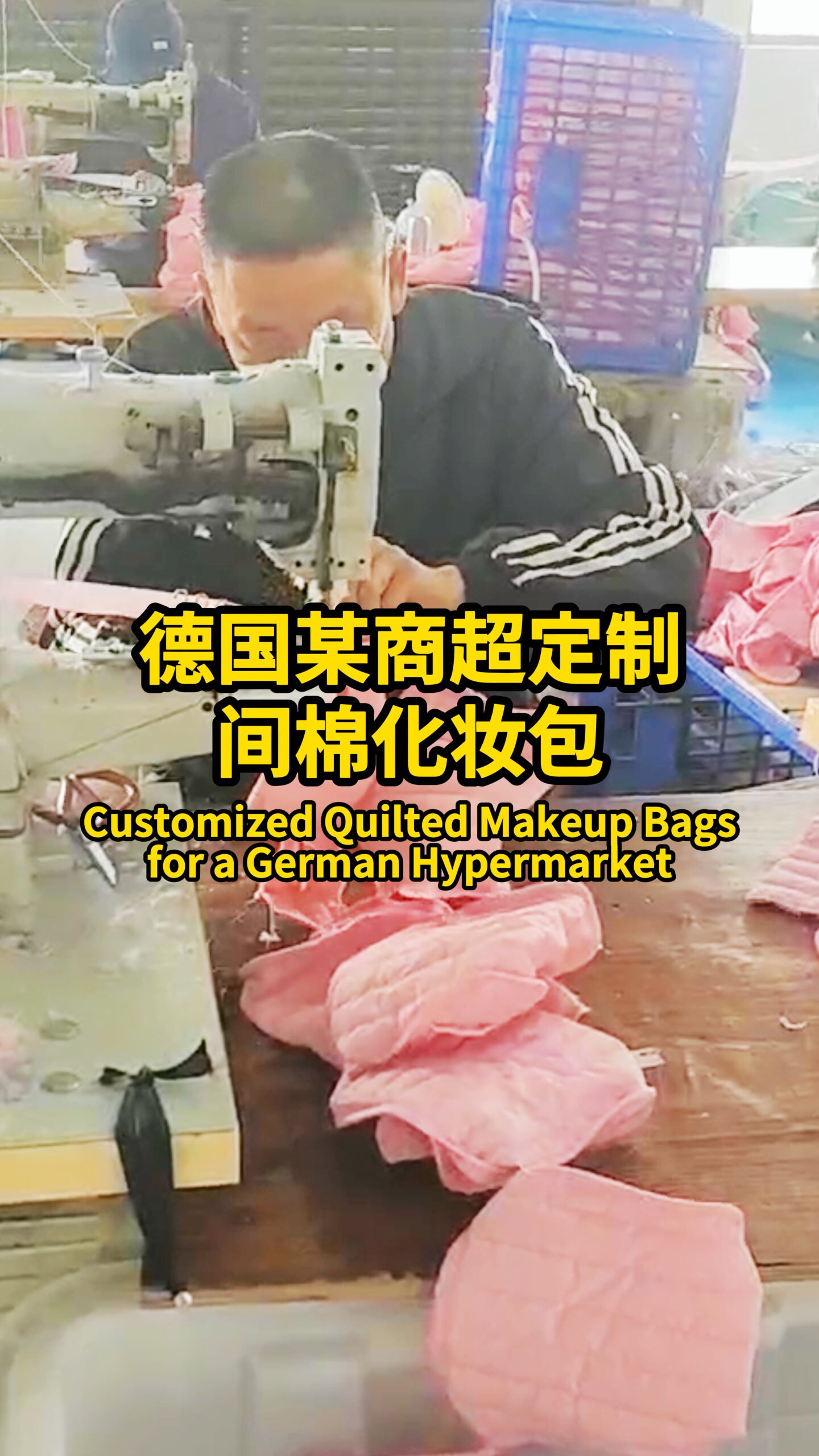
This page is built from a real factory walkthrough video: sewing stations in action, work-in-progress (WIP) bins, bulk order flow, and packing preparation—so you can evaluate our process like a professional buyer.
Video: Real Workshop Walkthrough (Bulk Production Workflow)
What you’re watching: multiple sewing workstations running in parallel, WIP pieces organized in baskets/bins, and packing cartons prepared near the line—key signals of repeatable bulk production.
- Experience: real floor footage
- Expertise: cut–sew–pack workflow
- Trust: PO-ready QC checklist
- Conversion: inquiry-ready CTA
Request a Quote / Sampling PlanBrowse Our Custom Bag
On This Page
- Why the production process matters for buyers
- What you see in the video (accurate breakdown)
- Video-to-process map
- 3 controls that keep bulk quality consistent
- PO-ready QC checklist table
- Packaging reliability for retail & DTC
- Compliance references (official resources)
- FAQ
- Next steps
Why the Production Process Matters (More Than Just a Nice Sample)
For brand buyers and importers, the biggest risk isn’t whether a factory can make one good sample—it’s whether the factory can keep the same standard across hundreds or thousands of units.
That’s why real floor footage is valuable. It shows the operational reality behind delivery promises: line setup, WIP control, and packing readiness.
Note: This page focuses on manufacturing capability and quality control for physical goods. It does not discuss sensitive topics and is designed to be compliant for general advertising and content policies.
What You See in the Video (Accurate Breakdown)
Scene A — Sewing Stations Running in Parallel
You can see multiple industrial machines working at the same time. This typically indicates the order is flowing through different operations (assembly stitching, edge finishing, parts joining) in a controlled sequence.
- Why it matters: parallel line setup helps protect lead time and reduces workmanship variation.
- Buyer check: request a reference sample + workmanship standard photos for critical seams.
Scene B — WIP Pieces Stored in Baskets / Bins
The video shows semi-finished items grouped in baskets/bins near workstations. This is a practical method to keep lots separated and reduce mixing errors during bulk production.
- Why it matters: WIP control reduces mix-ups (wrong parts, wrong accessories, missing components).
- Buyer check: confirm lot labeling method (style/color/accessory set) and in-process checks.
Scene C — Cartons & Packing Prep On-Site
Cartons and packing materials appear close to the line. Packing is not “just logistics”—it affects transit damage and customer unboxing quality.
- Why it matters: packing prep signals shipment readiness and reduces last-minute delays.
- Buyer check: confirm carton marks, pack counts, and protection method.
Video-to-Process Map (Walkthrough → Manufacturing Meaning)
This table translates what you see on the floor into buyer-relevant production signals.
| Video Evidence | Manufacturing Meaning | Risk It Helps Reduce | What You Can Ask For |
|---|---|---|---|
| Multiple sewing stations running | Parallel operations on a bulk order | Delays, inconsistent workmanship | Workmanship reference sample + line SOP overview |
| Stacks of panels / semi-finished pieces | Cut parts staged for assembly | Size drift, mismatched parts | Cutting tolerance + pre-production confirmation |
| Baskets/bins with WIP | Lot separation & step-by-step flow | Mix-ups, missing components | Lot ID labeling + WIP checklist |
| Cartons prepared near the line | Packing prep & shipment readiness | Transit damage, wrong labeling | Packaging spec + carton marking rules |
| Organized aisles / floor layout | Safer, smoother material handling | Bottlenecks, handling damage | QC gate placement + packing zone separation |
3 Controls That Keep Bulk Quality Consistent
1) Lot Separation & Traceability (WIP Bins)
In bulk orders, quality loss often starts with mixing: wrong zipper, wrong label, wrong panels. WIP bins work best when they remain traceable to the correct style / color / accessory set through the entire process.
Buyer questions to ask:
- How are WIP bins labeled (style, color, accessory set, date, line)?
- How do you prevent accessory mixing across similar SKUs?
- Where is the “hold area” for nonconforming items?
2) In-Process QC Gates (Not Only Final Inspection)
Reliable factories check quality during key steps (after critical seams, after zipper operations, before packing). This reduces defect accumulation and rework.
Buyer tip: If your team uses AQL language, many buyers reference ISO 2859-1 as a framework for attribute sampling.
3) Repeatable Process Management
Brands want stable outcomes, not one-time success. Many companies use structured quality management concepts (such as those reflected in ISO 9001) to support consistent processes and continuous improvement.
PO-Ready QC Checklist (Copy Into Your Purchase Order)
This table helps make expectations measurable and reduces disputes. Adjust tolerances and rules based on your product design.
| Checkpoint | What to Inspect | Typical Defects | Simple Acceptance Rule |
|---|---|---|---|
| Stitching consistency | Even tension, no skipped stitches, neat backstitch | Broken threads, seam breaks, uneven tension | Visual check + pull test on key seams |
| Panel alignment | Symmetry, consistent seam allowance, shape holds | Warped shape, uneven edges | Measure critical dimensions within tolerance |
| Accessories match | Correct zipper/label/hardware per lot | Mixed accessories, missing components | Lot-by-lot accessory checklist + photo record |
| Cleanliness | No oil stains / chalk residue / visible marks | Dirty panels, residue | 100% wipe-down before packing |
| Packing accuracy | Correct pack method, counts, carton label | Wrong quantity, wrong label | Carton checklist + seal verification |
Want stricter inspection language? You can add: “Final inspection sampling per ISO 2859-1 (AQL) reference” to your PO.
Packaging Reliability for Retail & DTC
If your cosmetic bags ship to retail DCs or e-commerce fulfillment centers, transit damage becomes a hidden cost. A packaging plan should address:
- Surface protection: tissue/polybag/protective film (as needed)
- Shape protection: prevent corner crush and zipper deformation
- Carton rules: correct carton size, pack count, void fill
- Labeling: carton marks, SKU labels, barcode placement
Some brands reference ISTA procedures when validating packaging performance, depending on their internal standards and shipping conditions.
Compliance References (Official Resources)
We avoid blanket promises because requirements vary by materials and intended use. Here are official resources compliance teams commonly reference:
- EU REACH (European Commission): Official overview
- ECHA (EU Chemicals Agency): Understanding REACH
- UK REACH (UK HSE): UK REACH guidance
- US CPSIA (CPSC): CPSIA overview
- ISO 2859-1 (Acceptance sampling): ISO standard page
- ISO 9001 (Quality management): ISO overview
- ISTA (Packaging test procedures): ISTA official site
- amfori BSCI (Social compliance framework): amfori official site
Note: Compliance scope depends on product materials, intended user group, and brand claims. Your compliance partner typically defines required tests and documentation.
FAQ
What does a factory walkthrough prove?
It shows real production capability: line setup, WIP control, and packing readiness—signals that matter more than marketing photos when evaluating bulk stability.
How do you keep bulk quality consistent with the approved sample?
By locking specifications (materials + accessories), using repeatable work instructions, and placing QC checks during production—not only at the end. The PO-ready QC checklist above helps make expectations measurable.
Can you support compliance requests?
We can provide material details and support third-party testing requirements defined by your compliance team. The official resources above are common references used in compliance workflows.
Next Steps (Fast & Buyer-Friendly)
If you want a factory partner that can show real bulk workflow (like in this video), send us:
- Product photos or a tech pack + target size
- Target market + intended use
- Material preference + zipper type
- Expected order quantity + required lead time
Contact Us for Sampling PlanView Product Categories
Buyer Snapshot
- Capacity: multiple stations running
- Control: WIP separated in bins
- Readiness: cartons staged for pack-out
- Risk reduction: PO-ready QC checklist
Recommended Internal Links
Replace these with your exact qnbags.com URLs:
Optional: FAQ Schema (SEO)
If your theme allows JSON-LD in posts, paste below in the same HTML block (or your SEO plugin).
Aries Gu is the founder of Q&N. With over 17 years of experience in cosmetic bag OEM/ODM source factory. He focuses on quality control, efficient communication, and on-time delivery for global cosmetic bag projects.