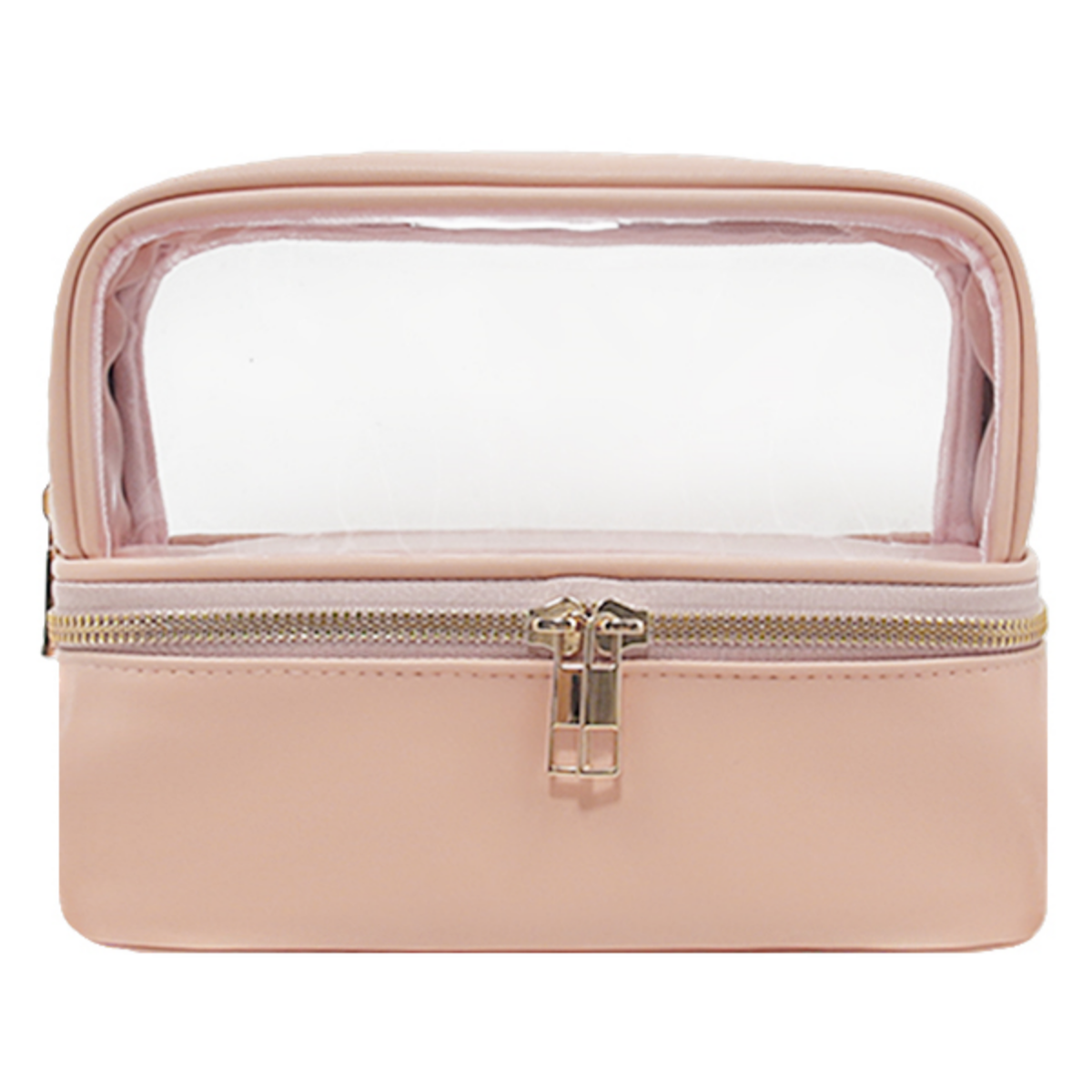
Clear makeup bags, transparent toiletry pouches, and see-through gift bags keep trending for a simple reason: they look great on shelves and in photos. But sourcing the wrong clear material can quietly destroy your margins—through odor complaints, yellowing, scratches, cracking, or compliance headaches.
If you’re developing clear cosmetic bags for retail, promotions, or travel sets, you’ll almost always face two questions:
- PVC or TPU for the clear body?
- If you want a sustainability story, can recycled nylon still feel premium?
This guide breaks down the decision like a buyer—so you can match materials to positioning, budget, and market needs.
Why material choice matters more than you think in 2026
A “clear bag” isn’t just a different sheet of plastic. Your material impacts:
- Pricing power (promo volume vs premium sets)
- Return/complaint rate (scratches, odor, yellowing, brittleness)
- Compliance conversations (especially for stricter markets)
PVC vs TPU: 6 sourcing factors (with best-fit use cases)
1) Cost & margin: PVC wins for volume, TPU supports premium pricing
PVC is typically more cost-effective for high-volume programs and promotions. TPU generally costs more and is often positioned as a premium/eco-forward option.
2) Hand feel & premium perception: TPU usually feels softer
PVC is firmer and holds structure. TPU is often softer and more elastic—better aligned with premium “soft-touch” expectations.
3) Flexibility, scratch resistance & cold-weather performance
Many buyers position TPU as a better “long-life” option thanks to flexibility and scratch resistance. (luckystarcreation.com)
4) Clarity & yellowing risk: match the product lifecycle
PVC often fits short-lifecycle promo projects. TPU is frequently used for premium sets where long-term appearance matters. (szoneier.com)
5) Odor & chemical compliance: TPU is often easier to position
“Does it smell?” is one of the most common questions. Many sourcing references describe TPU as easier for compliance conversations, while PVC may trigger more questions around plasticizers. (szoneier.com)
6) Manufacturing reality: structure + process matter as much as material
Bulk issues often come from details—wrinkles around zippers, stress whitening at corners, poor binding, and inconsistent haze. Lock your construction, thickness, binding method, and testing standards early.
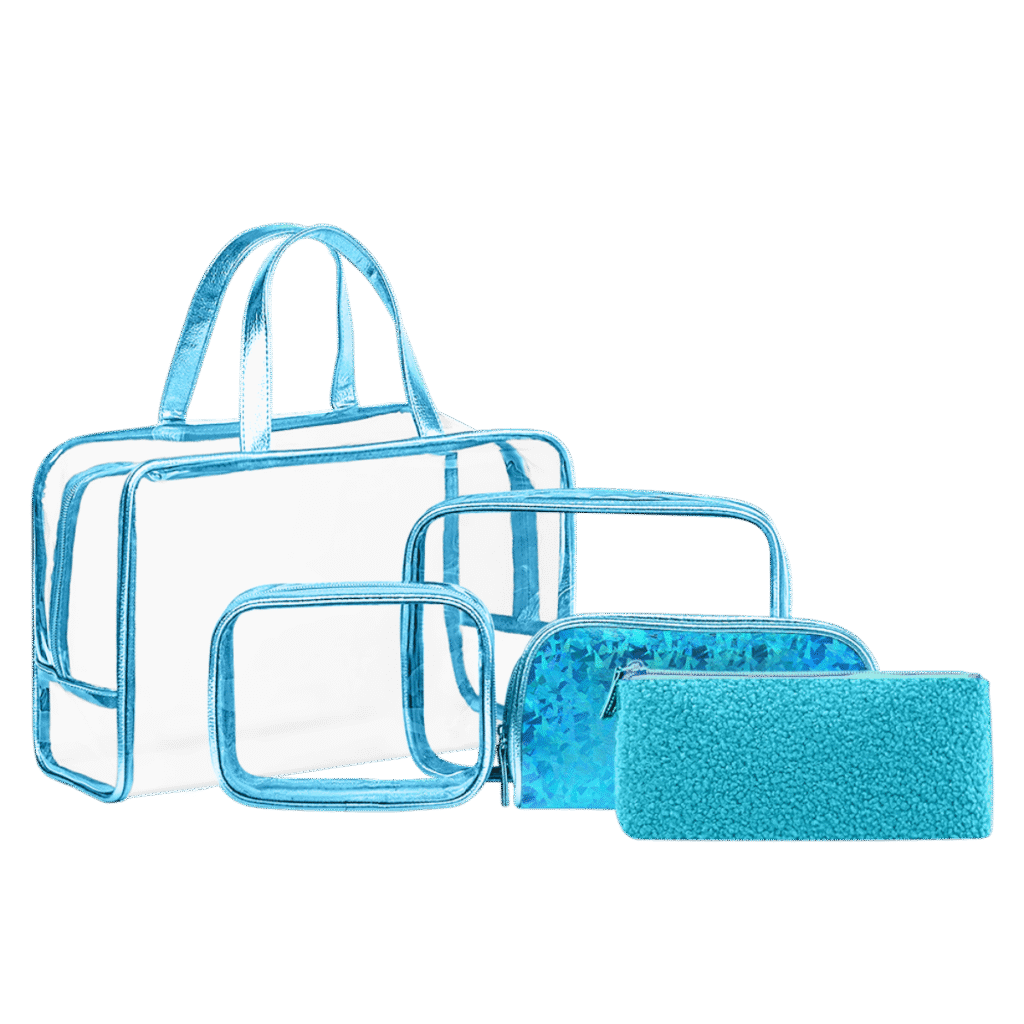
1-minute material decision guide (share with your team)
- High-volume promos / cost-sensitive projects → PVC
- Premium gifting / long-term use / softer feel → TPU
- Sustainability + core long-life styles → GRS recycled nylon
- Higher AOV bundles → TPU clear pouch + recycled nylon inner bag set
Why recycled nylon works best for core cosmetic bag styles
Clear pouches deliver instant visual value. But repeat sellers are often durable core items—nylon cosmetic bags, organizers, inner pouches, and travel kits.
1) GRS recycled nylon supports both story and documentation
Factories use GRS-certified recycled nylon and highlight that premium hand feel can be comparable while improving traceability. (rivta-factory.com)
2) Replace perception with specs and QC tests
Define requirements: abrasion resistance, color fastness, seam/zip strength, pilling control, wipe-clean performance.
3) The winning combo: TPU + recycled nylon sets
- TPU clear pouch = display + premium perception
- Recycled nylon inner bag = durability + sustainability proof
Recycled nylon systems like ECONYL® are also used in brand storytelling around circular value. (econyl.aquafil.com)
Pre-production checklist (copy/paste to your supplier)
- Material specs (PVC/TPU thickness, clarity/haze, odor expectations; GRS docs if needed)
- Compliance plan (target market + recommended testing)
- Construction (binding, corner reinforcement, zipper spec, coatings)
- Quality standards (scratch tolerance, haze variance, inspection level)
- Timeline & inspection (sample lead time, bulk lead time, third-party inspection support)
- third-party inspection supported
How to sample faster and reduce risk
Use a simple 3-step sampling plan:
- Same design: PVC vs TPU
- Same style: virgin nylon vs GRS recycled nylon
- Same testing checklist for both
Your own website supports this CTA well: you state OEM/ODM customization, material options (transparent PVC and eco options like RPET), third-party inspection support, and BSCI & ISO9001.
FAQ
Q1: Should I choose PVC or TPU for clear makeup bags?
A: PVC is typically preferred for high-volume, cost-sensitive programs. TPU fits premium gifting, travel kits, and long-term usage where a softer feel and durability story matter.
Q2: Is TPU more scratch-resistant and flexible in cold weather?
A: Many buyers position TPU for long-life use. Validate via side-by-side tests: bend/fold cycles, scratch tests, low-temp folding, zipper cycle tests.
Q3: What causes yellowing in clear bags?
A: Formulation, thickness, storage, and transport conditions. Define haze/clarity tolerance and align testing before bulk production.
Q4: Will recycled nylon feel cheaper or bleed color?
A: Not necessarily—lock specs and QC standards: abrasion, color fastness, seam/zip strength, pilling control, wipe-clean performance.
Q5: Why do buyers ask for GRS-certified recycled nylon?
A: GRS provides traceability for recycled claims and helps brands pass audits when required.
Q6: When does a TPU + recycled nylon set make sense?
A: Travel sets, gifting kits, seasonal promos, and e-commerce bundles—better display value + better long-term usability.
Q7: What should I confirm before placing an order?
A: Material specs, construction details, QC standards, lead time, and third-party inspection support.
Aries Gu is the founder of Q&N. With over 17 years of experience in cosmetic bag OEM/ODM source factory. He focuses on quality control, efficient communication, and on-time delivery for global cosmetic bag projects.