A Practical Manufacturing Breakdown + PO-Ready QC Checklist for USA / UK / EU OEM/ODM Buyers
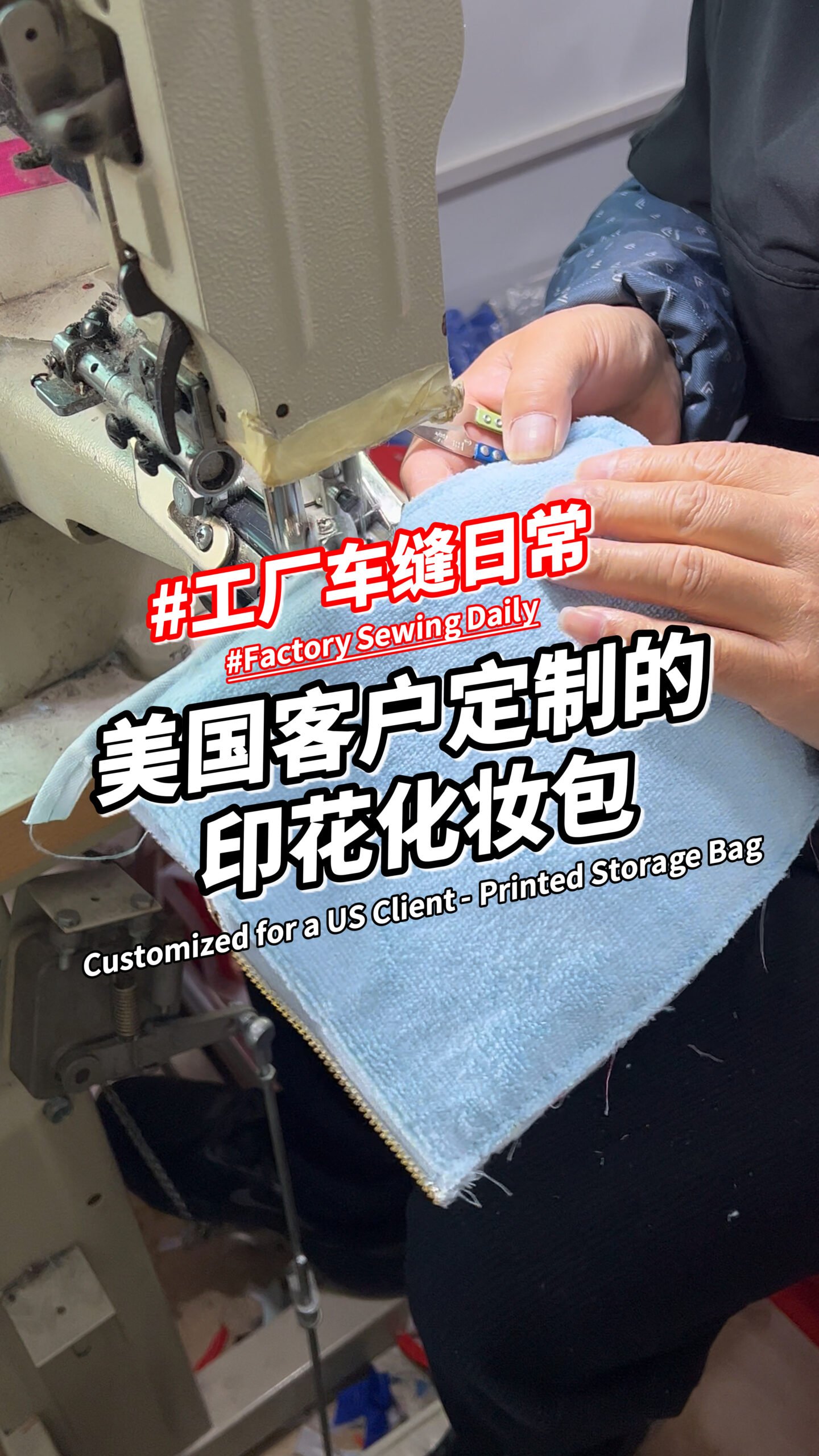
This article is based on a real workshop video filmed at our sewing station. In the footage, our operator is stitching a light-blue terry (towel) fabric panel and installing a zipper—one of the most quality-sensitive steps in cosmetic bag manufacturing.
Instead of only showing finished photos, we explain what the process looks like on the factory floor, how we control repeatability from sample to bulk, and what buyers can specify in a purchase order to reduce quality disputes.
Video: Real sampling work (zipper sewing + edge control)
What you’re watching:
An operator guiding terry cloth under an industrial machine while sewing a zipper seam/top-stitch and controlling edge alignment—where many “premium vs. basic” differences become visible: stitch stability, tape flatness, corner control, and cleanliness on pile fabric.
Quick Buyer Snapshot (What This Video Signals)
- Workmanship focus: zipper top-stitch straightness and seam stability
- Process control: edge alignment and corner handling on thicker fabric
- Material know-how: terry cloth finishing (pile management + clean trimming)
- Buyer confidence: measurable QC points that can be written into a PO
CTA (optional): Request a Sampling Plan | Explore Custom Bag Options
Why Zipper Sewing Is a High-Risk Quality Step
For cosmetic bags and pouches, zipper performance is one of the most common quality complaint points—not because the zipper itself is “bad,” but because installation quality determines:
- whether the zipper tape lies flat or waves
- whether top-stitching stays straight and consistent
- whether corners pucker or distort
- whether sliders snag due to tape tension or misalignment
That’s why we like to share real sampling footage: it gives buyers a clear view of process control, not just the final look.
Buyer tip (simple and effective):
Ask your supplier how they control zipper alignment at corners and how they verify smooth running. A quick end-to-end slider run test + visual check for tape waviness can prevent many issues.
What Happens in the Video (Real Sampling Breakdown)
Step 1 — Panel Preparation (Terry / Towel Fabric)
The fabric in the video is a light-blue terry/towel-like textile. Terry cloth can feel soft and premium, especially for spa-themed or gifting programs, but it needs careful handling because:
- the surface pile can shift during sewing
- edges may fray if not trimmed and finished cleanly
- lint, chalk marks, or oil stains show more easily on the pile surface
What we control:
edge alignment, seam allowance consistency, clean trimming, and pile direction awareness.
What buyers can request:
fabric weight (GSM), lining choice, and edge finishing method (binding / turned edge / reinforced seam).
Step 2 — Zipper Seam / Top-Stitching Under Industrial Machine
You can see the operator feeding the panel while guiding the zipper area. This is the part where craftsmanship becomes obvious—especially at corners and start/stop points.
What we control:
stitch density, top-stitch straightness, tape flatness (no waves), and smooth slider movement after sewing.
Buyer check:
Request a short “zipper run test” video for the approved sample. It’s fast to provide and very effective for evaluation.
Step 3 — Edge & Corner Control (Prevent Puckering)
The operator’s hand movement focuses on keeping edges clean and corners stable. This matters more for terry cloth because thickness + pile can cause small distortions.
What we control:
corner turning technique, seam flattening, trimming before next assembly step, and controlling fabric feed pace.
Buyer check:
Confirm whether edges are bound, turned, or reinforced, based on your target positioning (basic / mid-tier / premium).
Sampling → Bulk Production Map (What This Clip Represents)
This table translates the close-up footage into a repeatable workflow that buyers can evaluate and control.
| Stage | What Happens | Why It Matters | What to Confirm |
|---|---|---|---|
| Material confirmation | Terry cloth (GSM), lining, zipper type, accessories | Hand-feel + durability define perceived value | Approved swatches + spec sheet |
| Pattern & cutting | Panel shape, seam allowance, reinforcement pieces | Controls symmetry in bulk | Size tolerance on critical dimensions |
| Zipper installation (shown) | Zipper tape alignment + top-stitching | One of the most defect-prone steps | Flat tape + clean stitch + run test |
| Assembly | Join panels, manage corners/curves | Determines final silhouette | Reference photos of key seams |
| In-process QC | Check zipper/seams/cleanliness before packing | Prevents defect accumulation | QC checkpoints + handling rules |
| Final QC & packing | Functional test + packing method | Reduces returns + transit damage | Packing spec + carton marks |
PO-Ready QC Checklist (Copy/Paste Into Your Purchase Order)
Designed for USA/UK/EU buyers who want measurable acceptance criteria without over-complicated wording.
| Inspection Point | How to Check | Common Defects | Acceptance Rule (Simple) |
|---|---|---|---|
| Zipper function | Run slider end-to-end 3 times | snagging, stuck slider | Must run smoothly without force |
| Zipper tape flatness | Visual check under normal light | wavy tape, puckering | No visible waves near top-stitch |
| Top-stitch straightness | Check stitch line along zipper | crooked line, uneven spacing | Stitch line consistent within agreed tolerance |
| Corners & edges | Inspect turning points and corner seams | puckers, distortion | Corners clean; no visible puckers |
| Cleanliness (terry) | Check pile surface for marks | lint, oil/chalk residue | 100% wipe + lint removal before packing |
Optional buyer language (if your team uses AQL):
You may reference ISO 2859-1 (acceptance sampling by attributes) as a framework in your PO. Your QC plan can define sample size and acceptance limits per batch.
Material Options: Terry Cloth vs. Other Popular Choices
| Material | Best For | Pros | Watch-Outs |
|---|---|---|---|
| Terry / towel fabric | soft premium feel, spa/gifting | texture-rich hand-feel, cozy look | edges need clean finishing; lint/marks show easily |
| Cotton canvas | classic retail, everyday durable | good structure, easy printing | wrinkles; color consistency matters |
| Nylon / polyester | travel & functional | lightweight; water-resistant options | heat sensitivity; surface scratches vary by finish |
| PU / coated fabrics | premium look + easy wipe | sleek surface; stain resistance | compliance scope varies by coating/ink |
Practical note: Terry fabric often pairs well with a wipe-clean lining to improve usability for cosmetic storage.
Compliance References (EU / UK / US — Authoritative Sources)
Requirements depend on materials, coatings, inks, prints, and intended users. We avoid blanket promises and instead list common reference sources that compliance teams use:
- EU REACH (European Commission): official overview
- ECHA (EU Chemicals Agency): REACH guidance
- UK REACH (UK HSE): UK REACH guidance
- US CPSIA (CPSC): CPSIA overview (relevant when children’s products apply)
- ISO 2859-1: acceptance sampling (ISO standard)
- ISO 9001: quality management systems (ISO overview)
- ISTA: packaging test procedures (ISTA official resources)
- amfori: BSCI framework (amfori official resources)
Note: If a product is intended for children or includes specific claims (e.g., “waterproof,” “eco-friendly”), the required testing scope can change. The importer/compliance partner typically defines the final test list.
FAQ
Why show zipper sewing footage during sampling?
Zipper installation is one of the most defect-prone steps in bag production. Real footage helps buyers evaluate workmanship and process control beyond product photos.
How can buyers reduce risk when ordering a terry cloth cosmetic bag?
Lock the fabric spec (GSM), confirm edge finishing method, and include zipper function + tape flatness checks in the PO. Request sample photos/videos for critical seams before bulk starts.
Can bulk match the approved sample?
Bulk consistency depends on locked specs, repeatable work instructions, and production QC checkpoints. The QC checklist above is designed for PO use.
Next Steps for USA / UK / EU Buyers
If you’re developing a custom terry cloth cosmetic pouch/bag and want a factory that can show real sampling workmanship like the zipper sewing in this video, send:
- Reference photos or a tech pack + target size
- Target market (USA / UK / EU) + intended use
- Material preference (terry GSM / lining) + zipper type
- Expected order quantity + required lead time
We can propose material options, structure recommendations, and a sampling plan with clear QC checkpoints to support repeatable bulk production.
CTA (optional): Contact Us for a Sampling Plan | View Product Categories
Recommended Internal Links (Replace With Your qnbags.com URLs)
- Custom Cosmetic Bags
- Quality Control
- About Our Factory
- Packaging Options
- Materials & Fabrics (optional, strong for SEO)
Suggested SEO Meta (Optional)
Meta title: Terry Cloth Cosmetic Bag Sampling: Zipper Sewing Close-Up + QC Checklist
Meta description: Real factory footage of terry cloth panel sewing and zipper installation. Learn the high-risk quality points, sampling-to-bulk workflow, and a PO-ready QC checklist for USA/UK/EU OEM/ODM buyers.
Aries Gu is the founder of Q&N. With over 17 years of experience in cosmetic bag OEM/ODM source factory. He focuses on quality control, efficient communication, and on-time delivery for global cosmetic bag projects.