Quilting, Zipper Installation & QC Checklist for USA / UK / EU OEM/ODM Sourcing
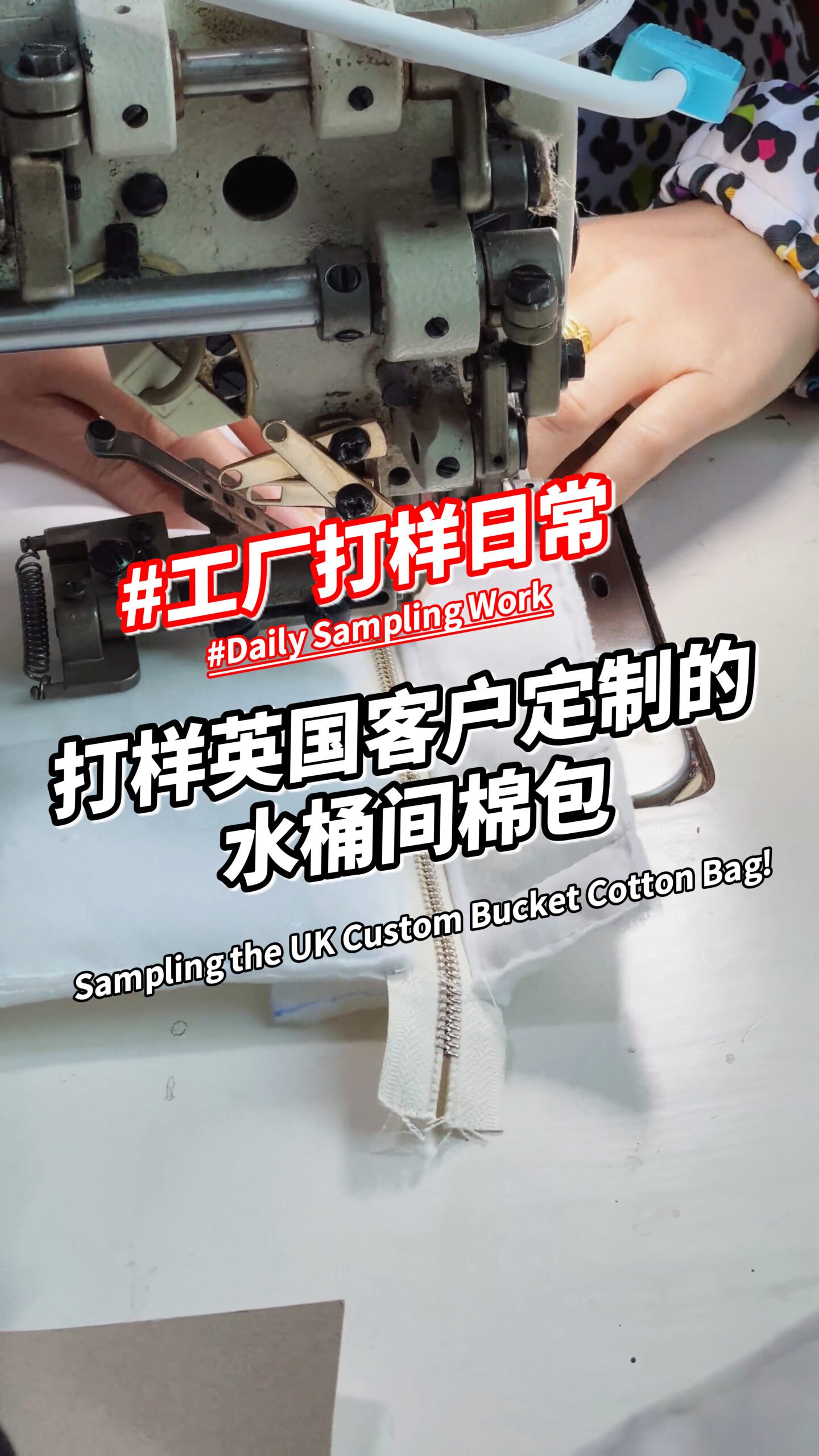
Daily sampling work inside our factory: real footage of a UK custom bucket cotton bag—padded quilting, zipper installation, and key QC checkpoints. Built for USA/UK/EU OEM/ODM sourcing programs that require repeatable quality from sample to bulk.
If you’ve ever received a sample that looked fine in photos but felt “off” in hand, the cause is usually not the fabric—it’s the finish and execution: quilting stability, zipper alignment, stitch balance, and curve control. This article explains what you’re seeing in the clip and, more importantly, how to translate it into repeatable bulk production standards.
What You’re Seeing in the Video (Quick and Accurate Breakdown)
Scene 1 — Padded / Quilted Panel Stitching (Craftsmanship-Sensitive Step)
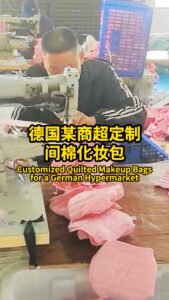
In the footage, the operator guides a padded cotton panel under an industrial machine to stitch quilting lines. Quilting here is not only decorative—it’s functional:
- Locks the padding layer so it won’t shift after repeated use
- Improves shape retention, especially for bucket silhouettes
- Creates a premium hand-feel that customers notice immediately
Common risk if quilting is uncontrolled: uneven puffing, misaligned channels, or “bubbling” areas that make the bag look inconsistent.
Scene 2 — Zipper Installation (High-Risk Step)
You also see zipper sewing along the fabric edge. Zippers are one of the most common complaint points in bag production because small alignment errors create visible defects:
- wavy zipper tape
- uneven top-stitching
- snagging or stuck sliders
- left/right asymmetry
In sampling, we treat zipper installation as a “high-risk checkpoint,” meaning it must be verified before moving forward to final finishing.
Video-to-Process Map: Sampling → Bulk (How We Make It Repeatable)
This table converts what the camera shows into a production workflow that can be repeated in bulk.
| Stage | What Happens | Why It Matters for USA/UK/EU Buyers | Shown in Video |
|---|---|---|---|
| Design confirmation | Size, bucket structure, opening, logo method, target cost | Reduces revision cycles and timeline drift | — |
| Material selection | Cotton, padding, lining, zipper, hardware | Controls hand-feel, durability, and consistency | — |
| Pattern & cutting | Pattern accuracy + cutting tolerance | Determines symmetry and shape stability in bulk | — |
| Quilting / padded stitching | Stitch channels to lock padding | Drives structure + premium tactile feel | ✅ Yes |
| Zipper installation | Align zipper + top-stitch | Impacts function + clean appearance | ✅ Yes |
| Assembly & finishing | Sew body, control curves, trim threads | Finishing quality affects “retail-ready” look | Partial |
| In-process QC | Inspect seams/zipper during production | Prevents defect accumulation | — |
| Final QC & packing | Function checks + packing method | Reduces after-sale issues and transit damage | — |
The 3 Buyer Checks That Prevent Most Quality Disputes
These are simple checks buyers can request during sampling and PPS (pre-production sample). They catch most issues early.
1) Quilted Panel Consistency
- channel spacing is consistent
- no skipped stitches or thread breaks
- padding lies evenly (no bubbles or thin spots)
2) Zipper Performance Test
- slider runs smoothly end-to-end
- zipper tape lies flat (no puckering)
- top-stitch lines are symmetrical
3) Bucket Shape & Structure
- silhouette looks balanced and even
- opening shape stays stable
- seam allowance on curves remains controlled
QC Checklist Table (Copy Into Your Purchase Order)
Use this table as a practical QC appendix in the PO. It creates a shared standard and reduces “expectation mismatch.”
| Inspection Point | What to Check | Common Defects | How We Control It |
|---|---|---|---|
| Quilting / padding lock | even stitch lines, padding stable | shifting fill, uneven puff | standardized stitch density + guided forming |
| Stitching quality | even tension, no skipped stitches | seam breaks, loose seams | in-process checks + reinforcement rules |
| Zipper function | smooth running, flat tape | stuck slider, wavy tape | zipper-foot sewing + functional run test |
| Shape consistency | symmetry & bucket silhouette | warped body, distorted opening | pattern tolerance + shaping/pressing control |
| Lining finish | clean inside, no exposed raw seams | wrinkled lining, messy seams | lining pattern + seam finishing method |
| Cleanliness | no oil stains / chalk residue | dirty panels | workstation SOP + final wipe-down |
| Packaging | correct pack method + carton marks | crushed corners, wrong labels | packing SOP + carton protection |
Tip for buyers: If you want a specific measurement tolerance, add it to the PO (example: width/height ±0.5 cm).
Zipper Options for a Bucket Cotton Bag (Decision Table)
Different zipper types create different “feel” and positioning. Choose based on your retail tier and use case.
| Zipper Type | Best For | Pros | Watch-Outs |
|---|---|---|---|
| Metal zipper | premium / gifting | higher perceived value | needs precise alignment; heavier |
| Nylon coil zipper | travel / everyday | smooth, flexible, widely used | less “premium” look compared to metal |
| Molded resin zipper | durable / outdoor feel | strong and stable | color matching needs confirmation |
If your goal is “premium but practical,” many brands choose nylon coil + upgraded puller, because the smoothness is excellent and the look can still feel elevated.
Compliance Notes for USA / UK / EU (Reference-Style, No Over-Claims)
For USA/UK/EU programs, buyers may request documentation or third-party testing depending on materials, coatings, prints, or target users. Requirements vary by product configuration and claim language.
Common reference points compliance teams use include:
- EU REACH (European Commission overview)
- ECHA REACH guidance
- UK REACH (HSE)
- CPSIA (US CPSC) when children’s products apply
Note: Testing scope is typically defined by the brand/importer’s compliance partner based on materials and claims (e.g., “waterproof,” “eco-friendly,” “for kids”).
Packaging Reliability (Optional for Retail / DTC Programs)
For retail distribution or e-commerce warehouses, packaging damage can become a hidden cost. Many brands reduce risk with:
- internal stuffing/support to maintain shape
- dust bag or polybag + insert card
- reinforced carton corners and correct carton marks
- basic transit simulation approaches (often referenced under ISTA methods)
If your program is warehouse-heavy, let us know early so packaging is developed alongside the sample—not after bulk production starts.
FAQ
How long does sampling take for a custom bucket cotton bag?
Sampling time depends on structure (padding/quilt), zipper type, logo method, and material confirmation. A clear tech pack and confirmed materials reduce revision rounds.
Can bulk match the approved sample?
Bulk consistency depends on locking key specs: materials, stitch density, zipper method, and QC checkpoints. That’s why we recommend attaching the QC table above to the PO.
Do you support USA/UK/EU compliance requests?
We can support documentation preparation and third-party testing requests defined by your compliance team or importer requirements. Final testing scope depends on materials and claims.
Ready to Develop a UK/EU/US Bucket Cotton Bag? Send These 3 Things
If you want a factory partner who can show real sampling operations like quilting and zipper installation (as in the footage), send:
- reference images/video + target size + compartment needs
- target market (USA / UK / EU) + zipper preference
- logo file + expected order quantity
We’ll propose material options, structure recommendations, and a sampling plan with clear QC checkpoints—so your first approved sample is closer to bulk-ready.
Aries Gu is the founder of Q&N. With over 17 years of experience in cosmetic bag OEM/ODM source factory. He focuses on quality control, efficient communication, and on-time delivery for global cosmetic bag projects.