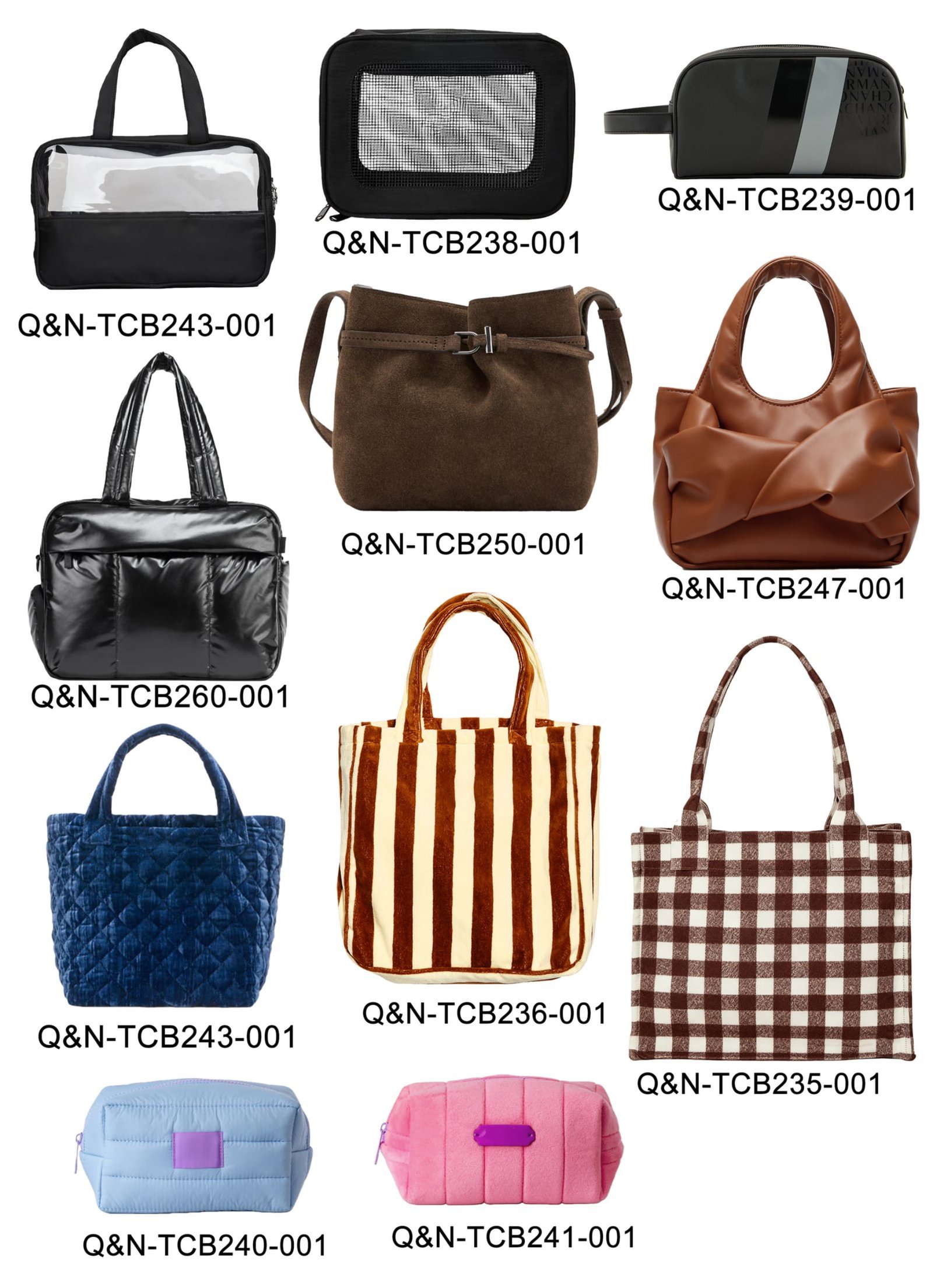
A cosmetic bag is no longer just a functional organizer. In 2026, it sits much closer to the world of fashion accessories, where color does real commercial work: it shapes first impressions, affects perceived value, and can influence clicks, conversions, and repeat purchases. In a beauty market where brands have more ways than ever to capture attention, but consumers are also more selective, color has become one of the fastest signals of positioning. (McKinsey & Company)
So, what colors are most popular for cosmetic bags this year? The short answer is this: soft neutrals, blush pinks, butter yellow, muted greens, and blue tones are leading the conversation. These shades feel calm, modern, photogenic, and easy to style, which is exactly why they are working so well for beauty and travel accessories in 2026. (qnbags)
This article breaks down which shades are trending, why they resonate, and how brands should choose the right palette for different markets and product lines.
The Trend This Year: What Colors Are Leading Cosmetic Bags
Soft neutrals
If one shade defines the soft-luxury side of 2026, it is Cloud Dancer, Pantone’s 2026 Color of the Year. Pantone describes it as a lofty white with a calming influence, while British Vogue notes that the color has already translated into a creamy, refined neutral across 2026 fashion. In bags, white-adjacent tones such as cloud white, beige, and warm sand work because they look premium without feeling loud. They also pair easily with metallic hardware, embroidery, and minimalist branding. (Pantone)
For cosmetic bags, soft neutrals are especially effective because they suggest cleanliness, simplicity, and understated value. They also photograph well for ecommerce, which matters when your product has to win in a thumbnail before it wins in a cart. (British Vogue)
Blush and pastel pinks
Pink remains important in 2026, but the mood has shifted away from overly sugary tones and toward blush, ballet, and pastel pinks. Pantone’s Spring/Summer 2026 London report includes Tickled Pink, while additional 2026 color reporting also highlights pink families such as Dusty Rose and soft rose tones as relevant for the year. (qnbags)
For cosmetic bags, pastel pink works because it still feels feminine and giftable, but in a quieter, more wearable way. It suits beauty kits, travel pouches, and special-edition gifting sets without looking too seasonal or juvenile.
Butter yellow
Butter yellow is one of the clearest crossover shades from fashion into accessories. Pantone’s London Spring/Summer 2026 report includes Pale Banana, and multiple 2026 trend roundups continue to point to butter yellow as a standout shade for the season. (Pantone)
This color works for cosmetic bags because it feels bright but not harsh. It gives a product freshness and optimism without the visual aggression of neon or saturated citrus. For brands that want something trend-led but still commercially friendly, butter yellow is a strong middle ground.
Muted greens
Green is still present in 2026, but the most usable versions are softer and more grounded. Pantone’s seasonal reporting names Shale Green as a muted earthy green, and 2026 bag coverage also points to pistachio sage and olive green as relevant accessory shades. (Pantone)
Muted green performs well in cosmetic bags because it communicates calm, wellness, and a clean aesthetic. It also works across both beauty and travel categories, especially for brands that lean natural, eco-conscious, spa-inspired, or quietly premium.
Blue tones
Blue is one of the strongest families in 2026 because it spans both soft and statement looks. Pantone’s London report includes Dutch Canal, described as an airy blue with a breezy appeal, while 2026 accessory coverage highlights sky blue as a bag trend. Broader 2026 style reporting also points to light and pastel blues as a major seasonal color story. (Pantone)
For cosmetic bags, blue is useful because it can move in two directions. Powder blue and aquamarine feel clean and fresh, while stronger blues add visibility and shelf impact. That makes blue one of the most flexible color families for both mass and premium product lines.
Why These Colors Are Popular
The popularity of these shades is not random. 2026 trend signals consistently point toward colors that feel either calming and quiet or clear and emotionally legible. Pantone’s own language around Cloud Dancer emphasizes calm, reflection, and airy lightness, while its fashion reporting for Spring/Summer 2026 frames color as both functional and emotional. (Pantone)
That fits what beauty brands are dealing with commercially. McKinsey’s 2025 State of Beauty report says the industry is still growing, but consumers are more value-conscious and skeptical of hype. In that environment, accessible colors matter because they help products look trustworthy, giftable, and easy to use in everyday life. (McKinsey & Company)
There is also a visual reason. In 2026 style coverage, the shades receiving repeated attention in accessories are the ones that look clean, soft, or pleasantly distinctive on screen: stark white, sky blue, pistachio sage, olive green, pastel pink, and butter yellow. These are exactly the kinds of colors that perform well on ecommerce listings, social media, and gifting displays. (Who What Wear)
A useful market data point
For B2B buyers, this is not just about taste. McKinsey reports that beauty’s core segments are expected to constitute a $590 billion market by 2030, based on research that included more than 15,000 consumers in 13 markets. The same report says the global beauty market is expected to grow 5% annually through 2030. When the category is this large and this crowded, visual differentiation at the product and packaging level becomes commercially meaningful. (qnbags)
What Each Color Communicates to Buyers
Below is a practical way to think about the leading shades for cosmetic bags this year.
| Color family | What it signals | Best use case | Main watch-out |
|---|---|---|---|
| Soft neutrals | Clean, premium, minimal | Luxury pouches, travel sets, hotel or spa lines | Can feel too plain without texture or trim |
| Blush / pastel pink | Soft, feminine, giftable | Beauty gifting, DTC launches, younger audiences | Too sweet if the tone is overly saturated |
| Butter yellow | Optimistic, cheerful, trend-forward | Spring/summer capsules, social-first launches | May feel seasonal if used too heavily |
| Muted green | Natural, calm, wellness-inspired | Clean beauty, lifestyle, eco-leaning brands | Too gray if fabric finish is dull |
| Blue tones | Fresh, modern, trustworthy | Travel kits, broad-market assortments, men’s or unisex lines | Bold blues can narrow audience appeal |
These signals are not hard rules, but they align closely with how 2026 trend reporting is framing the season: soft white and creamy neutrals for calm luxury, pink for softened femininity, Pale Banana for cheerful uplift, Shale Green for grounded freshness, and Dutch Canal or sky blue for light, modern clarity. (Pantone)
How Brands Should Choose the Right Color
Based on target market
For a younger market, trend-led colors such as butter yellow, blush pink, and powder blue usually create stronger visual pull. They feel more social, more giftable, and easier to style into lifestyle content.
For a premium market, soft neutrals and muted greens are often safer. They communicate restraint and quality, especially when paired with cleaner silhouettes, matte finishes, or elevated hardware.
For a gifting market, pastel pink and soft yellow usually work well because they feel warm and emotionally easy to buy.
Based on product positioning
A travel bag can handle more neutral, blue, or green tones because consumers often associate those shades with utility, order, and cleanliness.
A daily cosmetic pouch can be more playful. Pinks, pale yellow, and light blue work particularly well here because they feel light enough for everyday carry.
A luxury gift set often performs best in cloud white, beige, sand, or a controlled pastel. These colors hold up better visually when paired with premium finishes and branded details.
Based on seasonality
Spring and summer naturally support lighter colors. That is where butter yellow, blush, sage, and powder blue tend to shine.
In autumn and winter, the same product lines can move slightly deeper without leaving the core palette. Sand can become camel, blush can move toward dusty rose, and pale blue can shift into a moodier mid-blue.
The Opportunities for Cosmetic Bag Brands
Trend-aware color does several useful jobs at once. It can improve click-through by making listings feel current. It can also make it easier to build seasonal collections, create multi-color sets, and support beauty gifting or collaboration drops.
For brands selling online, these 2026 shades are especially useful because they look strong in flat lays, shelf shots, and short-form video. For brands selling wholesale, they offer an easy way to refresh an existing silhouette without reengineering the entire bag. (Who What Wear)
The Risks of Following Color Trends Too Closely
The risk is overcommitting.
Trend colors move fast, and 2026 is not dominated by just one shade. The year’s color conversation stretches from soft white and pastel yellow to stronger brights and more expressive blues and greens. That means chasing only the hottest color can make a collection feel dated sooner than expected. (British Vogue)
There is also a practical risk for manufacturers and buyers: the more fashion-sensitive the color, the more important consistency becomes across fabric dyeing, printing, piping, and replenishment. In a market already facing cost pressure and supply-chain complexity, that is not a small issue. (McKinsey & Company)
The Best Practical Strategy
The smartest strategy for most cosmetic bag brands is simple:
- Lead with 1–2 safe core colors, such as soft neutrals or blush pink.
- Add 1–2 trend colors, such as butter yellow, muted green, or blue, to create freshness.
- Use limited editions or capsule collections to test higher-risk colors.
- Start with small-batch orders, then scale the shades that actually convert.
This approach protects margin while still giving your assortment enough newness to stay commercially relevant. It also fits the broader beauty environment McKinsey describes: brands need to refresh commercial execution while staying disciplined about value and consumer demand. (McKinsey & Company)
Final Verdict: Which Colors Are Safest and Which Are Best for Trend Appeal
If you want the safest answer to what colors are most popular for cosmetic bags this year, start with soft neutrals and blush pink. They are the easiest to commercialize, the easiest to photograph, and the least likely to go out of style quickly. (Pantone)
If you want stronger trend appeal, look at butter yellow, blue tones, and muted greens. These shades bring more seasonal energy and more social-media visibility, while still staying wearable enough for beauty and travel accessories. (Pantone)
For most brands, the best move is not choosing between safe and trendy. It is building both into the line. A commercially balanced range usually sells better than a collection built around one fashionable color story.
FAQ
What is the best-selling cosmetic bag color in 2026?
There is no single universal winner across every channel, but soft neutrals and blush pink are the safest commercial bets, while butter yellow, muted green, and blue tones offer stronger trend visibility in 2026. (Pantone)
Are neutral cosmetic bags still in style this year?
Yes. In fact, neutral tones are unusually strong in 2026 because Pantone’s Color of the Year is Cloud Dancer, a soft white, and editorial coverage continues to highlight creamy whites and stark white bags as relevant accessory directions. (Pantone)
Is butter yellow just a seasonal trend?
It is strongest for spring and summer, but it is more wearable than many short-lived brights. Pantone’s Pale Banana and broader 2026 fashion coverage suggest it has enough softness to work beyond a single micro-trend, especially in accessories. (qnbags)
Which cosmetic bag color works best for a premium brand?
Soft white, warm beige, sand, and muted green are usually the strongest options for premium positioning because they feel calm, minimal, and elevated. Texture and finish matter just as much as the color itself. (qnbags)
Should brands launch many colors or just a few?
For most brands, fewer is better at first. Start with core colors that can scale, then test trend colors in smaller quantities. That reduces risk while still letting the collection feel current. (qnbags)
In the end, the best cosmetic bag color is not simply the one that is trending most loudly. It is the one that fits your customer, your price point, your product positioning, and your replenishment strategy. If you are developing a 2026 line for retail or private label, build around safe base colors and let trend colors do the attention-grabbing work around the edges.
Aries Gu is the founder of Q&N. With over 17 years of experience in cosmetic bag OEM/ODM source factory. He focuses on quality control, efficient communication, and on-time delivery for global cosmetic bag projects.