Meta Title: TPU vs PVC & Recycled Nylon vs Virgin Nylon: Future-Proof Materials for Cosmetic Bags
Meta Description: Stop relying on PVC and virgin nylon. Learn how TPU and recycled nylon upgrade performance, reduce material risk, and strengthen your cosmetic bag sustainability story—without sacrificing quality.
Beyond PVC & Virgin Nylon: Why TPU and Recycled Nylon Are the Future of Cosmetic Bags
Still relying on PVC clear film or generic virgin nylon in your cosmetic bag collection? You might be losing trust (and repeat purchases) without realizing it. In 2026, buyers judge materials fast—by smell, touch, and how the product ages. That’s why TPU and recycled nylon are becoming the go-to choices for brands that want premium performance with a cleaner, more credible story.
Want samples or a fast quotation? Tell us your target size, logo method, and order quantity.
View Custom Clear Cosmetic Bags Request a Quote
Table of Contents
- The Material Shift Brands Can’t Ignore
- PVC: The Cheap Material With Expensive Consequences
- TPU Explained: The Premium Upgrade for Clear Cosmetic Bags
- Recycled Nylon Explained: Same Feel, Smarter Story
- The Side-by-Side Buyer Pitch (What to Say, What to Show)
- Design Ideas That Make TPU & Recycled Nylon Look Expensive
- Cost, MOQ, and Pricing Strategy
- Common Mistakes to Avoid When Switching Materials
- A Simple Material Decision Framework
- Conclusion
- FAQs
The Material Shift Brands Can’t Ignore
Materials are like the “voice” of your product. Even when your logo isn’t visible, the material speaks. PVC often signals “cheap and disposable.” TPU feels “soft, modern, premium.” Virgin nylon may feel “classic,” but recycled nylon adds “intentional and responsible.” And right now, buyers are rewarding brands that feel intentional.
Why “Business as Usual” Materials Are Suddenly Risky
- Consumer perception: “toxic plastic” and “new oil-based fabric” are emotional triggers—especially for beauty and wellness audiences.
- Retail pressure: more buyers want proof: certifications, traceability, and compliance testing.
What Customers Notice First (Before They Read Your Label)
In under five seconds, customers squeeze, sniff, and scan a bag for clarity and finish. If it smells harsh, feels stiff, or looks like it will yellow, your brand looks less premium—instantly.
PVC: The Cheap Material With Expensive Consequences
PVC is popular because it’s clear, waterproof, and inexpensive. But it often carries three brand-killers: odor, yellowing, and cold-weather cracking. Even if your product is compliant, the customer experience can still feel “chemical” or “cheap.”
Odor, Yellowing, Cracking: The 3 Complaints That Kill Repeat Purchases
Odor creates distrust. Yellowing creates disappointment. Cracking creates returns and negative reviews. And here’s the worst part: customers may never explain the real reason they didn’t repurchase. They just move on.
The Winter Test: When Clear Bags Fail the Fastest
If your customers travel—or you sell into colder regions—PVC-style stiffness becomes a problem. Fold lines and corners are the first places to crack. That’s not just a defect. It’s a story customers tell.
The Trust Problem: “Toxic Plastic” Is a Marketing Landmine
Many shoppers don’t know polymer chemistry, but they recognize the word PVC. For some audiences, it’s shorthand for “not clean” and “not eco-friendly.” If you position as premium, clean beauty, or sustainability-forward, PVC can quietly undermine your message.
Product idea: Add a “PVC-free clear” badge for TPU collections (with documentation ready if retailers ask).
Explore PVC-free Clear Bag Options →
TPU Explained: The Premium Upgrade for Clear Cosmetic Bags
TPU (Thermoplastic Polyurethane) keeps the visual benefits of clear bags—visibility, water resistance, easy wiping—while improving softness, flexibility, and premium handfeel. It’s the material that makes customers say: “Oh, this feels expensive.”
What TPU Is (In Plain English)
Think of TPU as a high-performance clear film family that can be engineered for elasticity and resilience. For cosmetic bags, that means a “clear” product that feels softer and holds up better in real travel conditions.
TPU vs PVC: Performance Differences That Matter in Real Life
Clarity & Anti-Yellowing: The “Shelf Life” Advantage
With the right TPU grade, clear panels can stay visually cleaner for longer. That means your product looks closer to your listing images over time—less “why doesn’t it look like the photo?” frustration.
Flexibility & Cold Resistance: Less Cracking, Less Returns
TPU tends to remain flexible in lower temperatures. Corners, folds, and stitched edges are less likely to become brittle—so you reduce cracking complaints and returns.
How to Talk About TPU Without Risky Overclaims
Instead of loud claims, sell measurable benefits: soft-touch feel, low-odor experience, flexibility, and PVC-free positioning. If you want to mention “non-toxic” or “food grade,” only do it when you have the specific grade documentation and test reports for your market.
TPU vs PVC: Quick Comparison Table
| Feature | Traditional PVC | Eco TPU Option | Why It Matters |
|---|---|---|---|
| Long-term appearance | May yellow over time | Often maintains clearer look | Better shelf life & fewer complaints |
| Cold-weather handling | Can stiffen and crack | More flexible in cold | Less cracking, fewer returns |
| Handfeel | Can feel hard/plasticky | Softer, premium feel | Higher perceived value |
| Positioning | Often seen as “cheap plastic” | Modern PVC-free upgrade | Stronger brand story |
CTA: Want TPU samples with different thickness options?
Learn More About TPU Material Get Samples
Recycled Nylon Explained: Same Feel, Smarter Story
Nylon is loved because it’s strong, silky, water-resistant, and easy to clean. The performance isn’t the issue—the issue is the story of virgin nylon: oil-based inputs and a growing PR sensitivity around “new plastic.” Recycled nylon lets you keep the luxury feel while upgrading credibility.
Is Recycled Nylon Really as Good as Virgin Nylon?
High-quality recycled nylon is often regenerated at the polymer level, meaning the fiber performance can match virgin nylon when sourced correctly. So buyers get the same smooth look and durability—without the same “made from new oil” narrative.
The Molecular Reality: It’s Not “Second-Hand Fabric”
“Recycled equals rough” is an old myth. Modern recycled nylon supply chains can produce consistent, premium-grade material suitable for beauty brands and retailers.
The Luxury Factor: The “Cool Touch” Test
If your recycled nylon passes the cool-touch feel and tight weave check, buyers stop thinking “eco compromise” and start thinking “premium upgrade.”
Certifications That Build Buyer Confidence
If you sell recycled nylon, proof matters. Use certifications (like GRS where applicable), traceability documentation, and market-specific compliance testing. These assets don’t just satisfy retailers—they make your sales story stronger.
CTA: Explore recycled nylon cosmetic bag designs (stock colors available for faster launches).
View Recycled Nylon Products Learn About Recycled Nylon
The Side-by-Side Buyer Pitch (What to Say, What to Show)
Buyers don’t fall in love with a material through long paragraphs. They fall in love through comparisons. If you want faster approvals and fewer objections, build a mini “proof kit.”
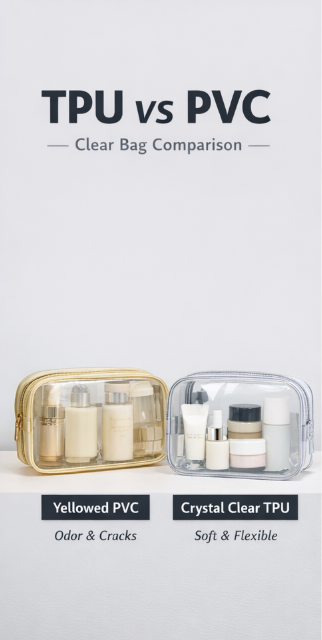
Visual Proof: The Studio Comparison Shot That Sells in 3 Seconds
- TPU vs PVC: an older clear PVC sample showing yellowing vs a crystal-clear, soft TPU bag.
- Recycled Nylon: a sleek black recycled nylon bag with a minimal “Recycled” hangtag + close-up weave macro.
Touch Proof: The Blindfold Test Your Sales Team Can Use
Let buyers touch virgin nylon and recycled nylon without telling them which is which. When they can’t reliably guess, the conversation flips from “quality concern” to “story opportunity.”
Design Ideas That Make TPU & Recycled Nylon Look Expensive
Switching materials is step one. Step two is making the whole bag look intentional—so the upgraded material feels worth it.
Clear TPU Collections That Don’t Look Like Promotional PVC
- Edge finishing: clean binding, refined piping, or neat welding where suitable.
- Hardware upgrade: matte metal zipper, custom pulls, smooth sliders.
- Contrast panels: clear TPU + recycled nylon trims for a “designed” look.
- Minimal branding: small woven label or subtle patch beats loud prints.
Recycled Nylon Collections That Signal Modern Minimal Luxury
Recycled nylon shines in structured vanity cases, slim pouches, and travel organizers with clean lines. Think of it like architecture—strong shapes, quiet details, and materials that feel deliberate.
Hardware, Labels, and Lining Choices That Complete the Story
- Water-resistant wipe-clean lining
- Recycled webbing/lining for story consistency
- Reinforced stitching at stress points
- One-sentence hangtag that explains the material benefit
Cost, MOQ, and Pricing Strategy
Yes, TPU and certified recycled nylon can cost more than basic PVC and virgin nylon. But your goal isn’t to win on cost—it’s to win on value and trust.
How to Defend Higher Material Cost With Higher Perceived Value
- Less harsh odor perception
- Better flexibility and long-term look
- Premium handfeel customers notice immediately
- A sustainability narrative that reduces brand risk
Faster Launch Options: Stock Colors, Smart SKUs
- Start with core colors (black, ivory, beige, navy)
- Use TPU + recycled nylon hybrid designs
- Build one hero silhouette in 2–3 sizes
Common Mistakes to Avoid When Switching Materials
The Wrong Thickness, The Wrong Finish, The Wrong Zipper
TPU thickness affects softness and structure. Too thin feels flimsy; too thick can feel stiff. And clear materials show every construction flaw—so edge finishing matters. For recycled nylon, weak hardware or cheap lining can destroy the premium message.
Greenwashing Traps: Claims You Shouldn’t Print
Avoid absolute claims unless you can prove them for the specific material grade and market rules. Safer phrasing:
- “Made with recycled nylon (certified)”
- “PVC-free clear material option”
- “Designed for durability and long-term use”
A Simple Material Decision Framework for Your Next Collection
If You Sell Clear Bags…
Choose TPU when you want a softer handfeel, stronger premium perception, and better flexibility—especially for travel use.
If You Sell Premium Nylon Bags…
Choose recycled nylon when you want the same durability and luxury touch, plus a modern sustainability story that buyers can defend internally.
Need help choosing the right material for your SKU? Send your target price, structure, and selling channel.
Read the Material Selection Guide Talk to a Specialist
Conclusion: The Future Is Clear, Soft, and Credible
Switching from PVC to TPU and from virgin to recycled nylon isn’t about chasing a trend. It’s about improving customer experience, reducing brand risk, and creating a collection that looks premium and feels responsible. The best material isn’t the cheapest one—it’s the one that still looks good, feels good, and sounds believable after months of use.
FAQs
1) Is TPU always “more eco-friendly” than PVC?
TPU is often positioned as a premium PVC-free option with better flexibility and a cleaner customer experience. “Eco-friendly” depends on the specific TPU grade, additives, and end-of-life pathways—so use verified documentation and focus on measurable benefits.
2) Will TPU stay clear longer than PVC?
Many TPU options maintain a cleaner look over time compared to common PVC constructions. Real performance depends on material grade, thickness, storage, UV exposure, and product design—sampling is recommended.
3) Does recycled nylon feel cheaper than virgin nylon?
Not when it’s premium-grade and properly finished. High-quality recycled nylon can match the smooth, cool-touch handfeel and durability buyers expect.
4) What certification should I use for recycled nylon?
GRS is widely used for verifying recycled content and supply chain controls. Depending on your market, you may also need chemical compliance testing and traceability documents.
5) How do I justify higher pricing for TPU or recycled nylon bags?
Sell outcomes, not chemistry: premium feel, better flexibility, fewer odor complaints, and a sustainability story that reduces brand risk. Pair the material upgrade with premium details like hardware and clean finishing so the price feels natural.
Ready to Upgrade Your Next Collection?
Send your target size, material preference (TPU / recycled nylon), logo method, and quantity. We’ll recommend the best construction and provide a quotation + sample plan.
Contact Us Material Selection Guide
Aries Gu is the founder of Q&N. With over 17 years of experience in cosmetic bag OEM/ODM source factory. He focuses on quality control, efficient communication, and on-time delivery for global cosmetic bag projects.