When B2B buyers source custom cosmetic bags, the primary goal is to create a physical product that accurately reflects their brand’s identity and retail value. A flawless bag design can be entirely ruined by a misaligned, peeling, or poorly chosen logo application. The right branding technique not only elevates the perceived value of the product but also dictates manufacturing costs, tooling fees, and production lead times.
As a direct manufacturer with over 15 years of OEM/ODM experience, QNBags understands that cosmetic brand founders and procurement managers need highly technical advice, not superficial consumer tips. Whether you require durable screen printing for a TSA-approved travel pouch or luxury blind embossing for a vegan leather beauty case, this comprehensive guide will break down the structural realities of logo application on the factory floor.
1. Why Logo Application Defines Your Cosmetic Bag Brand Identity
For boutique owners and retail buyers, the logo is the focal point of the product. Making the right manufacturing choice requires understanding the intersection of materials and machinery.
1.1 The Importance of Perceived Value in B2B Retail
Consumers judge the quality of the cosmetics inside by the packaging outside. A high-end skincare kit packaged in a bag with a fading, cheap logo will suffer lower retail conversions. Investing in premium logo application techniques—like custom metal plates or deep embossing—significantly increases the retail markup potential for wholesale cosmetic bags.
1.2 Aligning Logo Technique with Base Materials
There is no “one size fits all” in factory production. A technique that looks incredible on thick canvas will fail miserably on clear PVC. B2B buyers must match the logo application to the substrate. For instance, high-heat embossing will melt thin nylon, whereas embroidery on thin polyester can cause severe puckering.
1.3 How Factory Tooling Costs Impact Bulk Procurement
Every logo application requires unique factory tooling. Screen printing requires mesh screens; embossing requires CNC-machined brass molds; embroidery requires digitized punch-tape files. Understanding these upfront tooling costs helps procurement managers calculate the true unit cost of their custom makeup bags.
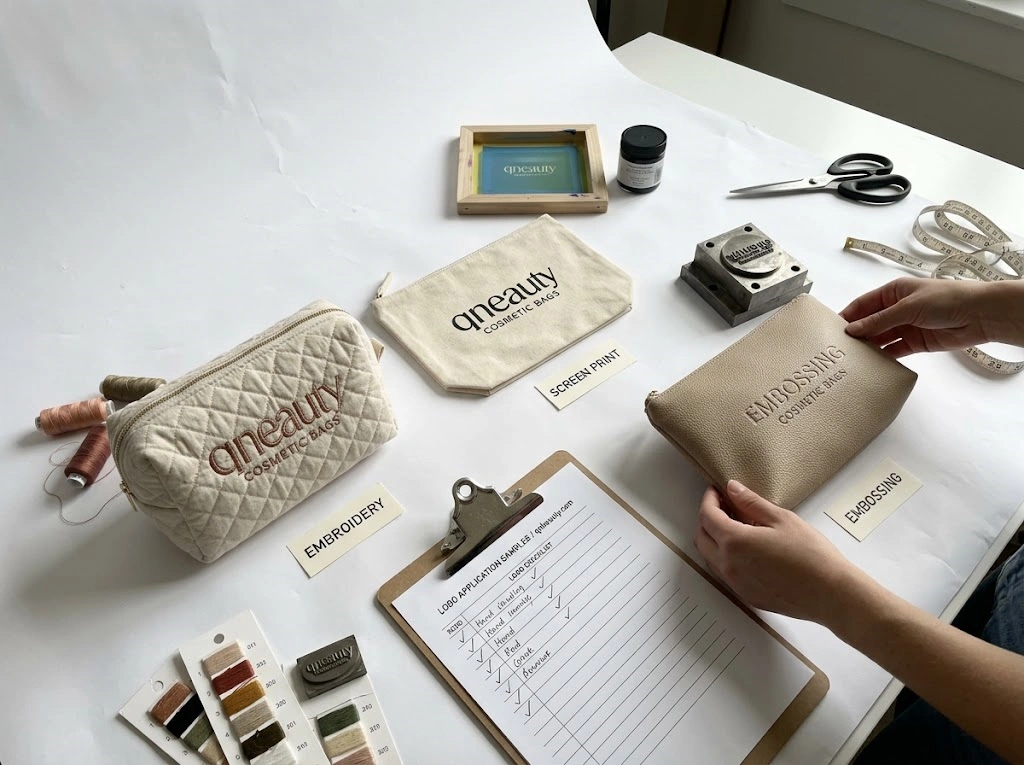
2. Screen Printing: The High-Contrast, Cost-Effective Solution
Silk-screen printing is the most common and cost-effective branding method in bag manufacturing. It offers vibrant colors and precise detailing, making it ideal for large bulk orders and promotional “Gift With Purchase” (GWP) items.
2.1 Ideal Fabrics: Nylon, Canvas, and Clear TPU
Screen printing works best on flat, relatively smooth surfaces. It adheres beautifully to 210D or 420D nylon, flat cotton canvas, and transparent TPU or PVC materials. It allows for exact color matching using the Pantone Color Matching System to ensure your brand guidelines are strictly followed.
2.2 The Factory Process: Silk Screens and Curing Ovens
On the factory floor, each color in your logo requires a separate mesh screen. The ink is pushed through the stencil using a squeegee directly onto the pre-cut fabric panels (before the bag is sewn together). The panels are then passed through industrial curing ovens to bake the ink into the fabric fibers, ensuring long-lasting durability.
[Insert Image: A factory worker carefully applying a white silk-screen printed logo onto pre-cut navy blue nylon fabric panels.]
2.3 Limitations: Scratch Resistance and Surface Texture
While versatile, screen printing struggles on highly textured materials like heavy corduroy, thick velvet, or heavily grained faux leather. The ink can settle unevenly into the grooves. Additionally, on highly flexible PVC materials, improper ink curing can lead to cracking and peeling over time.
3. Embroidery: Premium Texture and Three-Dimensional Branding
For brands targeting the luxury or boutique market, computerized embroidery offers a tactile, three-dimensional logo that commands a higher retail price.
3.1 Best Materials: Cotton, Velvet, and Heavy Canvas
Embroidery relies on structural integrity. It performs exceptionally well on thicker materials like 16oz cotton canvas, plush velvet, and quilted fabrics. We frequently use threads certified by organizations like Textile Exchange to support eco-conscious B2B buyers seeking sustainable branding.
3.2 Thread Count and Computerized Needle Precision
The cost of an embroidered logo is calculated by the stitch count. A dense, fully filled logo will require thousands of stitches, taking more time on our multi-head CNC embroidery machines. We advise B2B clients to simplify complex gradients in their logos, as embroidery works best with solid, distinct color blocks.
3.3 The Waterproofing Dilemma: How We Prevent Leaks
A critical factory insight: embroidery needles punch thousands of tiny holes into the fabric. If you are sourcing a waterproof travel toiletry bag, those holes will leak. To solve this, our production line applies an interior heat-sealed waterproof tape over the back of the embroidery, ensuring the waterproof toiletry bag remains fully functional.
4. Embossing and Debossing: Subtle Luxury for Leather Bags
For men’s Dopp kits and premium women’s vegan leather train cases, embossing (raised) or debossing (sunken) provides an understated, highly professional aesthetic.
4.1 Heat Stamping on PU and Genuine Leather
This technique uses heavy hydraulic pressure and high heat to permanently brand the logo into the material. It works flawlessly on genuine full-grain leather and high-quality, thick PU (polyurethane) vegan leather. It does not work on thin nylons or standard cotton, as they lack the memory to hold the impression.
4.2 Blind Embossing vs. Gold/Silver Foil Stamping
- Blind Embossing: Stamping the logo without any color, relying purely on the shadow and texture for visibility. This is highly requested for minimalist, modern skincare brands.
- Foil Stamping: Adding a layer of metallic gold, silver, or rose gold foil between the heated mold and the leather. This creates a striking, high-contrast luxury finish but requires careful temperature calibration to prevent the foil from flaking.
[Insert Image: A close-up of a heavy brass CNC-machined mold pressing a custom logo into a piece of premium PU vegan leather, utilizing gold foil.]
4.3 Custom Brass Molds and Setup Times
To achieve crisp lines, the factory must mill a custom brass or copper mold for your specific logo. While this incurs a one-time tooling fee, the mold can be reused for years across multiple orders, making it highly cost-effective for long-term manufacturing partnerships.
5. Advanced B2B Logo Options: Hardware and Patches
Sometimes, printing or stamping directly onto the bag isn’t enough. Applying secondary logo assets can dramatically elevate the product’s premium feel.
5.1 Woven Labels and Rubber PVC Patches
Woven labels stitched into the side seam offer a clean, boutique look at a very low unit cost. 3D Rubber PVC patches are highly durable, waterproof, and visually striking, making them ideal for sporty, outdoor-focused cosmetic or wash bags.
5.2 Custom Metal Plates and Electroplating Standards
A polished alloy metal plate engraved with your brand name screams luxury. However, hardware in a bathroom environment faces high humidity. We ensure all custom metal plates undergo strict salt-spray testing and meet SGS environmental and anti-rust electroplating standards.
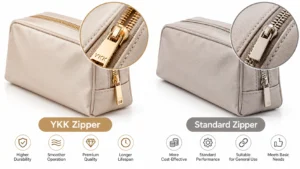
5.3 Molded Alloy Zipper Pullers (YKK Integration)
The zipper is the most frequently interacted-with component of the bag. We regularly partner with top-tier suppliers like YKK Zippers to provide flawlessly smooth tracks, pairing them with custom-molded alloy pullers shaped precisely like your brand’s logo or monogram.
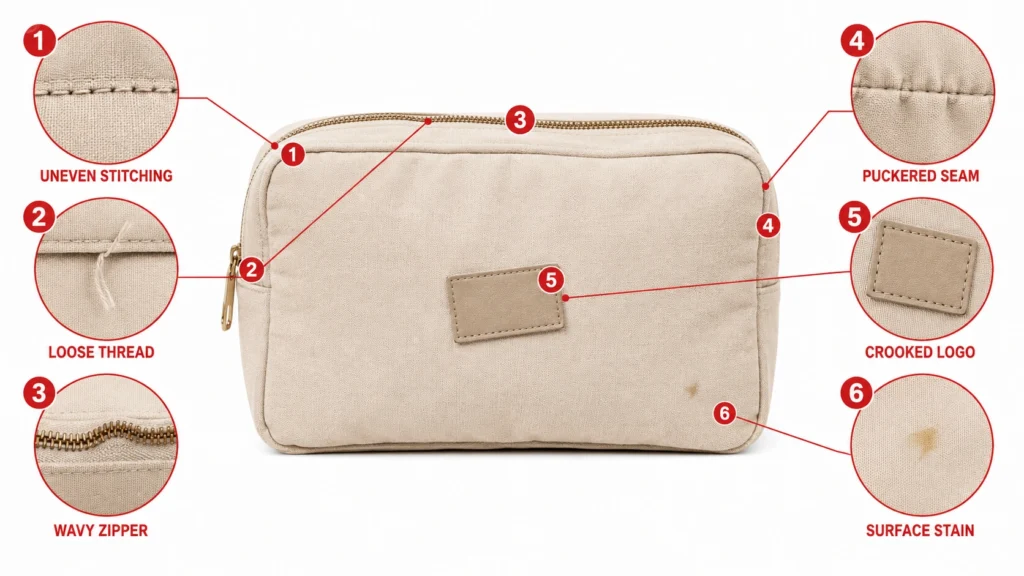
6. Quality Control (QC) Standards for Custom Logos
A factory is only as reliable as its Quality Control (QC) department. At QNBags, our strict inline inspection processes guarantee that your branding is perfectly executed before it leaves our facility.
6.1 Alignment and Positioning Checks on the Production Line
Crooked logos are the number one cause of retail returns. Before sewing the bag together, our IPQC (In-Process Quality Control) team uses acrylic alignment templates to ensure every screen print, embroidered crest, and metal plate is perfectly centered down to the millimeter.
6.2 The “Tape Test” for Printed Logo Adhesion
To ensure screen-printed and foil-stamped logos will not peel off in the hands of the consumer, we conduct standard 3M Tape Tests on the factory floor. We aggressively apply and rip off high-adhesion tape over the logo; if any ink flakes off, the curing temperature is immediately recalibrated.
[Insert Image: A QC inspector performing the 3M tape adhesion test on a freshly screen-printed nylon cosmetic bag panel.]
6.3 Thread Trimming and Final Cleanliness Inspections
For embroidered logos, stray threads ruin the premium presentation. Our final QC stage involves dedicated workers using precision scissors and heat guns to trim and seal every loose backing thread. The bags are then fully wiped down before polybag packing.
7. Navigating Tooling Costs and Minimum Order Quantities (MOQ)
For startup brands and boutique buyers, managing upfront costs is critical. Here is how QNBags structures our manufacturing to support your brand’s growth.
7.1 How Logo Complexity Influences Minimum Orders
Custom metal plates and molded zipper pullers require heavy alloy casting molds, which typically force hardware suppliers to demand high MOQs (often 3,000+ pieces). Conversely, screen printing and woven labels carry very low tooling fees, making them highly accessible for initial product testing.
7.2 Our Agile 500 MOQ Solution for Startup Brands
We believe high MOQs shouldn’t stifle innovation. By maintaining an agile production line and deep relationships with hardware vendors, QNBags proudly supports comprehensive OEM/ODM customization with a highly accessible MOQ of just 500 pieces. This allows you to test the market with premium debossed leather or embroidered canvas bags without massive inventory risk.
7.3 Requesting Your Pre-Production Sample (PPS)
Never commit to a bulk order without seeing the logo in person. Our dedicated sample room will create a physical Pre-Production Sample (PPS) within 7 to 10 days. You can physically test the zipper, inspect the embroidery density, and verify the Pantone color matching before full production begins.
Ready to bring your brand to life with flawless factory execution? Whether you need crisp silk-screen printing on travel pouches or luxury debossing on vegan leather cases, our 15+ years of factory expertise ensure your logos are perfect every time. Contact our B2B sourcing experts today to discuss your tech pack, request material swatches, and secure a quotation for your 500 MOQ custom order.
Aries Gu is the founder of Q&N. With over 17 years of experience in cosmetic bag OEM/ODM source factory. He focuses on quality control, efficient communication, and on-time delivery for global cosmetic bag projects.