Cosmetics become messy faster than most people expect. Lip products multiply, half-used compacts hide under newer launches, travel minis spill into drawers, and the makeup bag that once looked tidy slowly turns into a catch-all for products you barely use. That is why learning how to organise cosmetics is not just a “tidy vanity” problem. It is a time, hygiene, and routine-efficiency problem. The right system helps you find products faster, use what you already own, avoid waste, and keep daily routines from feeling chaotic.
The topic matters more than ever because beauty remains a strong category and people are carrying, storing, and rotating more products across home, handbags, and travel. Circana reported that the U.S. prestige beauty market grew to $16 billion in the first half of 2025, while mass beauty sales at mass merchants reached $34.6 billion. Grand View Research estimated the global cosmetic packaging market at $32.67 billion in 2023 and projected it to reach $44.28 billion by 2030. In other words, people are buying, moving, and storing more beauty products than ever. In this guide, you will learn how to organise cosmetics at home, in a makeup bag, and for travel, how to declutter intelligently, what storage tools actually help, and how to avoid the mistakes that make cosmetic organisation harder instead of easier.
Table of Contents
- Why Organising Cosmetics Matters
- Start by Sorting Your Cosmetics
- Best Ways to Organise Cosmetics at Home
- Storage Tools and Systems That Actually Help
- How to Organise Cosmetics in a Makeup Bag
- How to Organise Cosmetics for Travel
- Common Cosmetic Organisation Mistakes
- Explore Cosmetic Bags and Organisers at QN Bags
- Conclusion and Next Step
- FAQ
1. Why Organising Cosmetics Matters
Why cosmetics become messy so easily
Cosmetics are difficult to organise because they combine three challenging traits at once. They are small, varied in shape, and easy to accumulate. One product category can contain tubes, pans, sticks, palettes, pumps, pencils, compacts, and bottles, all with different storage needs. Add seasonal buying, gift sets, samples, and travel minis, and even a moderate collection becomes visually noisy very quickly.
That is why cluttered beauty storage is common even among people who are otherwise organised. Editorial beauty and organisation experts repeatedly recommend grouping similar items first because product variety, not only product volume, is what makes cosmetics messy. Byrdie’s organisation guidance specifically highlights category grouping and drawer organisers as effective ways to stop products from rolling, stacking badly, or disappearing from sight.
Why organisation improves speed and routine efficiency
Organised cosmetics save time. You know what you have, where it is, and how to reach it. That reduces duplicate purchases, rushed searching, and “I know I own this somewhere” frustration. It also helps you use products before they dry out, expire, or become irrelevant to your routine. A good organisation system does not merely look tidy. It improves the speed and quality of how you get ready.
Why category-based storage works better than random stacking
Simple piling may feel convenient at first, but it quickly creates hidden products, broken powders, and wasted space. Category-based organisation works better because it matches how people actually think. Lips with lips. Base with base. Brushes with brushes. When storage mirrors usage logic, retrieval becomes much easier. It is the same reason professional organisers often begin by pulling everything out and grouping like with like before they suggest bins, drawers, or labels.
| Storage Approach | What Happens Over Time | Practical Result |
|---|---|---|
| Random stacking | Items get buried, mixed, and damaged | Slower routines and more clutter |
| Category grouping | Products stay visible and easier to track | Faster use and cleaner storage |
| Category + frequency grouping | Daily items stay accessible, low-use items stay controlled | Best long-term system for most users |
Suggested image alt: “Messy cosmetics collection beside a neatly organised beauty setup sorted by category”
2. Start by Sorting Your Cosmetics
How to sort cosmetics by function
The most effective first step is functional sorting. Separate base products, eye products, lip products, brushes and tools, skincare-adjacent items, and travel minis. This creates a visual map of what you own. It also reveals duplication quickly. People are often surprised by how many similar lip colors, half-used concealers, or mini mascaras they have once everything is grouped properly.
Celebrity makeup artists and organisers often recommend this first-step inventory logic because it lets you build the system around the collection rather than buying storage first and hoping it fits later. That order matters. Storage should follow product reality, not the other way around.
How to separate daily-use products from low-frequency items
Once you sort by function, sort again by frequency. Daily-use cosmetics should live in the easiest-to-reach area. Weekly or occasional products can go one level back. Seasonal, special-event, or experimental items can be stored in secondary drawers, boxes, or back-stock pouches. This “front zone / back zone” system is what keeps a collection functional instead of simply tidy.
What to do with expired or unused products
Decluttering is not only about preference. It is also about safety and performance. FDA guidance notes that cosmetics do not have to carry expiration dates by law, but products can go bad if stored improperly, especially in warm or moist conditions. FDA also explains that eye-area cosmetics have more limited shelf life and notes that some experts recommend replacing mascara about three months after purchase because of microbial exposure. Products that smell off, change texture, separate strangely, or dry out should be removed. Unused but still appropriate items can sometimes be set aside for intentional rotation, but low-trust products should be discarded.
Case Study: One of the clearest turning points in beauty organisation happens when users move from “store everything” to “store only what still serves a purpose.” FDA’s shelf-life guidance makes that shift more concrete: the issue is not just tidiness but also product quality and potential contamination risk.
Expert tip: Before buying a single organiser, empty everything onto one surface and sort by category, then by usage frequency, then by product condition. That sequence produces better systems than buying containers first.
Suggested image alt: “Cosmetics sorted into categories including base lips eyes tools and declutter pile”
3. Best Ways to Organise Cosmetics at Home
When drawers, boxes, and countertop storage each make sense
Drawers work best when you want a clean visual surface and already have enough built-in space. Countertop organisers are best when daily products need fast access and attractive display. Boxes and lidded bins are useful for backups, refills, special-event items, or low-frequency products that should stay out of the main routine. The best home setup usually combines at least two of these rather than relying on just one.
Byrdie’s organiser recommendations reflect this layered logic. Drawer organisers are praised for grouping products neatly and making use of vertical space, while countertop organisers are often favored for everyday visibility.
How to stay tidy in a small space
Small spaces demand stronger editing, not just smaller containers. Limit the countertop to daily products. Store duplicates and low-frequency products elsewhere. Use vertical storage where possible. Choose organisers that fit the actual furniture dimensions instead of forcing oversized acrylic boxes onto already crowded surfaces. In small bathrooms or bedrooms, the best organisation system is often the one that hides more than it displays.
How to make products easier to see and reach
Visibility is one of the most underrated organising principles. Cosmetics that cannot be seen tend to be forgotten, duplicated, or left to expire. That is why clear dividers, open-top compartments, shallow drawers, and upright product placement work so well. Good organisation is not about packing the most items into the least space. It is about making the right items obvious at the right moment.
| Home Storage Option | Best For | Main Watch-Out |
|---|---|---|
| Drawer organisers | Clean visual surfaces, category separation | Can hide items if drawers are too deep |
| Countertop storage | Fast access to daily products | Can look cluttered if not edited |
| Lidded boxes or bins | Back-stock, seasonal, special-use items | Easy to ignore if not labeled |
Suggested image alt: “Home cosmetic organisation using drawers clear bins and a small countertop organizer”
4. Storage Tools and Systems That Actually Help
Which organisers solve real problems, not just add more stuff
The best organisers are the ones that solve a specific friction point. Drawer trays stop products from rolling and mixing. Clear acrylic units help with visibility. Rotating organisers help in small spaces where depth is limited. Brush cups, brush rolls, and sleeves protect tool hygiene better than throwing brushes loose into a box. Good systems reduce chaos. Bad systems simply add another layer around the chaos.
When labels, dividers, and pouches are worth using
Labels are most useful when storage is not transparent or when multiple people share the same area. Dividers are useful when product categories are visually similar or when the drawer is wide enough for things to drift. Small pouches work especially well for dividing travel, handbag, and back-stock cosmetics. They are simple, flexible, and often better than rigid inserts for low-frequency items.
How to build a simple system that you will actually maintain
A maintainable system usually has three zones: daily use, occasional use, and reserve stock. Daily products stay closest. Occasional products stay grouped but slightly farther back. Reserve items stay boxed or binned away from the routine. This is easier to keep up than ultra-detailed micro-categories. The goal is not perfect aesthetic control. The goal is repeatable order.
A practical 3-zone system
- Zone 1: Daily face, eye, and lip products you reach for most
- Zone 2: Weekly, seasonal, or event-based items
- Zone 3: Backups, unopened products, and rarely used extras
Case Study: In makeup-organizer roundups, experts repeatedly note that the “best” organiser depends on collection size and usage habits, not just aesthetics. That aligns with celebrity makeup artist guidance reported by Byrdie: first determine how much you own and what types of products you gravitate toward, then choose the storage size and features.
Suggested image alt: “Cosmetic organization tools including drawer dividers clear organisers labels and pouches”
5. How to Organise Cosmetics in a Makeup Bag
What should stay in your daily makeup bag
A daily makeup bag should hold what you are realistically likely to use outside the home. That usually means a lip product, powder or blotting sheets, concealer, a mirror, and one or two practical tools like cotton swabs or a hair tie. It should not become a portable version of your entire vanity. Smaller, edited makeup bags are easier to keep clean and much faster to use.
How to stop lip products, powders, and liquids from becoming one pile
The easiest fix is to separate by risk and shape. Keep powders flat and protected. Group lip products together. Place liquids in a small inner pouch or in the most wipeable section of the bag. Choose a makeup bag with enough internal logic to prevent everything from collapsing into one corner. If the bag has no dividers, use mini pouches or sleeves.
How to keep a small makeup bag tidy
With a small bag, limitation is the system. The more items you carry, the less organised the bag becomes. That is why small makeup bags work best when every product has a clear reason to be there. Audit the bag often. Remove duplicates. Wipe out powder debris. Replace broken caps and cracked compacts. If the bag feels messy every few days, it is probably carrying too much.
| Daily Makeup Bag Item | Why It Belongs | Keep or Skip? |
|---|---|---|
| Pressed powder or blotting sheets | Quick touch-ups | Keep |
| One or two lip products | High use, low bulk | Keep |
| Full brush set | Bulky and low necessity for most people | Usually skip |
| Multiple foundations | Heavy and unnecessary for daily carry | Usually skip |
Suggested image alt: “Small daily makeup bag neatly organised with compact lip products mirror and hygiene extras”
6. How to Organise Cosmetics for Travel
Which products are worth bringing when you travel
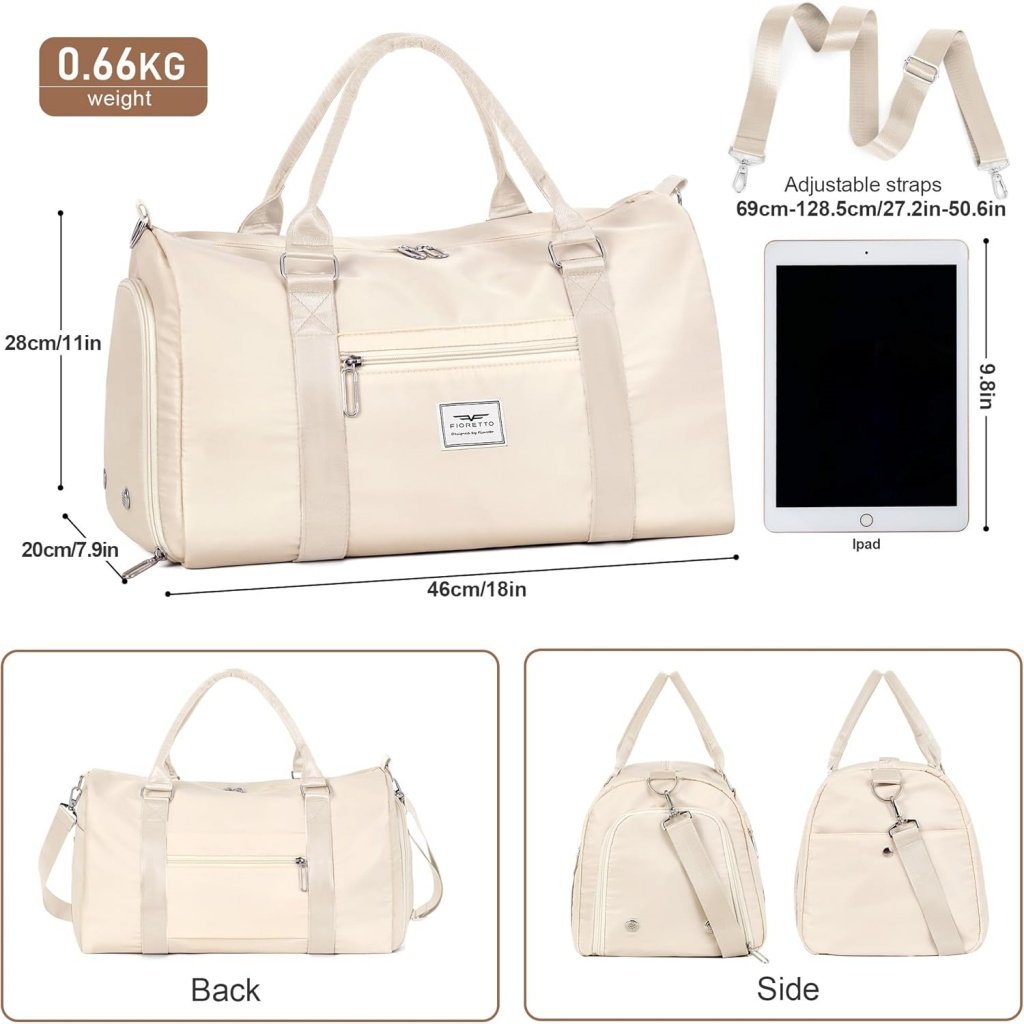
Travel organisation works best when you pack by function, not by category. Bring what supports cleansing, hydration, sun protection, and your most important makeup steps. The goal is not to recreate your full home setup. It is to preserve your routine with less bulk. Travel-size or decanted products should be used intentionally, not just because they are small.
How to use decants and smaller pouches effectively
Use one small pouch for liquids, one for dry makeup, and one for tools if needed. This prevents spills from contaminating powders and helps you find things faster. Clear or wipeable pouches are especially useful for travel because they support visibility and cleanup. TSA’s carry-on rule for liquids, aerosols, gels, creams, and pastes also reinforces the value of separating liquids early rather than stuffing everything into one bag at the airport.
How to reduce leakage and product damage
Choose leak-prone items carefully, tighten caps fully, and keep liquids together. Use padding or sleeves for fragile powders and glass bottles. A wipeable or water-resistant bag is often worth it for travel because it keeps one accident from becoming a full cleanup problem. Products packed upright inside structured compartments generally perform better than products tossed into a soft pouch.
Travel organisation rule: Separate cosmetics by format: liquids together, dry color products together, and tools together. That single change solves a large share of travel-related beauty mess.
Case Study: Editor-tested travel makeup bags often win because they support separation: removable pouches, hanging compartments, clear windows, or wipeable pockets. The repeated lesson is simple. Travel organisation is strongest when categories are isolated before problems happen.
Suggested image alt: “Travel cosmetics organised in small pouches with separate liquids makeup and tools sections”
7. Common Cosmetic Organisation Mistakes
Why overbuying makes cosmetics harder to organise
Too much product is one of the biggest hidden causes of disorder. More products require more decisions, more bins, more rotation, and more maintenance. When shopping outpaces usage, storage systems quickly become overwhelmed. The issue is not only space. It is also decision fatigue. The larger the pile, the harder it becomes to keep any one part of it under control.
What happens when products are not stored by usage frequency
If daily products are mixed with occasional ones, the whole setup slows down. You dig more, forget more, and create more mess during each use. Frequency-based storage is what keeps a system practical over time. Daily products should always be easiest to reach. Reserve items should not compete with them for front-row space.
Why ignoring cleaning and shelf-life checks is risky
Organisation is not complete without hygiene. FDA states that cosmetics may go bad if stored the wrong way, and contaminated cosmetics can become harmful if exposed to harmful microorganisms. The American Academy of Dermatology recommends washing makeup brushes every 7 to 10 days to reduce harmful bacteria. If you never wipe organisers, never clean tools, and never check product condition, the collection may look sorted but still function poorly and unsafely.
| Mistake | Why It Causes Problems | Better Alternative |
|---|---|---|
| Buying more storage before decluttering | Hides the real problem instead of solving it | Sort and reduce first |
| Mixing daily and low-use products | Slows routines and creates visual clutter | Store by frequency of use |
| Ignoring expiration and hygiene | Raises waste and contamination risk | Set regular review and cleaning intervals |
Pros & Cons of “more containers” as an organising strategy
Pros
- Can improve separation quickly
- Useful after the collection is edited
- Helps maintain categories
Cons
- Does not fix overbuying or duplicates
- Can consume space without improving logic
- May hide expired or ignored products
Suggested image alt: “Common cosmetic organisation mistakes including overcrowding mixed categories and expired makeup”
8. Explore Cosmetic Bags and Organisers at QN Bags
Why the right bag helps the system stay organised
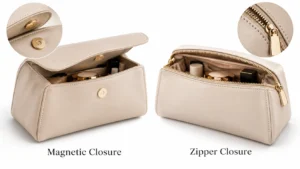
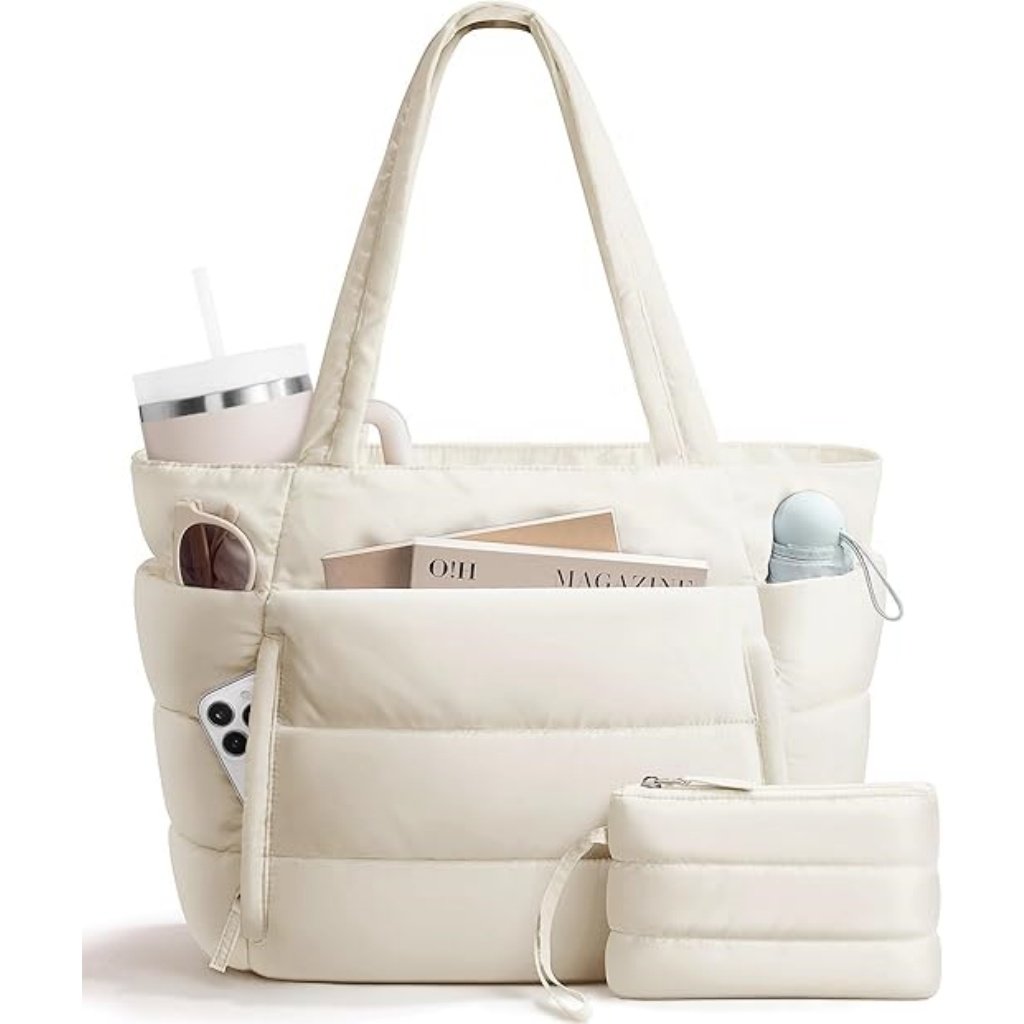
Cosmetic organisation is not only about drawers and countertop storage. The makeup bag itself can either support the system or disrupt it. A bag that is too small creates pressure and clutter. A bag with no structure or compartments can turn every touch-up into a search mission. A better-designed bag helps keep categories visible and easy to reach.
Why different routines need different organiser styles
Daily-use cosmetics, travel cosmetics, vanity storage, and giftable beauty sets rarely need the same format. Some users benefit from flat pouches. Others need boxy bags, clear bags, or larger travel organisers. This is why variety matters when choosing a bag that supports the way you actually organise your products.
Where to explore more options
If you want to compare cosmetic bags and organiser-friendly formats for different routines, explore QN Bags. It is a useful reference point for flat pouches, boxy cosmetic bags, clear travel-friendly cases, and other product-storage options that can support a more practical beauty system.
Clear CTA: If your beauty setup still feels messy, do not start by buying more bins. Start by sorting what you own, then choose the right storage or makeup bag to support that logic.
Explore Cosmetic Bag Options
Suggested image alt: “Different cosmetic bags and organiser styles displayed for home daily use and travel”
9. Conclusion: Organise First, Buy Storage Second
The core of how to organise cosmetics is not buying more containers. It is creating the right logic. First sort. Then declutter. Then group by category and frequency. After that, choose storage that makes those decisions easier to maintain. That sequence is what turns beauty organisation from a short-lived cleanup into a routine that actually works.
The best system is the one that fits your real collection and your real behavior. Small-space users need tighter editing. Travel users need stronger separation. Daily makeup users need quick access. Larger collections need clearer zoning and more review discipline. Across all of these, visibility, hygiene, and frequency-based placement matter more than aesthetic perfection.
Looking ahead, as beauty products, portable formats, and refill systems continue to expand, cosmetic organisation will matter even more. The collections themselves are becoming more varied, which means storage systems need to become more intentional, not more crowded. If you want a practical starting point for bag-based organisation and travel-ready cosmetic storage, explore styles at QN Bags and build your system around how you actually use your products.
FAQ
1. What is the best way to organise cosmetics?
The best way is to sort by category first, then by usage frequency, then store daily items closest and low-use items farther back. After that, choose organisers that support visibility and easy retrieval.
2. How do I organise cosmetics in a small space?
Keep only daily-use items visible, store low-frequency products separately, use vertical or drawer-based organisation, and avoid oversized organisers that create more crowding.
3. How often should I declutter my makeup?
A full review every few months is a good baseline, with faster checks for daily items. Replace products that have changed smell, texture, or performance, and rotate out what you no longer use.
4. How do I organise cosmetics for travel?
Separate liquids, dry makeup, and tools into smaller groups or pouches. Use travel-size products intentionally and choose wipeable or structured bags when possible.
5. What should I keep in my daily makeup bag?
Keep only high-use essentials such as one or two lip products, powder or blotting sheets, concealer, a mirror, and a few small practical extras like cotton swabs or a hair tie.
6. Should I throw away old mascara?
Yes, especially if it is dry or older. FDA notes that eye-area cosmetics have more limited shelf life, and some experts recommend replacing mascara about three months after purchase.
7. How often should I clean makeup brushes?
The American Academy of Dermatology recommends washing makeup brushes every 7 to 10 days to reduce harmful bacteria and protect skin.
Aries Gu is the founder of Q&N. With over 17 years of experience in cosmetic bag OEM/ODM source factory. He focuses on quality control, efficient communication, and on-time delivery for global cosmetic bag projects.