Best Material for Toiletry Bags: A Guide for Travel, Retail, and Private Label Buyers
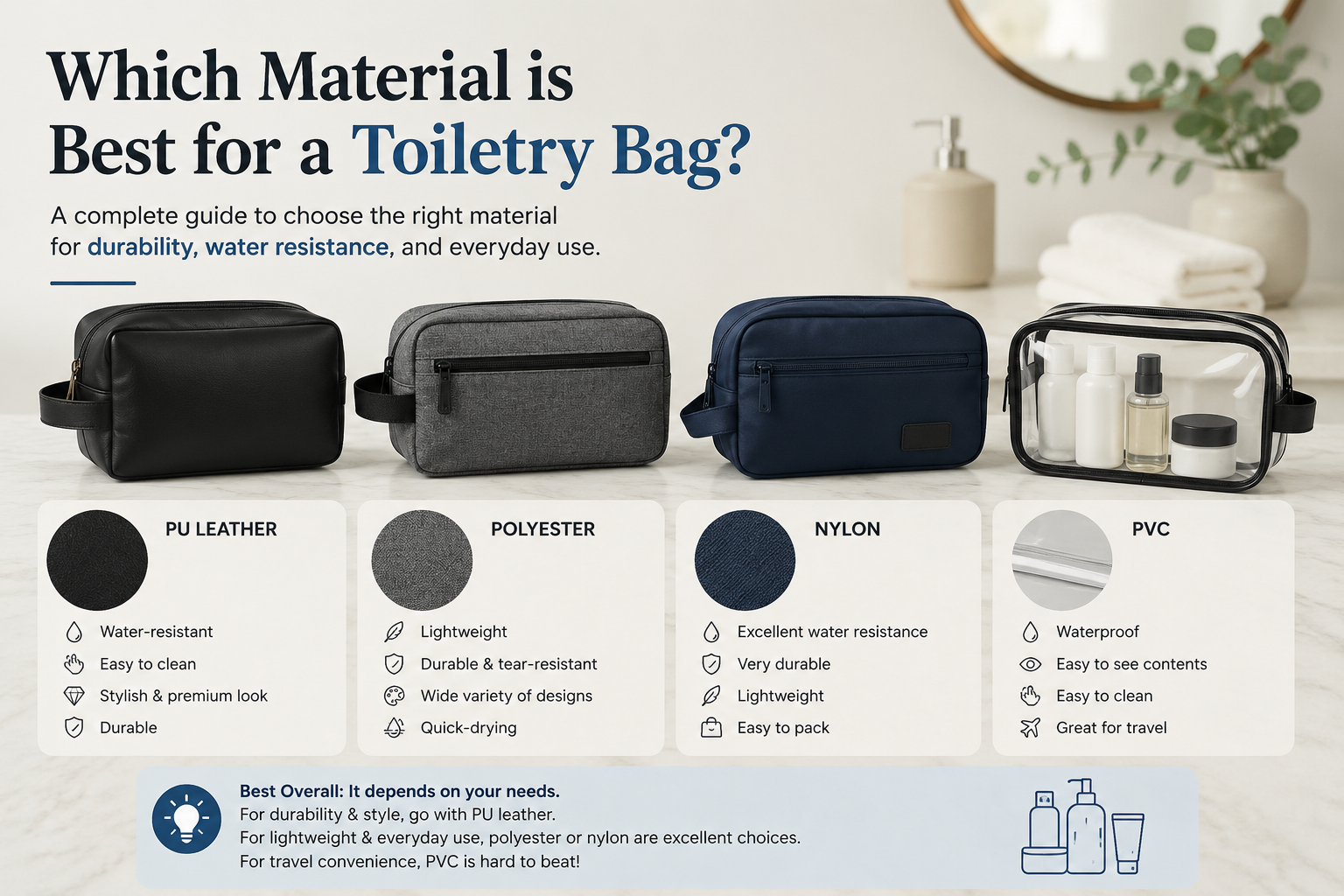
The best material for a toiletry bag depends on how the bag will be used, where it will be sold, and what level of quality the buyer wants to achieve. For most travel, retail, and private label projects, the most common toiletry bag materials include nylon, polyester, PU leather, canvas, PVC, TPU, and coated fabrics.
For waterproof travel toiletry bags, TPU, PVC, coated nylon, and coated polyester are usually the most practical choices. For premium private label collections, PU leather, matte coated fabrics, and structured nylon often provide a better balance of appearance, durability, and retail value.
This topic matters because the travel accessories market continues to grow. Grand View Research estimates the global travel bag market reached USD 18.78 billion in 2023 and may reach USD 32.29 billion by 2030. ResearchAndMarkets also reports continued growth in the broader travel accessories market. For brands and wholesalers, toiletry bags are no longer just small travel pouches — they are functional packaging, travel essentials, and brand extension products.
Internal link suggestion: Link “custom toiletry bags” to https://qnbags.com/.
External link suggestion: Link “global travel bag market” to Grand View Research.
What Makes a Good Toiletry Bag Material?
A good toiletry bag material should handle moisture, frequent travel, bathroom environments, and daily packing. Unlike a simple cosmetic pouch, a toiletry bag often carries heavier or leak-prone items such as shampoo, skincare bottles, razors, toothbrushes, shaving products, and grooming tools.
Water Resistance
Water resistance is one of the most important factors. Toiletry bags are often used near sinks, showers, hotel bathrooms, and wet counters. Materials such as TPU, PVC, coated nylon, and coated polyester perform better in damp environments than untreated cotton or canvas.
Durability During Travel
A toiletry bag may be squeezed into luggage, carried in backpacks, or packed with liquid containers. The material should resist tearing, deformation, and surface damage.
Easy Cleaning and Maintenance
Easy-clean materials are especially important for travel retail and private label brands. Toiletry bags may come into contact with toothpaste, creams, oils, skincare liquids, and makeup residue.
Suitable Structure and Weight
The material should support the bag’s shape without making it too heavy. A hanging toiletry bag, for example, needs stronger fabric and lining than a simple flat pouch.
| Material Requirement | Why It Matters | Recommended Materials |
|---|---|---|
| Water resistance | Protects contents from bathroom moisture | TPU, PVC, coated nylon, coated polyester |
| Durability | Supports travel and repeated use | Nylon, polyester, PU leather |
| Easy cleaning | Improves customer satisfaction | TPU, PVC, PU, coated fabrics |
| Structure | Helps the bag keep shape | PU, thick polyester, semi-rigid coated fabric |
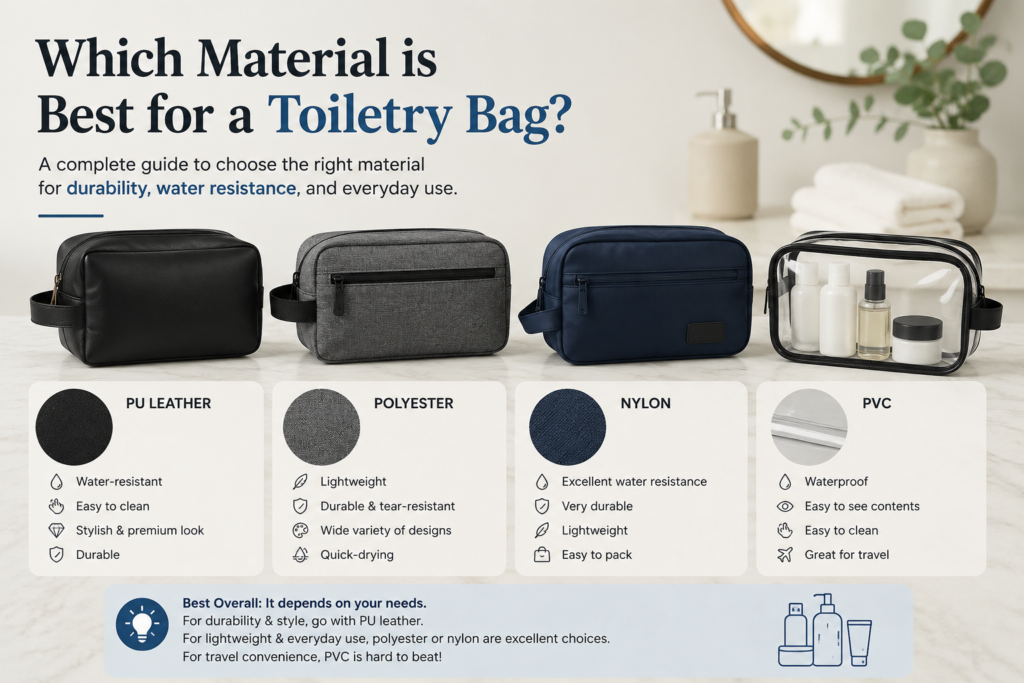
Common Materials Used for Toiletry Bags
Nylon Toiletry Bags
Nylon is one of the best all-around materials for toiletry bags. It is lightweight, durable, and suitable for travel products. High-density nylon can feel premium while still remaining practical.
Pros:
- Lightweight and durable
- Good for travel use
- Can be coated for water resistance
- Suitable for hanging toiletry bags
Cons:
- Higher cost than basic polyester
- Quality varies depending on density and coating
Polyester Toiletry Bags
Polyester is cost-effective and widely used for wholesale toiletry bags. It is suitable for promotional projects, retail sets, and medium-volume private label orders.
Best for: budget-friendly toiletry bags, gift sets, travel kits, and promotional collections.
PU Leather Toiletry Bags
PU leather is often used for premium toiletry bags and men’s grooming kits. It gives a structured and refined look, especially when paired with metal hardware or embossed branding.
Best for: premium grooming kits, private label travel collections, luxury hotel gift sets, and retail toiletry bags.
Canvas Toiletry Bags
Canvas creates a casual, natural, and lifestyle-oriented appearance. It works well for eco-style brands, outdoor travel collections, and simple dopp kits. However, untreated canvas is not fully waterproof.
| Material | Best Use | Price Level | Main Limitation |
|---|---|---|---|
| Nylon | Travel and hanging toiletry bags | Mid to premium | Depends on fabric density |
| Polyester | Wholesale and promotional bags | Budget to mid-range | Can look less premium |
| PU Leather | Premium private label bags | Mid to premium | Can scratch depending on finish |
| Canvas | Casual and natural-style bags | Budget to mid-range | Not naturally waterproof |
Waterproof Material Options
For toiletry bags, waterproof or water-resistant performance is often more important than decorative appearance. This is especially true for travel brands, hotel amenity suppliers, and private label buyers targeting frequent travelers.
PVC for Clear Travel Toiletry Bags
PVC is widely used for transparent toiletry bags. It is easy to wipe clean, cost-effective, and suitable for airport-style travel pouches.
Pros:
- Clear and practical
- Easy to clean
- Good for travel kits
- Lower cost than TPU
Cons:
- Can feel stiff
- May have odor if low-grade material is used
- Can scratch during shipping if not protected
TPU for Softer Transparent Bags
TPU is often used as a softer and more premium alternative to PVC. It has better flexibility and usually feels smoother in hand.
Best for: mid-high-end transparent toiletry bags, premium travel kits, beauty travel organizers, and private label collections.
Coated Fabrics for Water-Resistant Designs
Coated nylon and coated polyester are excellent choices when buyers want water resistance without using a fully transparent material. These fabrics work well for structured toiletry organizers and hanging bags.
| Waterproof Material | Best Feature | Best Application |
|---|---|---|
| PVC | Clear, economical, easy-clean | Mass-market travel toiletry bags |
| TPU | Soft, flexible, premium clear look | Mid-high-end clear toiletry bags |
| Coated nylon | Durable and travel-friendly | Hanging toiletry bags |
| Coated polyester | Cost-effective water resistance | Wholesale travel kits |
Best Materials by Market Positioning
Budget-Friendly Promotional Toiletry Bags
For promotional campaigns or gift-with-purchase projects, buyers usually need a material that looks acceptable while keeping unit cost controlled.
- Recommended materials: polyester, basic canvas, PVC
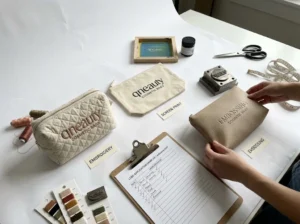
- Common logo methods: screen printing, woven label, heat transfer
- Best use: events, promotional kits, low-cost travel sets
Mid-Range Travel Toiletry Bags
For mid-range travel collections, the material should offer stronger durability and better cleaning performance.
- Recommended materials: nylon, coated polyester, TPU, better-quality PU
- Common features: handle, compartments, waterproof lining, inner mesh pockets
Premium Private Label Toiletry Bags
Premium private label toiletry bags need better hand feel, stronger structure, and more refined finishing.
- Recommended materials: matte PU, high-density nylon, soft TPU, semi-rigid coated fabric
- Common details: custom zipper puller, metal logo plate, embossed logo, premium lining
Eco-Conscious Toiletry Bag Collections
Eco-conscious buyers often prefer reusable, longer-lasting, or natural-looking materials. According to Shorr’s 2025 Sustainable Packaging Consumer Report, 54% of surveyed U.S. consumers said they had deliberately chosen products with sustainable packaging in the previous six months.
- Recommended materials: canvas, cotton-look polyester, recycled polyester, reusable coated fabrics
- Best use: clean beauty, natural skincare, lifestyle travel brands
Functional Design Considerations
Lining Material and Inner Compartments
The outside material is important, but the lining often determines daily user experience. For toiletry bags, water-resistant lining is highly recommended.
Useful inner features include:
- Mesh pockets
- Elastic bottle holders
- Brush slots
- Transparent compartments
- Leak-resistant inner lining
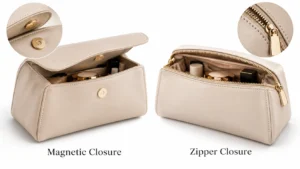
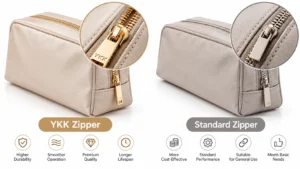
Zipper Quality and Puller Design
A toiletry bag may fail in the market not because of the fabric, but because of poor zipper performance. Smooth zippers, strong pullers, and clean stitching are critical for wholesale quality control.
Hanging Hooks, Handles, and Mesh Pockets
For hanging toiletry bags, the main fabric must support weight when filled. Reinforced stitching around hooks and handles is important.
| Feature | Recommended Material Support | Buyer Note |
|---|---|---|
| Hanging hook | Nylon, coated polyester, PU | Needs reinforced stitching |
| Clear window | PVC or TPU | TPU feels more premium |
| Inner mesh pocket | Polyester mesh | Useful for drying and visibility |
| Waterproof lining | PEVA, coated polyester, TPU | Important for toiletries |
Case Study: Material Upgrade for a Private Label Travel Toiletry Bag
A private label travel brand originally planned to use basic polyester for a hanging toiletry bag collection. The target customers were frequent travelers, and the product was positioned as a mid-range travel accessory.
During sample testing, the buyer found three issues:
- The fabric felt too thin when the bag was filled
- The shape collapsed when hanging
- The inside lining was not easy enough to clean
The final solution was to upgrade to coated nylon outer fabric with a water-resistant polyester lining. The brand also added a stronger hook area, mesh inner pockets, and a custom zipper puller.
| Original Plan | Problem | Final Solution |
|---|---|---|
| Basic polyester | Too soft and thin | Coated nylon |
| Simple lining | Not easy to clean | Water-resistant lining |
| Standard zipper | Looked too generic | Custom zipper puller |
| Weak hook area | Poor hanging support | Reinforced stitching |
The lesson: for toiletry bags, material selection should be tested with real products inside the bag, not judged only by fabric photos.
Design Trends for Toiletry Bag Materials
Matte Waterproof Fabrics
Matte coated fabrics are becoming popular because they look cleaner and more premium than shiny materials. They are suitable for travel, beauty, and men’s grooming collections.
Minimalist Neutral Colors
Neutral colors such as black, beige, taupe, grey, navy, and olive are widely used in modern toiletry bag collections because they work across gender and market categories.
Transparent Travel-Friendly Designs
Transparent PVC and TPU toiletry bags remain popular for travel kits because customers can quickly see what is inside. TPU is often selected for private label collections that want a softer, more refined version of the clear travel look.
Structured and Semi-Rigid Toiletry Bags
Semi-rigid toiletry bags are becoming more common in premium travel collections. These bags hold shape better and feel more valuable in retail displays.
Sourcing Tips for Wholesale Toiletry Bags
Confirm Material Thickness and Coating
Ask for fabric thickness, coating type, hand feel, and sample photos before confirming bulk production. A material name alone is not enough because nylon, polyester, PU, PVC, and TPU all have different grades.
Check Sample Performance Before Bulk Orders
A sample should be tested with real travel items such as bottles, toothbrushes, razors, and skincare containers.
Consider Packaging and Shipping Protection
Transparent PVC and TPU materials can scratch during shipping. Individual OPP bags or protective packaging are recommended for better appearance on arrival.
Use a B2B Material Approval Checklist
| Checklist Item | Why It Matters |
|---|---|
| Material thickness | Affects structure and durability |
| Water resistance | Important for bathroom and travel use |
| Color accuracy | Protects brand consistency |
| Logo effect | Impacts final retail appearance |
| Zipper smoothness | Affects customer experience |
| Packaging method | Prevents scratches and deformation |
Internal link suggestion: Link “custom toiletry bag manufacturer” to https://qnbags.com/.
Expert Recommendation: Which Material Should You Choose?
For most B2B buyers, the best toiletry bag material can be selected by use case:
- Best overall travel material: coated nylon
- Best budget material: polyester
- Best clear waterproof material: TPU for premium, PVC for cost control
- Best premium material: PU leather or high-density nylon
- Best natural-style material: canvas with lining or coating
- Best for hanging toiletry bags: coated nylon or thick coated polyester
The best material is not simply the most expensive one. It is the material that matches the product’s function, target price, brand image, and expected customer use.
FAQ
What is the best waterproof material for a toiletry bag?
TPU, PVC, coated nylon, and coated polyester are the best waterproof or water-resistant materials for toiletry bags. TPU feels softer and more premium, while PVC is usually more cost-effective.
Is nylon or polyester better for toiletry bags?
Nylon usually feels more durable and premium, while polyester is more cost-effective. For mid-range and premium travel toiletry bags, nylon is often preferred. For promotional or budget-friendly bags, polyester is commonly used.
Are PU leather toiletry bags water-resistant?
PU leather has some surface water resistance and is easy to wipe clean, but it is not always fully waterproof. For better performance, the inner lining should also be water-resistant.
What material is best for a hanging toiletry bag?
Coated nylon, thick polyester, and PU leather are good choices for hanging toiletry bags. The hook area should be reinforced because the bag needs to support weight when filled.
Can toiletry bag materials be customized for private label brands?
Yes. Private label brands can customize material, color, lining, zipper, logo method, hardware, compartments, and packaging depending on MOQ and project requirements.
Is canvas good for toiletry bags?
Canvas is good for casual and natural-style toiletry bags, but untreated canvas is not waterproof. For travel or bathroom use, lining or coating is recommended.
Which material is best for luxury toiletry bags?
PU leather, high-density nylon, matte coated fabrics, and soft TPU are commonly used for luxury toiletry bags. Premium finishing such as metal logo plates, custom pullers, and structured lining can further improve perceived value.
Future Trends in Toiletry Bag Materials
Toiletry bag materials are moving toward better function, cleaner design, and more sustainable choices. Future product development will likely focus on:
- Reusable travel packaging
- Water-resistant coated fabrics
- Soft TPU transparent designs
- Recycled polyester and eco-conscious materials
- Minimalist matte textures
- Structured toiletry organizers
- Better protection for skincare and grooming products
As travel and personal care continue to grow, buyers will pay more attention to material performance, not just appearance.
Conclusion
The best material for a toiletry bag depends on the target market and usage scenario. For waterproof travel bags, TPU, PVC, coated nylon, and coated polyester are strong choices. For premium private label toiletry bags, PU leather, high-density nylon, and matte coated fabrics offer better retail value. For casual or eco-style collections, canvas and cotton-look materials can work well when supported with proper lining.
For wholesalers and private label buyers, the smartest approach is to confirm the product purpose first, then choose material, structure, lining, logo technique, and packaging accordingly.
CTA: Looking for custom toiletry bags for your brand, wholesale collection, or travel product line? Explore more material and customization options here: https://qnbags.com/
Suggested External Resources
- Grand View Research: Travel Bags Market
- Grand View Research: Cosmetic and Toiletry Containers Market
- ResearchAndMarkets: Travel Accessories Market
- Shorr: 2025 Sustainable Packaging Consumer Report
Aries Gu is the founder of Q&N. With over 17 years of experience in cosmetic bag OEM/ODM source factory. He focuses on quality control, efficient communication, and on-time delivery for global cosmetic bag projects.