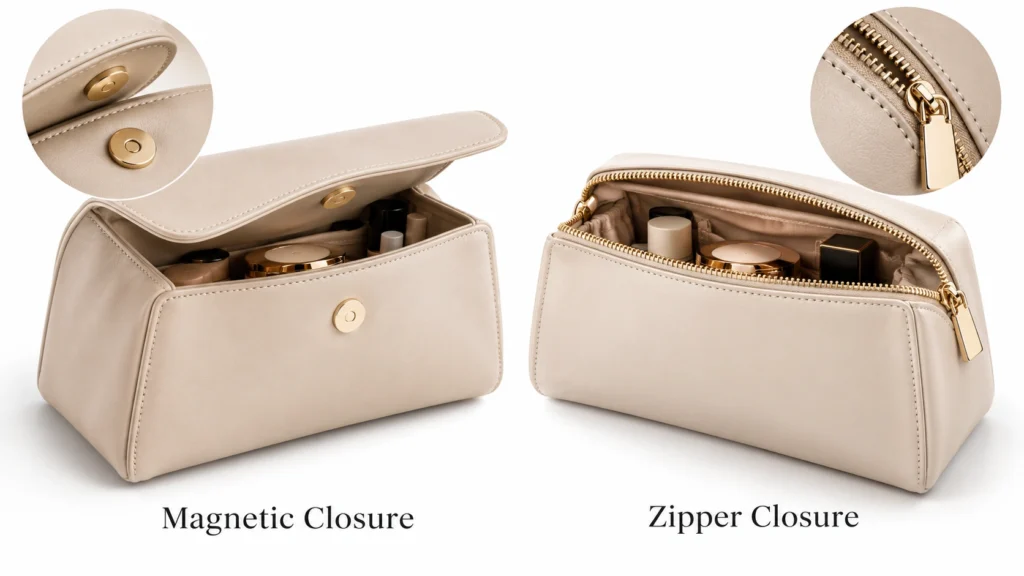
When sourcing premium makeup bags for retail, boutique brands, or promotional campaigns, procurement managers often focus heavily on exterior fabrics and logo printing. However, the closure mechanism—whether a zipper or a magnetic snap—fundamentally defines the bag’s user experience, manufacturing cost, and structural longevity.
Choosing the wrong closure can lead to high return rates, derailed zippers, or magnets that pop open during transit. As a direct source factory with over 15 years of OEM/ODM manufacturing experience, QNBags understands that B2B sourcing requires precise technical insights. This comprehensive guide takes you onto our factory floor to compare magnetic closures vs. zippers, helping you make the most profitable decision for your next bulk order.
1. The B2B Buyer’s Dilemma: Magnetic Closures vs. Zippers
The decision between a zipper and a magnetic flap is not merely aesthetic; it dictates the bag’s retail positioning. Understanding how these closures perform in the real world is critical for your inventory strategy.
1.1 Understanding End-User Experience in the Premium Market
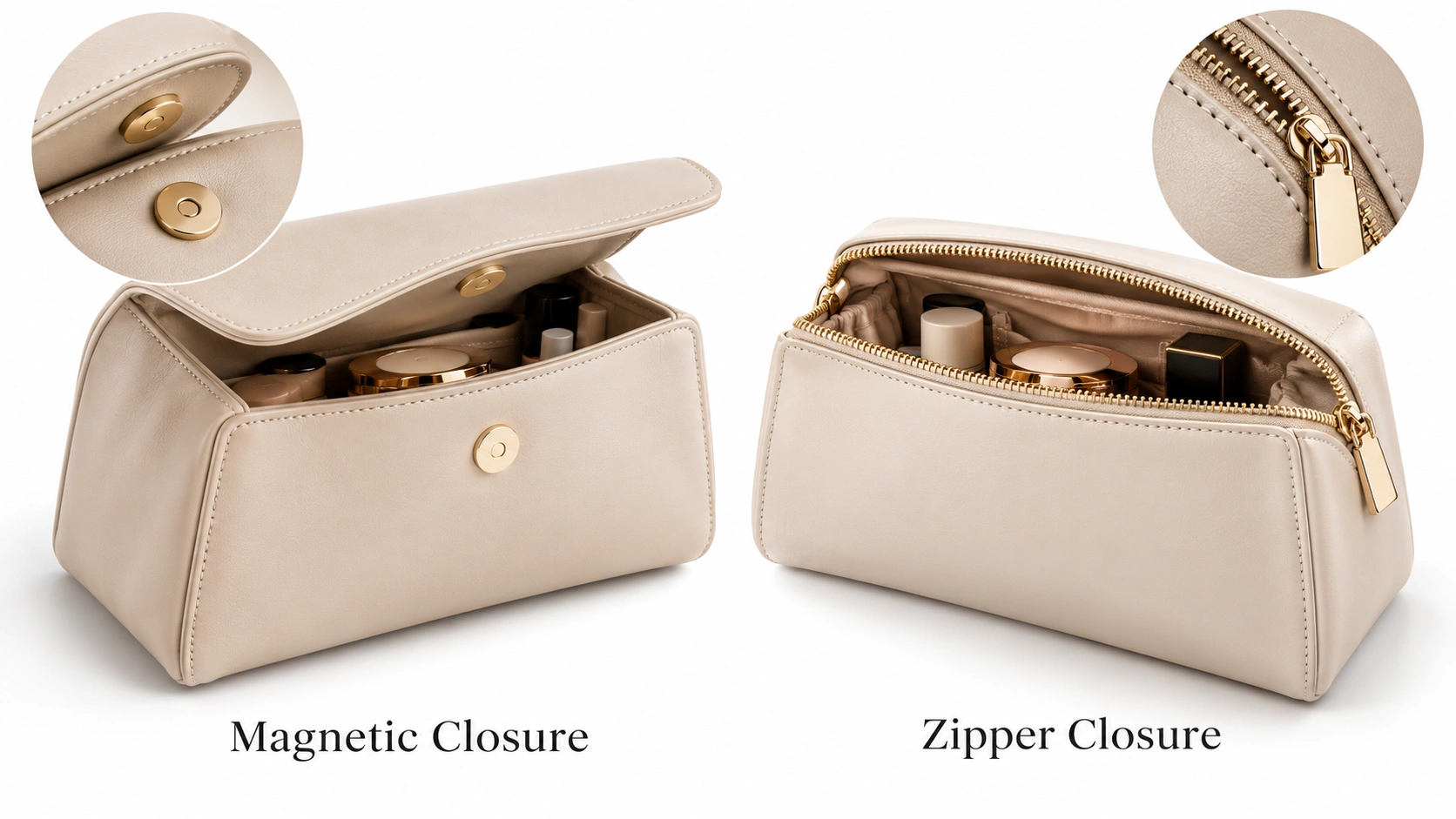
In the luxury cosmetics market, the tactile “snap” of a magnetic closure feels effortless and high-end. It allows for one-handed operation, which end-users appreciate when applying makeup. Conversely, a smooth, heavy-duty zipper communicates security and ruggedness, making it the preferred choice for comprehensive travel kits.
1.2 How Closure Types Impact B2B Procurement Budgets
From a manufacturing standpoint, zippers and magnets require entirely different assembly lines. Zippers demand highly skilled sewing operators to manage curved edges, whereas hidden magnets require precise die-cutting and material skiving. Balancing these labor costs against your target retail price is a crucial step in B2B procurement.
1.3 Balancing Aesthetics and Functionality in Custom Designs
A typical buyer example: A minimalist skincare startup wanted a sleek, square envelope pouch. A zipper would have interrupted the clean lines, so our factory engineered a concealed magnetic flap. However, when the same brand expanded into large travel Dopp kits, we transitioned them to heavy-duty zippers to handle the weight of full-sized shampoo bottles.
2. The Mechanics of Zippers in Cosmetic Bag Manufacturing
Zippers offer unparalleled security for travel accessories. However, integrating them seamlessly into a cosmetic bag requires strict factory-level calibration.
2.1 Coil vs. Metal Teeth Zippers for Makeup Pouches
The geometry of your custom cosmetic bag dictates the zipper type:
- Nylon Coil Zippers (#3 or #5): Highly flexible and perfect for dome-shaped or half-moon cosmetic pouches. They navigate tight corners smoothly without snagging.
- Metal Teeth Zippers: Rigid and visually striking. These are ideal for boxy, structured bags, offering a premium, vintage aesthetic, though they require straight sewing paths.
2.2 Factory Insights: Stitching Techniques for Zipper Durability
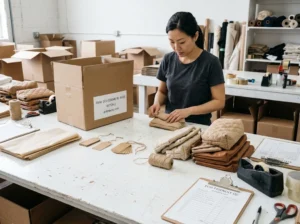
Zipper failure usually happens at the seam, not the teeth. On our production lines, we meticulously control the Stitches Per Inch (SPI) based on the fabric thickness. If the thread tension on a thick canvas bag is too tight, the fabric puckers around the zipper tape. If it is too loose, the zipper will eventually tear away.
[Insert Image: A factory worker using a specialized sewing machine foot to perfectly align a nylon coil zipper onto a PU leather cosmetic bag panel.]
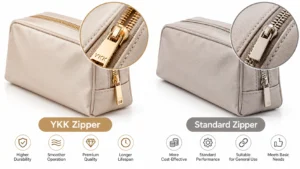
2.3 The YKK Standard: Why High-End Brands Insist on Premium Zippers
For brands positioning themselves in the luxury tier, we highly recommend integrating YKK zippers. YKK utilizes proprietary self-locking sliders and exceptional electroplating that resists chipping. Furthermore, their zipper tapes can be exact-matched to your brand’s Pantone colors, ensuring flawless design consistency.
3. The Elegance of Magnetic Closures in Beauty Packaging
Magnetic closures are the secret weapon of minimalist boutique brands. They eliminate the visual clutter of hardware, but they require advanced manufacturing techniques to execute properly.
3.1 Concealed Magnets vs. Exposed Snap Fasteners
There are two primary ways we apply magnets in the factory:
- Exposed Snaps: Metal rivet-style magnets punched directly through the flap. They are cost-effective, durable, and offer a classic hardware look.
- Concealed Magnets: Sewn invisibly between the inner lining and outer shell. This creates a highly sought-after “magic” closure effect but increases labor time.
3.2 Achieving the “Seamless Look” for Minimalist Brands
To make a concealed magnet work without looking bulky, our factory employs a technique called skiving. We shave down the thickness of the PU leather exactly where the magnet sits. This allows the magnetic pull to easily reach through the material without creating an ugly bump on the surface of the bag.
3.3 Limitations: When Magnets Fail in High-Volume Travel Bags
Magnets have a structural weakness: they pop open when overloaded. If a consumer stuffs too many cosmetic palettes into a magnetic envelope pouch, the lateral tension will force the magnets apart. Therefore, we only recommend magnets for flat pouches, brush rolls, or structured vanity cases that cannot be easily overstuffed.
4. Material Compatibility on the Factory Floor
A B2B buyer must match the closure to the substrate. Putting the right hardware on the wrong fabric guarantees a defective product.
4.1 PU Leather and Vegan Alternatives for Magnetic Snaps
Magnetic closures perform beautifully on structured materials like heavy PU leather or genuine leather. These materials have the necessary rigidity to hold the hardware in place. We often source premium, eco-friendly faux leathers certified by organizations like Textile Exchange for these luxury designs.
4.2 Nylon and Canvas Fabric Tension with Zippers
Thin, flexible materials like 210D waterproof nylon are too flimsy to support a heavy magnetic snap—the user will tear the fabric when pulling the magnet apart. For nylons and soft cotton canvas, high-quality zippers are the mandatory factory standard to distribute the pulling tension evenly across the bag.
4.3 Structural Reinforcement for Hardware Integration
When an indie brand insists on magnets for a soft fabric bag, we engineer a solution. We insert hidden EVA foam plates or thin PVC backing boards behind the fabric. This reinforces the snap area, ensuring the fabric does not rip during repeated daily use.
[Insert Image: A cross-section diagram showing a concealed neodymium magnet sewn between a layer of PU leather and a protective EVA reinforcement backing.]
5. Cost Analysis: Tooling, Hardware, and Assembly Lines
Profit margins are made on the factory floor. Understanding how zippers and magnets impact production costs is essential for any procurement strategy.
5.1 The Hidden Costs of Custom Zipper Pullers
Standard zippers are incredibly cheap to manufacture. However, if your brand requires a custom-molded alloy zipper puller shaped like your logo, hardware factories will charge a one-time mold fee and often demand high MOQs. This slightly inflates the upfront tooling cost for zipper-based bags.
5.2 Sourcing Industrial-Grade Magnets (Gauss Ratings Explained)
Not all magnets are created equal. We utilize high-grade Neodymium magnets (N35 to N52 ratings). A weak magnet frustrates the consumer, while a magnet that is too strong will tear the stitching. We calculate the exact Gauss rating needed based on the thickness of your bag’s lining to ensure a perfect, satisfying snap.
5.3 Labor Time: Setting Zippers vs. Punching Magnetic Snaps
Setting an exposed magnetic snap is an automated, rapid process using a pneumatic press, which drastically lowers labor costs. Conversely, sewing a zipper—especially around curved gussets—requires slower, manual precision from a master sewer. Therefore, simple magnetic pouches often yield a lower unit cost than zippered equivalents.
6. Factory-Level Quality Control (QC) for Bag Closures
Hardware failures lead to retail returns. Our strict QC protocols ensure that every closure mechanism performs flawlessly before it leaves our facility.
6.1 Zipper Glide Testing and Alignment Checks
During the In-Process Quality Control (IPQC) phase, our inspectors perform rapid open/close stress tests on zippered bags. We ensure the sliders do not catch on the inner linings, and we meticulously check the “zipper break” to guarantee absolute symmetry at the seams.
6.2 Magnetic Pull-Strength and Polarity Testing
For magnetic bags, workers manually test the pull strength of every unit. We also conduct strict polarity checks before sewing concealed magnets into the lining to ensure they attract rather than repel each other—a common, disastrous mistake made by amateur factories.
6.3 Salt Spray Testing for Rust Prevention in Humid Environments
Because makeup bags live in humid bathrooms, oxidation is a massive threat. Both our metal zipper teeth and magnetic snap hardware undergo rigorous salt spray testing to guarantee long-term rust resistance. Our environmental hardware compliance mirrors the strict protocols audited by international bodies like SGS.
[Insert Image: A factory QC inspector utilizing a tension gauge to test the exact pulling force required to separate a magnetic closure on a finished cosmetic bag.]
7. Customization and MOQ Solutions for Startup Brands
We understand that indie beauty brands and boutique owners need manufacturing agility without committing to massive inventory risks.
7.1 Navigating the 500-Piece MOQ for Custom Hardware
While many trading companies demand thousands of units, our direct factory supports full OEM/ODM customization with an accessible MOQ of just 500 pieces. This allows you to A/B test a zippered pouch versus a magnetic envelope bag in your retail market simultaneously.
7.2 Logo Application on Hardware Components
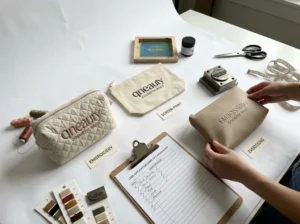
To maximize perceived value within a low MOQ, we recommend strategic branding. For zippered bags, we utilize premium standardized sliders paired with custom debossed leather pull-tabs. For magnetic bags, we apply stunning blind debossing or gold foil stamping directly onto the magnetic flap closure.
7.3 Securing a Pre-Production Sample (PPS) Before Bulk Manufacturing
Never approve a bulk hardware order blindly. Our dedicated sample room will produce a 1:1 physical Pre-Production Sample (PPS) within 7 to 10 days. This allows your team to physically test the zipper glide or the magnetic snap strength before the 500-piece production run begins.
8. Packaging and Shipping Logistics for B2B Orders
Hardware requires special handling during international transit. Our packaging engineers ensure your goods arrive retail-ready, without scratches or indentations.
8.1 Protecting Hardware from Scratches During Transit
Heavy zippers and exposed metal snaps can easily scratch adjacent bags when packed tightly into master cartons. On our assembly line, every zipper pull and exposed magnet is hand-wrapped in protective tissue paper or thin EVA foam before being placed into its individual polybag.
8.2 Vacuum Packaging Challenges with Rigid Closures
While vacuum packaging is an excellent way to save B2B freight costs by reducing dimensional weight, it must be executed carefully with hardware. Vacuum pressure can force a heavy zipper slider to leave a permanent indentation on soft PU leather. We arrange bags strategically to prevent hardware overlap during compression.
8.3 Optimizing Master Cartons for Global Sea Freight
Whether you choose a secure YKK zipper for a travel kit or a sleek concealed magnet for a boutique pouch, we optimize your master cartons for global shipping. We calculate the exact carton dimensions to maximize space inside your LCL sea freight or expedited air shipments, protecting your bottom-line profitability.
Are you ready to engineer the perfect premium makeup bag for your brand? Choosing between a zipper and a magnetic closure is just the first step. Contact the QNBags B2B sourcing experts today to discuss your tech pack, request hardware samples, and receive a competitive quotation for your 500 MOQ custom order.
Aries Gu is the founder of Q&N. With over 17 years of experience in cosmetic bag OEM/ODM source factory. He focuses on quality control, efficient communication, and on-time delivery for global cosmetic bag projects.