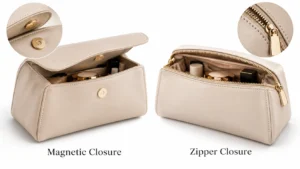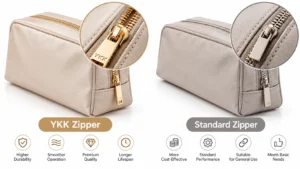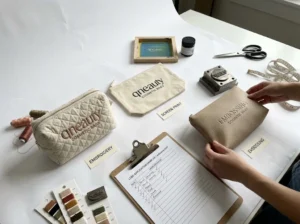
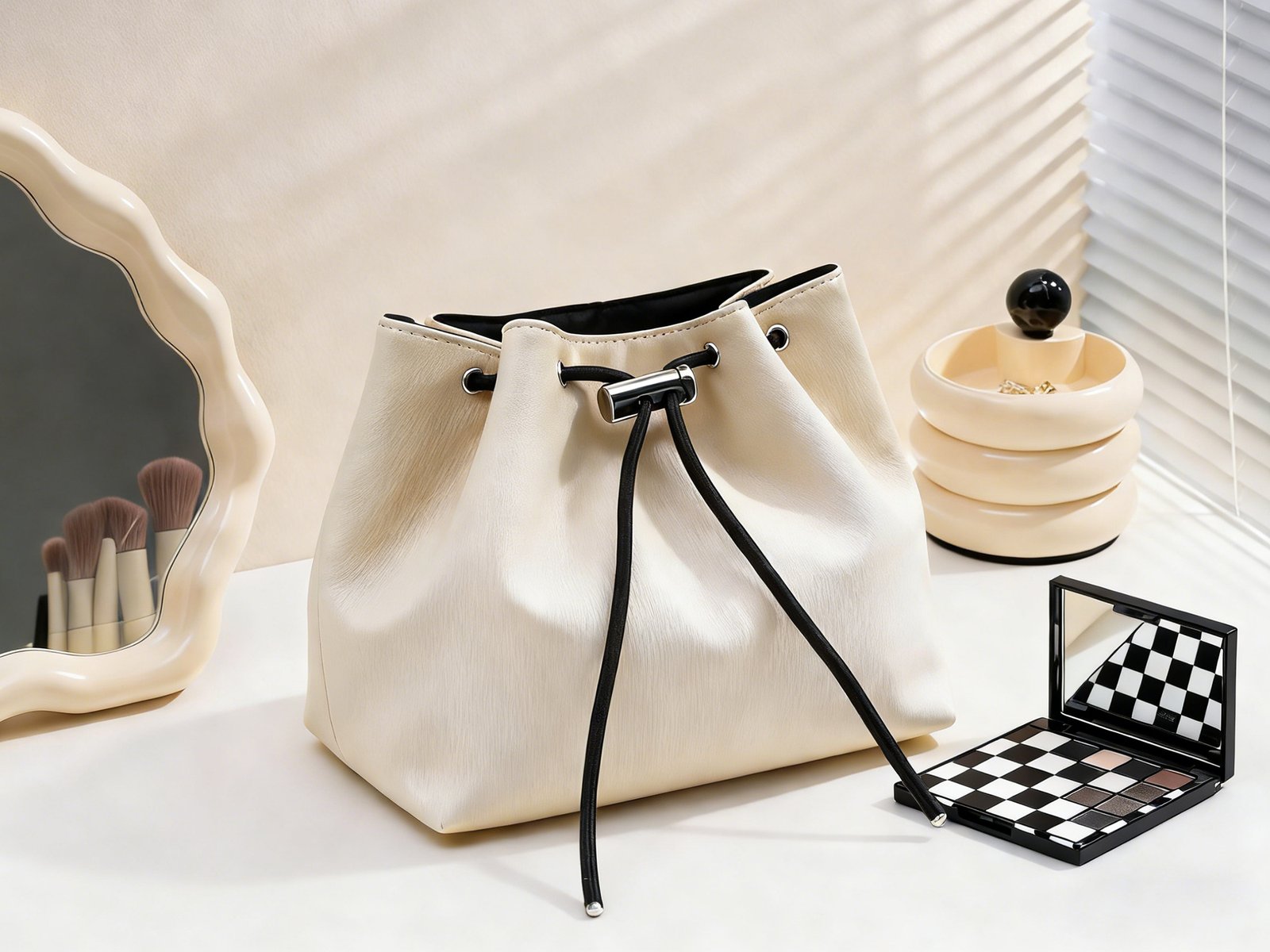
Looking for a makeup bag sounds easy until you start comparing the options. Some bags are flat and elegant but barely fit the essentials. Some are large and structured but feel bulky for daily carry. Some are beautiful but hard to clean. Others are highly practical but not designed for the way you actually live, travel, or get ready. That is why buying a makeup bag is not only a style decision. It is a usability decision. The right makeup bag can make daily routines smoother, keep products cleaner, prevent spills, and save time every single day.
The category itself is also more relevant than ever. Beauty remains a strong consumer market, portable formats continue to grow, and beauty accessories now play a bigger role in how people organize products across home, commute, and travel. As consumers buy more beauty products and move them across more environments, the makeup bag becomes part of the product experience. In this guide, you will learn what types of makeup bags are available, how to choose the right one for your lifestyle, which features matter most, and which styles work best for daily touch-ups, travel, and high-capacity storage.
Table of Contents
- Why Choosing the Right Makeup Bag Matters
- What Types of Makeup Bags Are Available
- How to Choose the Right Makeup Bag
- Best Makeup Bags for Different Needs
- What Features Make a Makeup Bag More Practical
- Buy Makeup Bags on the QN Bags Store
- Conclusion and Next Step
- FAQ
1. Why Choosing the Right Makeup Bag Matters
Why not all makeup bags are the same
At a glance, many makeup bags look interchangeable. They all zip. They all hold products. They all seem to offer some version of portability. But the real differences show up in use. A daily handbag pouch, a structured train case, a clear travel bag, and a multi-layer organizer are solving different problems. They are not just different shapes. They represent different ways of packing, finding, protecting, and carrying your beauty routine.
That is exactly why editorial testing tends to rank makeup bags by use case rather than by appearance alone. Tested roundups from beauty and lifestyle publishers consistently separate recommendations for long trips, over-packers, hanging designs, clear designs, and highly organized options. The pattern is clear: the “best” makeup bag depends heavily on how the user intends to pack and retrieve products. Function, not trend, is what usually determines satisfaction.
How the right makeup bag changes the daily experience
A good makeup bag reduces friction. It makes it easier to reach what you need. It protects products from damage. It keeps powders away from liquids and separates tools from cosmetics. It also influences whether you maintain a tidy system or let products pile up. If the zipper is awkward, the opening is too small, or the interior layout wastes space, the bag becomes frustrating even if it looks attractive on a shelf.
Why different people need different types of makeup bags
A handbag user who carries one lip product and a mirror does not need the same bag as a frequent flyer carrying sunscreen, cleanser, and mini skincare. A professional makeup artist needs different access than someone who only does daily touch-ups. Someone with a small bathroom may want a structured organizer that stands on a counter. Someone who lives out of a weekender may prefer lighter, softer, flexible storage. There is no universal best makeup bag. There is only the best one for a specific load, environment, and habit pattern.
| User Type | What Usually Matters Most | Best Direction |
|---|---|---|
| Daily touch-up user | Light weight, compact size, easy access | Small flat or lightly structured pouch |
| Frequent traveler | Capacity, wipeability, organization | Medium or large structured case |
| Skincare-heavy packer | Depth, leak control, compartments | Boxy or hanging organizer |
| Professional or high-volume user | Large capacity, visibility, separation | Large organizer or train-style bag |
Case Study: Real-world editor testing of makeup bags repeatedly shows that no single design wins every scenario. Clear cases, hanging organizers, and structured train cases each outperform in different categories, which reinforces a simple truth: the right makeup bag is contextual, not universal.
Suggested image alt: “Different types of makeup bags arranged side by side for daily use travel and professional storage”
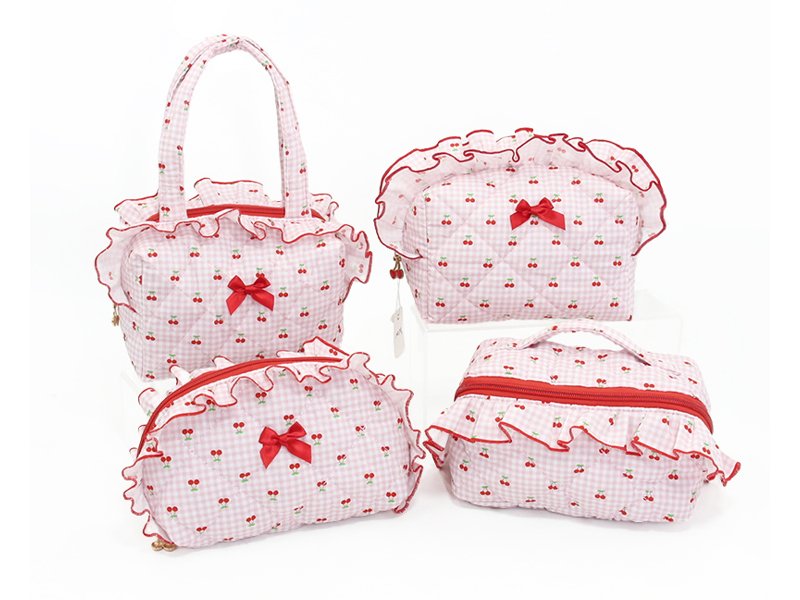
2. What Types of Makeup Bags Are Available
How flat, boxy, and clear bags differ
Flat makeup bags are usually the most portable. They slide easily into handbags, totes, and work bags. They work well for slim items and basic touch-up kits, but they are less efficient for taller products, brushes, and bottles. Boxy bags create more usable three-dimensional space. They are better at standing upright, keeping products visible, and holding mixed-size items. Clear bags help users see everything quickly and are especially practical for travel, bathroom storage, or spill-prone routines.
These styles are not merely aesthetic categories. They directly affect how much a bag holds and how easily you can use it. Recent editor-tested travel bag roundups reflect this clearly: oversized and clear cases are highlighted for more product-heavy travel, while smaller pouches are favored for limited, focused carry.
How to choose between everyday carry and travel organization
Everyday bags should be edited and compact. Travel bags need more room, better wipeability, and often better internal separation. If you use the same bag for both, medium structured styles are often the best compromise. That is one reason medium cosmetic and toiletry cases repeatedly appear in “best overall” positions: they balance capacity with portability better than either extreme.
Who benefits from single-layer versus multi-layer designs?
Single-layer designs are ideal for users who want quick access and minimal complexity. They work best when the product count is low. Multi-layer or compartment-rich bags are better for people who carry different product types together, such as skincare, makeup, tools, and liquids. Interior sections, brush compartments, and detachable pouches improve product separation and retrieval, especially on the go.
| Type of Makeup Bag | Main Strength | Main Limitation |
|---|---|---|
| Flat pouch | Portable and lightweight | Limited depth and organization |
| Boxy bag | Better capacity and access | Takes up more room in a tote or suitcase |
| Clear case | Easy visibility and easy wipe-down | Less discreet, can look more utilitarian |
| Multi-layer organizer | Excellent separation and storage logic | Can be heavier and more complex |
Suggested image alt: “Flat boxy clear and multi-layer makeup bag styles compared for capacity and function”
3. How to Choose the Right Makeup Bag
How size should be selected
Start with what you actually carry, not what might fit. A makeup bag that is too small becomes frustrating and may damage products. A bag that is too large invites clutter. Medium sizes often work best because they hold a realistic daily routine plus a few extras. But the right size still depends on whether the bag lives in a handbag, on a vanity, or in luggage. A small pouch is ideal for touch-ups. A medium case suits most users. A larger structured bag is more useful for travel or fuller routines.
Why material and ease of cleaning matter
Makeup bags get dirty. Powders break, lip products open, and skincare bottles leak. That means material is not only about appearance. It affects maintenance. Smooth, coated, and wipeable materials are often easier to keep clean than absorbent fabrics. Stain-resistant surfaces reduce worry about spills and splashes. If your routine includes liquids or heavy travel, easy cleaning quickly becomes one of the most valuable features.
How zippers, compartments, and opening style affect usability
A beautiful bag with a narrow opening can be harder to use than a simpler bag with good access. A zipper that only opens across a short top edge may make it difficult to find products at the bottom. Wide openings, clamshell designs, and standing boxy structures often make the user experience much better. Compartments help when they are thoughtfully placed, but too many can reduce flexibility. A good makeup bag keeps products visible without forcing them into awkward pockets.
| Feature | Why It Matters | Best For |
|---|---|---|
| Compact size | Easier to carry every day | Handbag and work users |
| Wipeable material | Faster cleanup and less staining | Travel and liquid-heavy routines |
| Wide opening | Improves visibility and access | Most users, especially travel |
| Interior pockets | Separates small tools and fragile items | Organizers and frequent travelers |
Expert buying tip: Never choose a makeup bag by exterior appearance alone. Test the logic: Can you see the contents easily? Can you clean it quickly? Does it fit the way you actually use beauty products?
Suggested image alt: “Key makeup bag buying features including size material zipper and compartment layout”
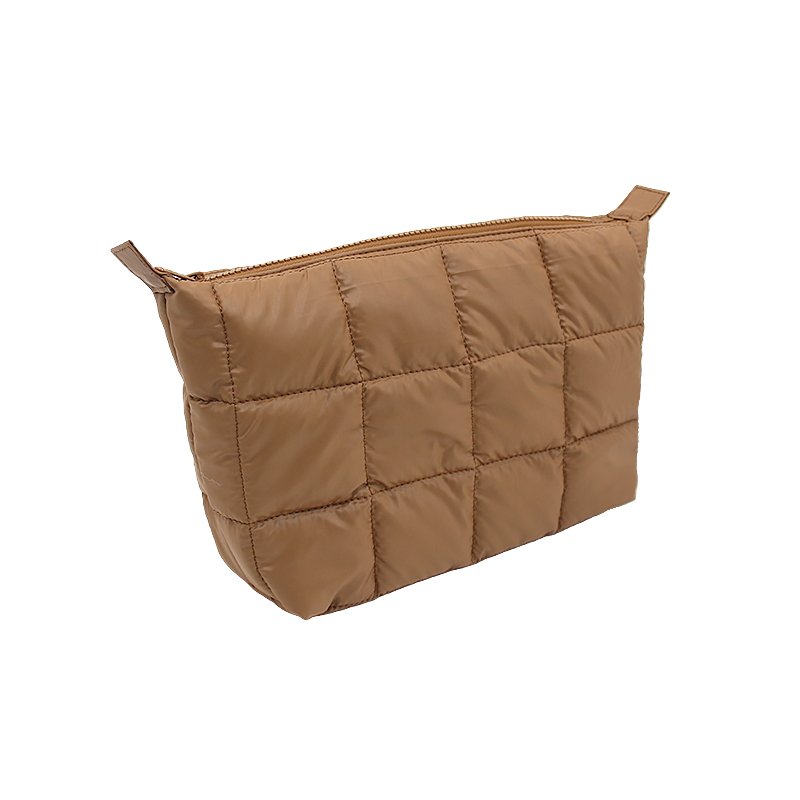
4. Best Makeup Bags for Different Needs
What kind of makeup bag works best for daily touch-ups?
For daily touch-ups, a small or medium makeup bag with light structure is often ideal. It should fit a lip product, pressed powder or blotting sheets, concealer, a mirror, and a few extras without taking over your handbag. Flat pouches are often enough here, but a lightly structured small case may be even better if you prefer easy product visibility.
What kind of makeup bag works best for travel and business trips?
Travel and business trips usually require more organization, a more wipeable interior, and a shape that can handle mixed product sizes. A medium or large boxy makeup bag, a hanging organizer, or a clamshell-style case works well because it prevents small products from disappearing into the bottom. If your routine includes cleanser, sunscreen, serum, or foundation, the bag should make it easier to separate liquids and maintain order.
What kind of makeup bag works best for professional or high-capacity storage?
Professional users, beauty creators, and large-routine packers need more than size. They need layout. Large train-style or compartmentalized cases work better because they keep categories separate, improve retrieval speed, and reduce breakage risk. Capacity without logic is just clutter. Capacity with access is what makes a bag professional.
Best type by need
- Daily touch-up: small flat or small structured makeup bag
- Weekend travel: medium boxy makeup bag
- Frequent flying: clear or wipeable travel case
- Professional storage: large organizer or train case
Case Study: Current beauty-editor recommendations highlight different winners for different needs, such as compact brush-friendly options, travel cases with multiple sections, and cases that keep products in place with zip compartments and detachable pouches. That mirrors what consumers learn quickly in real life: the best makeup bag depends on the routine, not only the bag’s style category.
Suggested image alt: “Best makeup bag styles for daily touch-ups travel and high-capacity professional storage”
5. What Features Make a Makeup Bag More Practical
Are waterproof and easy-clean materials necessary?
They are not mandatory for every user, but they are extremely useful for many. If the bag mostly carries dry products and stays inside a handbag, a soft fabric pouch may be enough. If it carries liquid skincare, foundations, or lip products, easy-clean surfaces become a major advantage. Clear vinyl, TPU, coated cotton, or wipeable lining materials help minimize the damage from spills and make routine maintenance far easier.
What are the advantages of clear windows and interior pockets?
Clear windows or transparent shells improve visibility instantly. You spend less time searching and less time unpacking. Interior pockets help keep small tools, tweezers, or cotton swabs from getting lost. Categorized compartments reduce visual chaos and improve routine speed. The same logic applies inside a makeup bag: a small amount of internal structure often creates a much bigger improvement in daily usability.
Why does a structured shape make products easier to use?
Structure changes access. A bag that holds its shape stays open better, keeps items upright more reliably, and prevents everything from sliding into one messy corner. This is one reason boxy bags and semi-rigid cases often outperform soft flat pouches in travel testing. They make the contents easier to retrieve, especially in bathroom or vanity settings where you want the bag to behave more like an organizer than a pouch.
| Practical Feature | Main Benefit | Who Benefits Most |
|---|---|---|
| Wipeable shell or lining | Easier cleanup after spills | Travelers and liquid-product users |
| Clear window or clear body | Faster product visibility | Busy users and travel packers |
| Interior pockets | Better separation and less clutter | Organized or tool-heavy users |
| Structured form | Easier access and more stable storage | Vanity users and travelers |
Pros & Cons: Soft pouch vs structured makeup bag
Soft pouch: Pros
- Lighter and easier to slip into handbags
- Often more flexible and casual
- Good for smaller daily kits
Soft pouch: Cons
- Less product visibility
- Can collapse and hide items
- Often weaker for travel organization
Structured bag: Pros
- Holds shape and stays open better
- Improves organization and retrieval
- Better for mixed-size products
Structured bag: Cons
- Can feel bulkier
- Takes up more room in a tote
- Sometimes heavier
Suggested image alt: “Practical makeup bag features including wipeable material clear window pockets and structured boxy shape”
6. Buy Makeup Bags on the QN Bags Store
Why shopping by use case works better than shopping by looks alone
If you are browsing makeup bags for yourself or for your business, it helps to compare bags by use case rather than by trend alone. A travel makeup bag, a daily pouch, a clear organizer, and a boxy vanity case all solve different storage problems. When you compare by function first, it becomes easier to narrow the right shape, size, and material.
Why variety matters when choosing a makeup bag
Most users do not need just one category of makeup bag. Daily life, short trips, long trips, gifting, and display all push the product in different directions. That is why a broader assortment is useful. Seeing multiple styles side by side makes it easier to understand what fits a minimal routine versus a more complex one.
Where to explore more makeup bag styles
If you want to compare flat pouches, clear bags, boxy cases, and other makeup bag options in one place, explore QN Bags. The site is useful for browsing different shapes, travel-friendly formats, and custom-oriented styles instead of relying only on generic marketplace listings.
Clear CTA: If you are looking for makeup bags, start by identifying your real routine: daily touch-ups, travel, or larger beauty storage. Then compare styles that match that exact use instead of defaulting to the prettiest option.
Shop Makeup Bags
Suggested image alt: “Makeup bags displayed on an ecommerce store page with flat clear and boxy styles”
7. Conclusion: The Best Makeup Bag Is the One That Fits Your Real Routine
If you are looking for makeup bags, the key is not only finding one that looks good. It is finding one that matches how you use beauty products in real life. The right makeup bag depends on the size of your routine, whether you travel often, how much organization you need, and how easy the bag is to clean and access.
Flat pouches work well for minimal daily carry. Boxy and structured cases are stronger for travel and larger collections. Clear bags are practical when visibility and cleanup matter. Multi-layer organizers are best when you need more logic and separation. In every case, the smartest choice is the one that reduces friction, protects your products, and makes your routine easier.
Looking ahead, the makeup bag category will likely continue moving toward more convenience, more portability, better visibility, and more material practicality as beauty routines stay mobile and consumers expect accessories to work harder. That means shape, cleanability, and organization will matter even more in future buying decisions. If you want to compare styles built for different needs, start with a wider assortment such as QN Bags and choose the bag that fits your actual lifestyle rather than your impulse buy instinct.
FAQ
1. What is the best makeup bag for travel?
The best travel makeup bag is usually medium or large, easy to wipe clean, and organized enough to separate liquids, tools, and color cosmetics. Structured or hanging styles often work especially well.
2. How do I choose the right makeup bag size?
Start with what you actually carry. Then think about where the bag lives: inside a handbag, on a vanity, or in luggage. Choose the smallest size that still fits your real essentials comfortably.
3. Should a makeup bag be waterproof?
Not always, but easy-clean or water-resistant materials are very useful if you carry liquid products, travel often, or want faster cleanup after spills.
4. What is the difference between a makeup bag and a toiletry bag?
A makeup bag is usually focused on cosmetics, small tools, and beauty touch-up products. A toiletry bag often includes hygiene basics such as toothbrush items, shower products, and larger skincare or grooming products.
5. What features should a good makeup bag have?
A good makeup bag should have the right size, practical access, durable zippers, easy-clean materials, and enough internal logic to keep products visible and organized.
6. Is a clear makeup bag better than an opaque one?
It depends on your priorities. Clear bags improve visibility and are often easier to wipe down, while opaque bags can feel more stylish and private.
7. Are structured makeup bags worth it?
For many users, yes. Structured bags make it easier to see and retrieve products, especially during travel or in bathroom and vanity settings.
- Market context: Grand View Research — cosmetic packaging market
- Beauty market context: Circana — U.S. beauty industry first half of 2025
- Real-world tested makeup bags: InStyle, Byrdie, Allure, Business Insider
- Organization and visibility guidance: expert-backed beauty organizing tips
- Travel-related context: TSA liquids rule where relevant
Aries Gu is the founder of Q&N. With over 17 years of experience in cosmetic bag OEM/ODM source factory. He focuses on quality control, efficient communication, and on-time delivery for global cosmetic bag projects.