A great toiletry bag can make travel easier, daily routines cleaner, and packing far less stressful. Yet many shoppers still choose the wrong one. They buy a bag that looks stylish but leaks, a bag with plenty of space but poor structure, or a bag that works for hotel trips but fails completely for daily use. The result is familiar: messy bottles, wasted space, hard-to-clean interiors, and frustration every time you need to find one item quickly.
That is why choosing the best toiletry bag is not really about price or branding alone. It is about matching the bag to how you live, pack, and travel. In today’s market, that matters more than ever. Travel demand remains strong, and the broader travel bag sector continues to grow. At the same time, consumers expect better organization, easier cleaning, smarter materials, and more versatile formats for both short trips and daily storage.
This in-depth guide explains what makes a toiletry bag truly useful, how different types compare, which features matter most, how to choose the right design for travel and everyday use, and what mistakes to avoid. You will also find real-world case studies, comparison tables, expert recommendations, internal link opportunities, external source prompts, image alt suggestions, and a forward-looking view of where the category is heading.
Contents
- What Makes a Great Toiletry Bag
- Different Types of Toiletry Bags
- Best Features to Look For
- How to Choose the Best Toiletry Bag for Travel
- How to Choose the Best Toiletry Bag for Daily Use
- Common Mistakes When Choosing a Toiletry Bag
- Case Studies, Pros and Cons, and Expert Picks
- Future Trends, Final Advice, and CTA
- FAQ
What Makes a Great Toiletry Bag
Image alt suggestion: Open toiletry bag with organized skincare, toothbrush, razor, and travel bottles on a bathroom counter.
What kind of toiletry bag is truly useful?
A truly useful toiletry bag does three jobs at once. First, it protects your products from leaking or being crushed. Second, it helps you find what you need quickly. Third, it fits naturally into your routine, whether that means sliding into a carry-on, standing on a bathroom shelf, or staying inside a gym bag every day.
The best bags are not always the most complex. In fact, overly complicated designs often create dead space or make access slower. A better toiletry bag usually has a clear purpose: a compact dopp kit for daily grooming, a hanging organizer for long trips, or a structured travel organizer with clear compartments for skincare-heavy packing.
Expert insight: The best toiletry bag is one that reduces friction. If it helps you pack faster, unpack faster, and clean up faster, it is doing its job.
Why different people need different toiletry bags
Not everyone carries the same products, and that is why one “best” design does not work for every user. A frequent flyer may prioritize TSA-friendly dimensions and leak control. A road-trip traveler may care more about capacity. A minimalist commuter may only need a compact pouch for deodorant, floss, hand cream, and a toothbrush. Someone who carries skincare, haircare, and makeup together may need a multi-compartment travel organizer rather than a simple pouch.
This difference in use case is what separates a good recommendation from a generic one. A bag that is perfect for one week in hotels may feel oversized for daily office use. A small flat cosmetic pouch may look clean and simple, but it can be deeply inefficient for a long-haul trip with bottles, tubes, and grooming tools.
What core standards matter most when buying
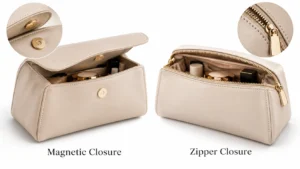
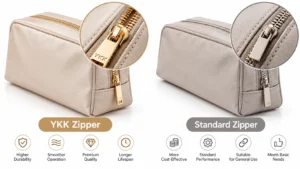
If you want to choose well, focus on five standards: size, material, organization, cleanability, and closure quality. Size determines whether the bag matches your routine. Material affects water resistance, durability, and weight. Organization affects speed and convenience. Cleanability matters because toiletries leak, even in premium products. Closure quality matters because a bad zipper can ruin an otherwise excellent bag.
These buying criteria also align with where the wider market is going. The global travel bag market was estimated at about USD 18.78 billion in 2023 and is projected to grow strongly through 2030, reflecting sustained consumer demand for travel gear that is both functional and lifestyle-driven. A toiletry bag sits inside that broader demand shift: people want travel accessories that feel organized, durable, and worth carrying repeatedly.
| Buying Standard | Why It Matters | What to Check |
|---|---|---|
| Size | Prevents overpacking or under-capacity | Fits your actual routine and trip length |
| Material | Affects water resistance and durability | PU, nylon, polyester, TPU, lining quality |
| Organization | Improves access and separation | Pockets, elastic loops, clear panels |
| Cleanability | Reduces long-term maintenance | Wipe-clean interior, washable fabric |
| Closure quality | Protects products and improves daily use | Smooth zipper, reinforced seams, sturdy puller |
Different Types of Toiletry Bags
Image alt suggestion: Comparison of flat toiletry pouch, structured dopp kit, and hanging toiletry bag on a white background.
Flat, structured, and hanging styles: what is the difference?
Flat toiletry bags are the simplest option. They are lightweight, easy to pack, and often work well for short trips or low-bulk essentials. But they usually offer the least internal structure. Once packed, items often pile on top of each other, which slows access and can crush soft tubes or small bottles.
Structured bags offer more shape and better volume distribution. They tend to stand on their own, protect contents better, and make it easier to separate categories. This is why many travelers prefer a boxy travel toiletry bag or classic dopp kit when carrying bottles, electric razors, or more than a few products.
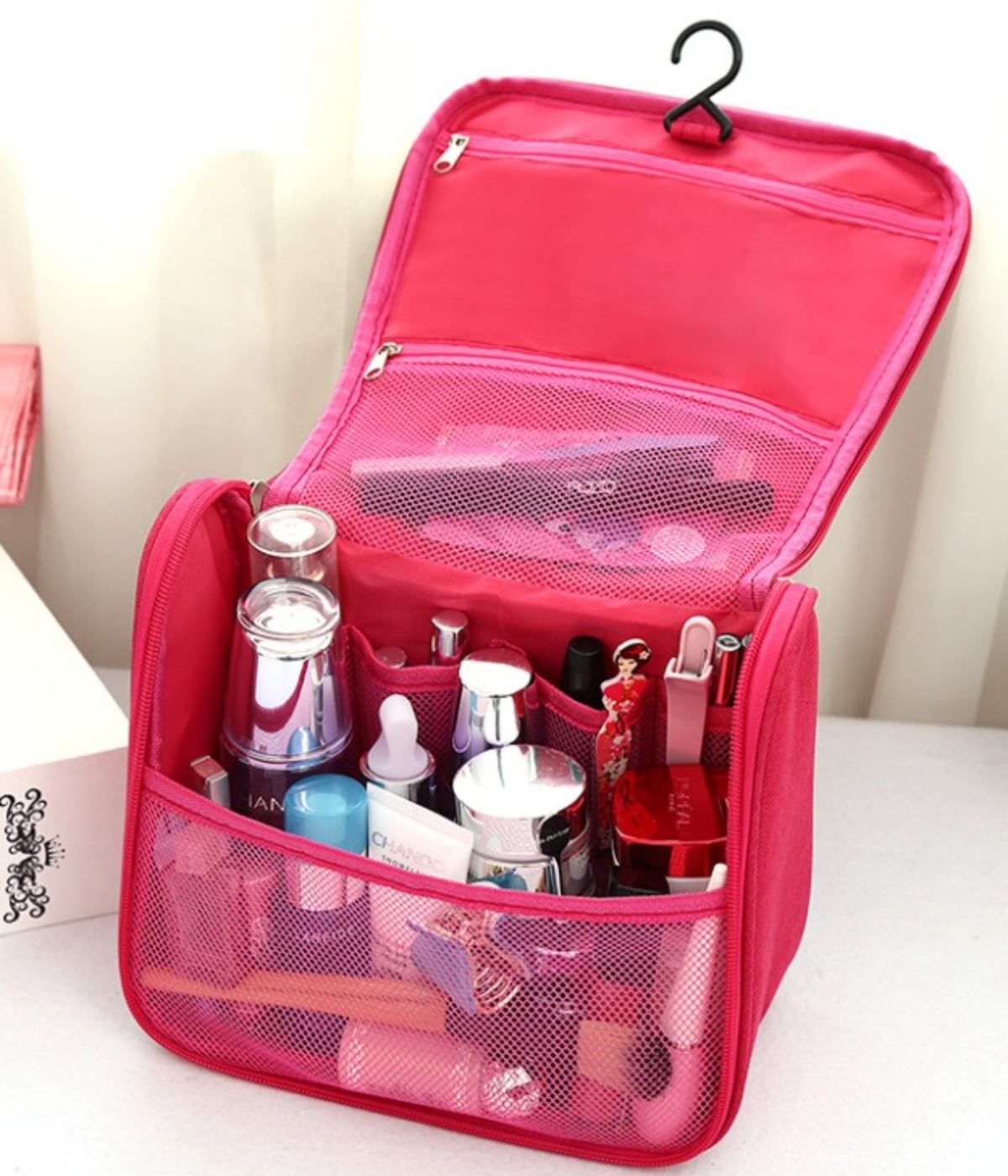
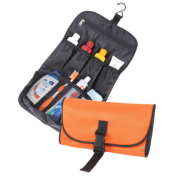
Hanging toiletry bags are built for visibility and convenience. When opened and hung, they turn vertical space into organized storage. This is especially useful in small hotel bathrooms, shared spaces, cruise cabins, or family travel situations where counter space is limited.
How travel toiletry bags differ from daily-use bags
A travel toiletry bag usually needs more containment, more organization, and better spill management. It may include waterproof lining, multiple zip sections, a hanger, and compartments sized for bottles or travel containers. A daily-use toiletry bag, by contrast, often benefits from being lighter, smaller, and faster to access.
That difference matters because the best travel pouch is not always the best daily organizer. A large hanging bag can feel brilliant in a hotel but bulky in a commuter tote. A sleek slim pouch works well at the gym or office but may feel frustrating on a seven-day trip.
How men’s and women’s common styles often differ
In practice, the difference is less about gender and more about packing behavior. Traditional men’s toiletry bags, often called dopp kits, tend to favor one main compartment, darker colors, and a lower-profile shape. Women’s toiletry bags are more likely to include layered compartments, wider openings, clear windows, brush slots, or a shape that accommodates skincare and cosmetics together.
Still, the most useful buying lens is not men versus women. It is routine versus routine. If someone carries clippers, shaving cream, and a toothbrush, they need different internal architecture than someone carrying serums, contact lens supplies, sunscreen, and hair ties.
Quick type comparison
- Flat pouch: best for minimal packing and short trips
- Structured toiletry bag: best for balanced organization and protection
- Hanging toiletry bag: best for long trips and small bathrooms
- Dopp kit: best for simple grooming routines and daily practicality
Best Features to Look For
Image alt suggestion: Close-up of a waterproof toiletry bag interior with mesh pockets, clear compartments, and sturdy zipper hardware.
Why waterproof and easy-clean materials matter
Waterproof or water-resistant construction is one of the most important features in any toiletry bag. Shampoos leak. Face wash caps loosen. Toothpaste splits. A bag that absorbs product is not just inconvenient. It becomes unhygienic over time. That is why coated linings, wipe-clean interiors, and materials such as nylon, polyester with coating, or TPU-backed fabrics tend to outperform untreated textiles in real travel conditions.
Ease of cleaning is just as important as water resistance. A bag may survive a spill once, but if the interior traps residue or odor, it will age poorly. The best options can be wiped clean quickly or rinsed without losing structure.
What layering, pockets, and clear windows actually add
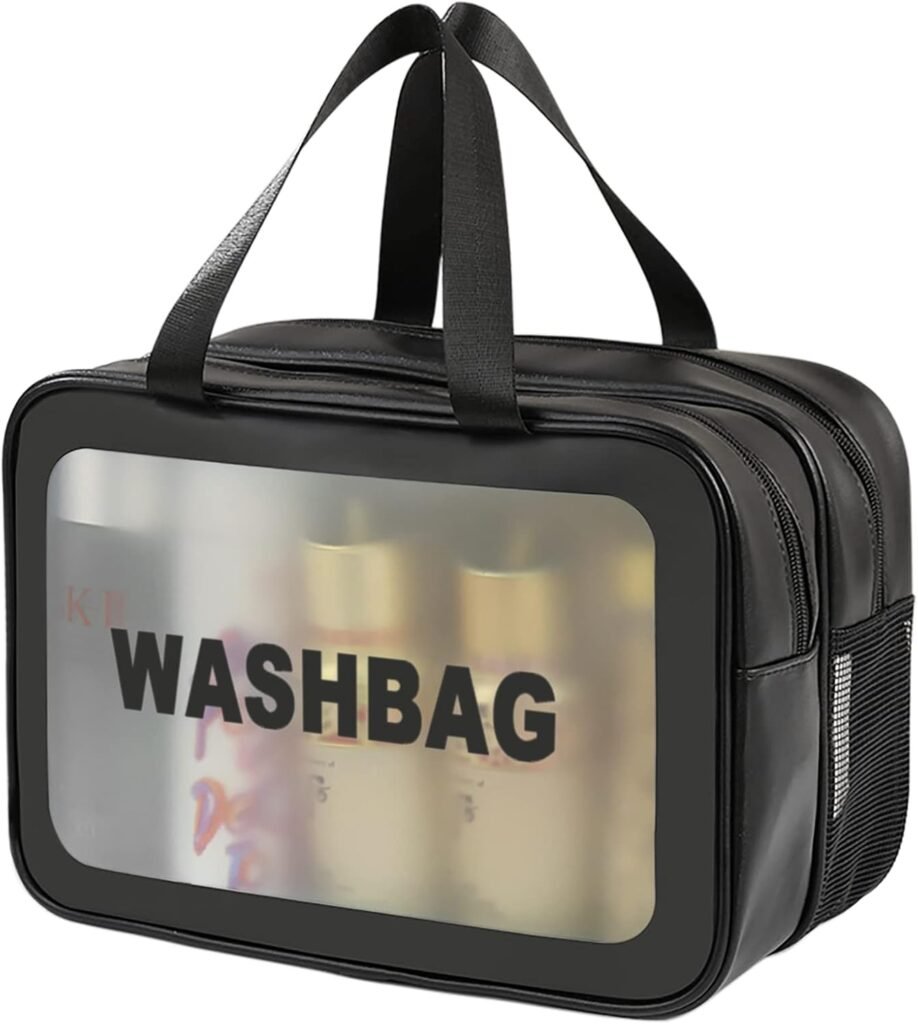
Good organization is not about having the highest number of compartments. It is about preventing conflict between products. Wet items should not sit against dry items. Razors should not scratch bottles. Small tools should not disappear into large empty space. Clear windows help you identify products quickly. Mesh pockets keep visibility high while still containing loose items. Elastic loops work well for toothbrushes, makeup brushes, razors, or travel tubes.
Several editor-tested rankings consistently reward this kind of practical design. Reviews from travel editors and gear reviewers in 2025 and 2026 repeatedly favored bags with strong internal organization, wipe-clean materials, and clear access rather than just aesthetic appeal.
How zippers, handles, and structure change the experience
A toiletry bag is opened and closed constantly. That makes hardware quality more important than many shoppers expect. A sticky zipper turns daily use into irritation. A weak handle makes a full bag awkward to move in and out of luggage. Poor structure causes tipping, sagging, and product compression.
Look for smooth zipper paths, reinforced corners, pullers that are easy to grip with wet hands, and a design that stays stable when placed on a shelf or countertop. A wide opening also matters. A bag that opens too narrowly forces you to dig instead of see.
- Choose wipe-clean lining over absorbent fabric whenever possible.
- Prioritize at least one separated compartment for liquids.
- Make sure the zipper opens wide enough to reveal the contents clearly.
- If you travel often, choose a handle or hanging hook that feels sturdy.
| Feature | Best For | Why It Helps |
|---|---|---|
| Water-resistant exterior | Travel and shared bathrooms | Protects from splashes and spills |
| Wipe-clean lining | All users | Makes maintenance fast |
| Clear window panel | Travel and fast access | Improves visibility |
| Hanging hook | Hotels and long trips | Saves counter space |
| Wide zip opening | Daily use | Speeds up packing and retrieval |
How to Choose the Best Toiletry Bag for Travel
Image alt suggestion: Travel toiletry bag packed with TSA-size bottles, toothbrush, skincare minis, and hanging hook beside a carry-on suitcase.
What works best for short trips
For a weekend trip or two- to three-day stay, a small to medium structured toiletry bag usually works best. It should fit essentials without encouraging overpacking. A slim dopp kit or compact rectangular travel organizer is often enough for toothbrush, razor, deodorant, facial cleanser, moisturizer, and a few small extras.
Short-trip packing rewards restraint. If the bag has too much empty space, you will likely fill it. That adds weight, clutter, and items you never use.
Why long trips usually need more compartmentalization
Longer trips create more complexity. Travelers often pack more liquids, backup products, medications, grooming tools, and specialty items like sunscreen, shaving products, or skincare routines split by morning and night. On these trips, compartmentalization matters much more than raw capacity.
A hanging toiletry bag often performs best here because it allows vertical separation. Liquids can stay in one zip section, dry items in another, and smaller tools in mesh pockets. That layout reduces search time and keeps a long-trip routine from turning into a mess.
Research-driven packing point: Travel editors repeatedly favor bags with segmented storage for longer trips because access speed and spill control matter more once the product count rises.
What to consider for airplane carry-on use
If you plan to keep your toiletry bag in carry-on luggage, airline security rules matter. In the United States, TSA’s 3-1-1 liquids rule generally limits carry-on liquids, gels, creams, and pastes to containers of 3.4 ounces or less, all fitting within one quart-size clear bag per passenger. That does not mean your entire toiletry bag must be clear, but it does mean your liquid strategy should be compatible with those rules when flying.
This is why many experienced travelers use one main toiletry bag plus one removable clear pouch for checkpoint compliance. It is often a better system than trying to force all products into one format.
Best travel toiletry bag checklist
- Weekend trip: compact and structured
- One-week trip: medium size with layered compartments
- Long-haul or family travel: hanging design with multiple sections
- Carry-on only: use leakproof minis and a checkpoint-friendly liquid setup
How to Choose the Best Toiletry Bag for Daily Use
Image alt suggestion: Small daily toiletry pouch inside a work tote with hand cream, deodorant, dental floss, and mini skincare items.
What size works best for daily grooming storage
For daily use, the best size is usually smaller than people expect. You want enough room for regular essentials, but not so much that the bag becomes a drawer you carry around. In most cases, a medium-small pouch or compact organizer is ideal. It should hold high-frequency items, stay easy to open, and fit naturally into a tote bag, locker, gym bag, or bathroom shelf.
Daily-use toiletry storage works best when it supports routine rather than “just in case” packing. If every extra pocket gets filled with low-priority items, the bag stops being efficient.
How home-use and commuting needs differ
A home-use toiletry bag may sit on a vanity, in a bathroom cabinet, or on open shelving. In that context, visual neatness and stand-up structure matter more. A commuting toiletry bag, on the other hand, needs compact dimensions, durability, and the ability to survive being packed next to electronics, lunch containers, or office supplies.
This distinction is often overlooked. People buy a beautiful large pouch for “daily use,” then realize it is annoying to carry or takes up too much room. Others buy a flat pouch for home storage and discover it collapses into clutter every morning.
Which materials hold up best with frequent use
For daily frequency, nylon and coated polyester remain some of the safest choices because they are lightweight, durable, and easy to wipe down. PU or vegan leather can look more elevated and work well for office or gifting use, but it should have a good-quality lining and cleanly finished edges if it will be handled often. Transparent or semi-transparent TPU panels can be useful in hybrid cosmetic and toiletry bags because they improve visibility and clean easily.
The broader category trend supports this focus on practicality. In the cosmetic and toiletry containers market, plastic remained the leading material segment in 2023, reflecting the continuing importance of lightweight, durable, and cost-effective formats in personal-care storage systems. For bag buyers, the takeaway is similar: functional materials still win in high-use categories.
| Use Scenario | Best Size | Best Material Direction |
|---|---|---|
| Office or commute | Small | Nylon, coated polyester, slim PU |
| Gym or locker | Small to medium | Water-resistant nylon or polyester |
| Bathroom shelf storage | Medium | Structured fabric or PU with wipe-clean lining |
| Shared household use | Medium to large | Segmented organizer with easy-clean interior |
Common Mistakes When Choosing a Toiletry Bag
Image alt suggestion: Overpacked toiletry bag with leaking bottles and tangled grooming tools beside a cleaner, organized version.
Why focusing only on appearance causes problems
One of the most common mistakes is buying a toiletry bag because it looks elegant in product photos, without checking how it opens, how it stands, or how it separates products. A beautiful bag with poor structure quickly becomes annoying. If the zipper path is awkward, if the opening is narrow, or if there is no spill-resistant lining, the bag may feel disappointing after only a few uses.
Good design is not only visual. In travel accessories, real performance comes from how the product behaves under pressure: when the bag is full, when a bottle leaks, when the bathroom counter is wet, or when you need to find one item in a hurry.
What goes wrong when capacity is too large or too small
If the bag is too small, essentials become crushed, bottles tilt sideways, and retrieval gets messy. If it is too large, you overpack. That means more weight, more clutter, and a greater chance of carrying items you never use. In both cases, the problem is poor fit between capacity and routine.
The best approach is to audit what you actually carry for one week. Then choose a bag based on that real kit, not the fantasy version of yourself who needs ten extra products for every trip.
Why ignoring materials and cleaning difficulty leads to regret
Another common mistake is underestimating maintenance. Absorbent linings, hard-to-reach corners, weak edge finishes, or cheaply bonded clear materials may look fine at first but age badly. Once residue builds up, the bag becomes unpleasant to use.
Expert advice: Choose for the worst day, not the best day. Assume that something will eventually leak. If the bag cannot handle that gracefully, it is not the right bag.
How to avoid the wrong purchase
- Lay out everything you actually carry.
- Measure your largest bottle or tool.
- Decide whether the bag is for travel, daily use, or both.
- Prioritize material and structure before color or trend details.
Case Studies, Pros and Cons, and Expert Picks
Image alt suggestion: Editor-style flat lay comparing a hanging toiletry bag, structured dopp kit, and clear TSA-friendly pouch.
Case study: editor-tested travel performance
Travel + Leisure reported testing and evaluating 70 toiletry bags and cosmetic cases in its latest updated roundup, which is useful because it reflects a broad, comparative approach rather than a single-writer opinion. Their recommendations emphasized practical features such as organization, usable capacity, portability, and access. That testing-based approach mirrors what experienced travelers already know: the best bag is rarely the prettiest empty shell. It is the one that still works when fully packed.
WIRED also published a 2026 tested roundup of toiletry bags, again emphasizing storage, organization, and design. When independent editorial sources keep rewarding the same traits, shoppers should pay attention. Structure, visibility, and cleanability are not niche preferences. They are repeat indicators of quality.
Case study: the value of the hanging toiletry bag
Good Housekeeping highlighted Bagsmart’s Hanging Toiletry Bag as a standout hanging option and noted that one editor’s bag had held up well after substantial travel. That is important because hanging bags sometimes get dismissed as bulky or overly specific. In reality, they are often the highest-function choice for people carrying more products, sharing bathroom space, or staying in hotels with limited counters.
This is a strong example of “fit matters more than hype.” A hanging toiletry bag is not necessary for everyone, but for longer trips or product-heavy routines, it can solve multiple problems at once.
Pros and cons of the main toiletry bag styles
| Style | Pros | Cons |
|---|---|---|
| Flat pouch | Lightweight, packable, simple | Minimal structure, slower access |
| Structured toiletry bag | Balanced storage, better protection | Can take more suitcase space |
| Hanging toiletry bag | Excellent visibility, great for long trips | Often larger and more feature-heavy |
| Dopp kit | Clean shape, easy daily use | Less ideal for product-heavy packing |
| Clear toiletry bag | Fast visibility, checkpoint-friendly | Can feel less polished and less protective |
Expert recommendation by use case
- Best for weekend travel: compact structured toiletry bag
- Best for long trips: hanging toiletry bag with layered pockets
- Best for daily carry: medium-small pouch with easy-clean lining
- Best for simple grooming: classic dopp kit
- Best for air travel liquids: modular system with a clear liquid pouch plus main organizer
Future Trends, Final Advice, and CTA
Image alt suggestion: Modern toiletry bags in recycled nylon, PU, and clear-panel designs arranged in a clean editorial layout.
What the category is likely to prioritize next
The future of the toiletry bag category will likely be shaped by three forces: travel recovery, smarter organization, and cleaner materials. As travel bag demand continues to expand globally, shoppers are becoming more selective. They want products that feel intentional, not generic. That means better compartment logic, easier-clean fabrics, more durable zippers, and formats that can move between home, work, and travel without friction.
Material direction will matter more as well. In adjacent packaging and travel-accessory sectors, sustainability, durability, and lightweight performance are becoming stronger market expectations. For toiletry bags, that may mean more recycled fabrics, smarter transparent components, and hybrid constructions that combine clean aesthetics with practical interiors.
How to make the right final choice
The best toiletry bag is not necessarily the most expensive one. It is the one that matches your usage scenario, packing habits, and travel style. A frequent traveler may need segmentation and a hook. A daily commuter may need slim dimensions and wipe-clean lining. A minimalist may be happier with a compact pouch than a large organizer full of empty compartments.
If you remember one rule, let it be this: buy for your real routine, not for the idealized routine shown in product photography.
Final summary and clear CTA
The best toiletry bag is the one that fits how you actually live. It should be easy to clean, sized correctly, simple to access, and built with materials and structure that support repeated use. Whether you prefer a hanging toiletry bag, a structured travel organizer, or a classic dopp kit, good design should make your routine easier every single time you pack.
If you are building a product range, sourcing a private-label travel organizer, or comparing materials and structures for your next collection, this is the stage where construction details matter most. Explore more bag design and manufacturing possibilities at Q&N Bags.
FAQ
Image alt suggestion: FAQ illustration showing different toiletry bag sizes and layouts for travel and daily use.
What is the best type of toiletry bag for travel?
For most travelers, the best type is a structured or hanging toiletry bag with clear organization. Short trips usually work well with a compact structured bag. Longer trips benefit from a hanging design because it gives better access and separation.
Should a toiletry bag be waterproof?
Ideally, yes. At minimum, it should be water-resistant and have an easy-clean interior. Toiletries leak often enough that choosing an absorbent, hard-to-clean bag is usually a mistake.
What size toiletry bag is best?
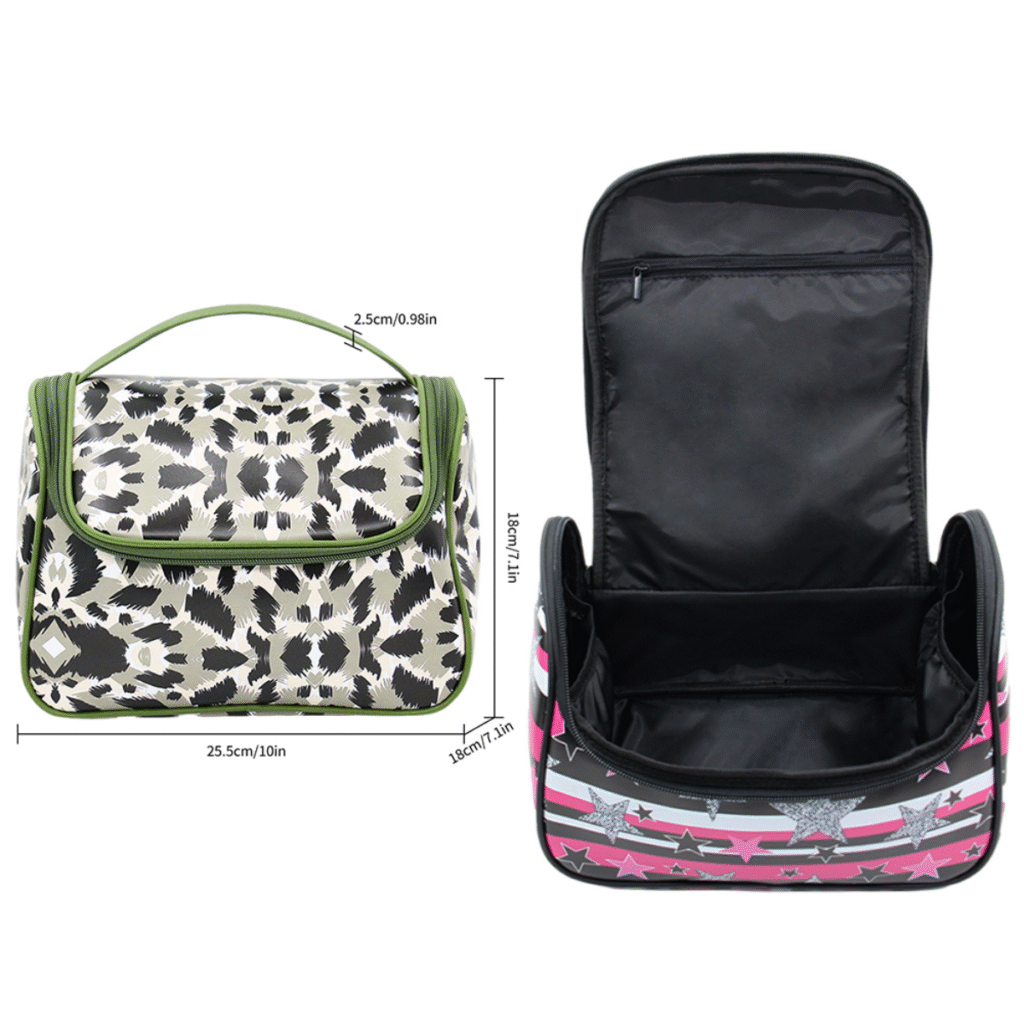
The best size depends on your routine. For daily use, small to medium is usually enough. For travel, choose based on trip length and product count. The right size is the one that fits your essentials without forcing you to dig through clutter.
What is the difference between a toiletry bag and a cosmetic bag?
A toiletry bag is generally designed for hygiene and grooming items such as toothbrushes, razors, shampoo, skincare, and shaving products. A cosmetic bag usually focuses more on makeup and beauty items. In practice, many people use one bag for both, but structure and materials may differ.
Are hanging toiletry bags worth it?
Yes, especially for longer trips, hotel stays, shared bathrooms, and product-heavy routines. They are not always necessary for minimalists, but they often provide the best organization and visibility.
Can I use one toiletry bag for both travel and daily use?
You can, but only if the bag is moderate in size and easy to carry. Many people eventually prefer separate solutions: one compact bag for daily use and one more organized bag for travel.
What material is best for a toiletry bag?
For most users, nylon or coated polyester offers the best mix of durability, lightness, and easy cleaning. PU can look more premium. Clear TPU or PVC panels can help with visibility, especially for travel or hybrid cosmetic storage.
Aries Gu is the founder of Q&N. With over 17 years of experience in cosmetic bag OEM/ODM source factory. He focuses on quality control, efficient communication, and on-time delivery for global cosmetic bag projects.