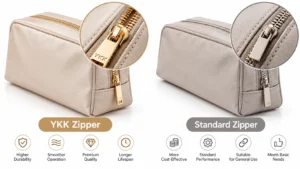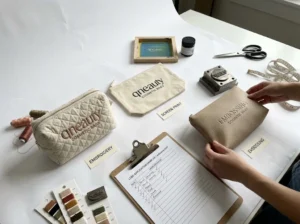
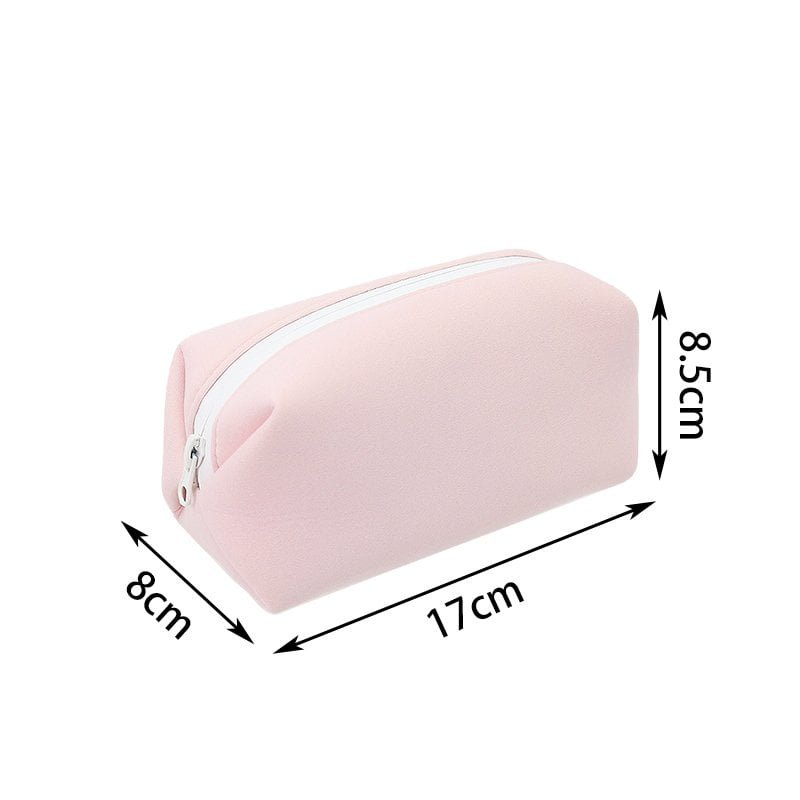
Neoprene cosmetic bags fit the way many consumers now use beauty products: at the gym, beside a pool, on a weekend trip or inside a recovery kit. The material is flexible, lightly cushioning and visually connected with wetsuits, performance gear and active lifestyles. Yet “neoprene” is often used too loosely in product development. Two bags can look similar while using different foam compositions, thicknesses, laminations and seam methods.
Those differences affect odor, weight, recovery, water resistance, logo quality and cost. This guide covers CR and SBR foam, thickness, capacity, branding, testing, sustainability claims and production control.
Market context: Grand View Research estimates the U.S. beauty and personal care market at US$117.05 billion in 2026 and projects it to reach US$196.33 billion by 2033, with self-care and wellness identified as major growth drivers. Skincare represented 32.5% of the market in 2025. These figures do not measure neoprene bags, but they support the commercial opportunity for travel-ready, fitness-oriented and wellness-led beauty kits.
Source: Grand View Research U.S. beauty and personal care market.
Table of Contents
- What Is a Neoprene Cosmetic Bag?
- Why Sporty Beauty and Wellness Brands Use Neoprene
- Best Uses for Neoprene Cosmetic Bags
- Neoprene Material Options
- How to Design a Neoprene Cosmetic Bag
- Branding Options for Neoprene Bags
- Production Considerations for Neoprene
- Neoprene Cosmetic Bag Advantages and Limitations
- How to Source Custom Neoprene Cosmetic Bags
- Is a Neoprene Cosmetic Bag Right for Your Brand?
- Frequently Asked Questions
- Expert Recommendations and Conclusion
What Is a Neoprene Cosmetic Bag?
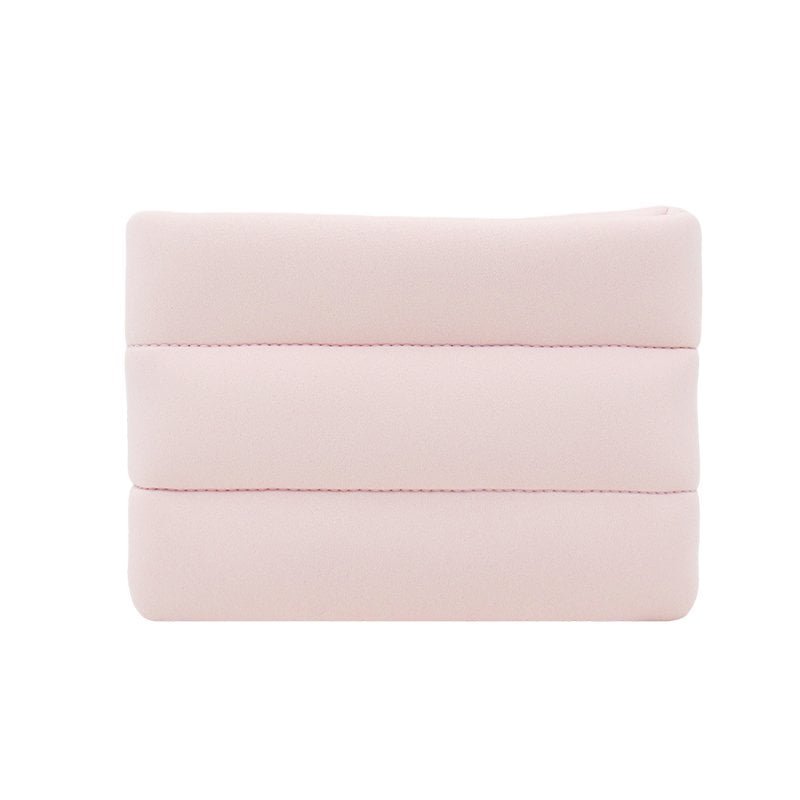
A neoprene cosmetic bag normally combines cellular rubber or rubber-blend foam with textile laminated to one or both sides. The textile adds color and abrasion protection; the foam provides body, flexibility and cushioning. Some designs add a separate lining.
Neoprene Material Structure
True neoprene is chloroprene rubber, abbreviated CR. Denka describes it as balancing physical performance with resistance to heat, ozone, oil and flame, and lists coated fabrics, wetsuits and sponge products among its applications.
In bag sourcing, “neoprene” may also mean SBR foam, a CR/SBR blend or another foam laminated with polyester or nylon jersey. These options can work well, but buyers should confirm foam composition, face textile, thickness and density.
Technical reference: Denka chloroprene rubber properties and applications.
Common Neoprene Thicknesses
Cosmetic-bag composites commonly range from about 1.5 mm to 4 mm. Thin material packs efficiently, medium thickness gives soft structure, and heavy foam adds cushioning but increases seam bulk and freight volume.
| Approximate thickness | Typical feel | Best application | Main risk |
|---|---|---|---|
| 1.5–2 mm | Light, flexible and compact | Flat makeup pouches, small gym kits, promotional bags | Limited shape support and cushioning |
| 2.5–3 mm | Balanced softness and structure | Travel toiletry bags, boxy cosmetic bags, wellness kits | Corner thickness if combined with heavy lining |
| 3.5–4 mm | Plush, protective and substantial | Electronic beauty tools, glass products, premium organizers | Higher weight, cost and sewing difficulty |
Neoprene Bags vs. Traditional Fabric Bags
Expert view: Never approve “3 mm neoprene” as the complete material description. Confirm whether 3 mm refers to the foam only or the textile-laminated composite, and approve thickness tolerance, density, stretch, surface fabric and color together.
Why Sporty Beauty and Wellness Brands Use Neoprene
Flexible and Protective Construction
Foam gives light impact absorption without a rigid-case appearance. It can flex inside a locker or suitcase and recover much of its shape, making it useful for travel skincare, recovery tools and beauty devices.
Neoprene reduces minor knocks but does not guarantee protection for glass, pressed powders or electronics. Fragile contents may still need loops, dividers or pads.
Water-Resistant Surface
Laminated neoprene commonly resists splashes, but the finished bag is not automatically waterproof. Needle holes, binding, zipper tape and logo attachments can allow water to enter.
Use “water-resistant outer” unless the complete bag passes a defined waterproof test; a waterproof zipper does not seal ordinary sewn seams.
Modern Athletic Appearance
Neoprene is visually linked with wetsuits and performance gear. Contrast binding, bold zippers and rubber-style patches reinforce that language, while bright colors feel energetic and black, navy or olive create a premium unisex look.
Suitability for Travel and Active Lifestyles
The material moves naturally between gym, beach, carry-on and bathroom settings. A wide opening, wipe-clean interior, stable handle and useful compartments make the pouch a credible active-lifestyle accessory.
Real Brand Case Studies: BURST and Quince
BURST Oral Care offers a neoprene cosmetic bag designed around toothbrushes, trays, floss and paste. Its official page lists a neoprene outer, waterproof zipper, poly-cotton lining and 9 × 3 × 5 inch dimensions—evidence of a pouch built around a complete mobile routine.
Quince takes a broader travel approach, listing a water-resistant recycled-neoprene outer, recycled-polyester lining, internal pocket, removable pouch and 6 × 9.5 × 4 inch dimensions. The two cases show focused-kit and general-organizer strategies.
Sources: BURST Neoprene Cosmetic Bag and Quince All-Day Neoprene Toiletry Bag.
Best Uses for Neoprene Cosmetic Bags
Gym and Fitness Beauty Kits
A gym kit may contain deodorant, dry shampoo, wipes, a hairbrush, skincare minis and hair accessories. Use a top zipper or U-shaped opening that exposes the full interior. Separate wet or leak-prone items from electronics and fabric accessories. An exterior grab handle makes the pouch easier to remove from a locker or duffel.
Swim and Beach Care Sets
Neoprene supports sunscreen, after-sun care, hair protection and goggles because the material feels appropriate near water. Add corrosion-resistant hardware and quick-draining or wipe-clean interior surfaces. Perforated panels can improve ventilation, but they also reduce splash resistance and allow sand to enter.
Travel Toiletry Bags
A neoprene toiletry bag can compress around bottles while providing light cushioning. A stable base and broad opening improve hotel-bathroom use. Check airline packing needs, filled weight and whether the bag fits inside the target carry-on. Removable pouches help separate liquids or small accessories.
Wellness and Recovery Product Kits
Recovery kits may include massage tools, heatless hair accessories, aromatherapy products, eye masks or compact devices. Neoprene works well when soft protection and an athletic appearance matter. For heated tools, do not assume standard neoprene provides validated heat protection; use tested thermal layers designed for the actual temperature.
| Use case | Recommended structure | Useful features | Critical test |
|---|---|---|---|
| Gym beauty kit | Medium boxy pouch | Wide opening, handle, internal mesh pocket | Capacity and sweat/wipe-clean performance |
| Beach care set | Soft zip pouch | Corrosion-resistant trims, drainage option | Saltwater exposure and colorfastness |
| Travel toiletries | Structured Dopp-kit shape | Removable pouch, elastic loops, stable base | Filled drop, zipper and leak-management test |
| Wellness tools | Padded organizer | Dividers, device pocket, cable loops | Product movement and surface protection |
Neoprene Material Options
Standard Neoprene
“Standard neoprene” often means black foam laminated with colored polyester jersey. The surface may be smooth, printed, perforated or embossed, while the core may be CR, SBR or a blend. Define every layer to avoid unapproved substitution.
SBR and CR Neoprene
CR is chloroprene rubber; SBR is styrene-butadiene rubber and is common in economical foam and blends. The right choice depends on odor limits, flexing, exposure, intended lifetime and price—not simply the most expensive compound.
When composition matters, compare density, thickness recovery, textile-to-foam peel strength, odor after ventilation and behavior after repeated compression.
Perforated Neoprene
Perforation reduces visual weight and creates a breathable athletic look. It can also improve flexibility. However, holes weaken claims about splash protection and may expose the inner foam at the cut edges. Small products can catch in large perforations, so lining and hole scale should be reviewed together.
Recycled and Alternative Foam Materials
“Recycled neoprene” may refer to the face fabric, foam, production scrap or several layers. Request the recycled percentage by layer and supporting documents; do not repeat bottle-equivalent claims without a calculation and chain of custody.
Alternatives include spacer fabric, EVA, TPE and natural-rubber blends. Compare odor, recovery, heat, water behavior and end-of-life options against the required performance.
| Material route | Main strength | Main limitation | Buyer verification |
|---|---|---|---|
| CR foam | Balanced durability and environmental resistance | Higher cost than many commercial blends | Composition, density, thickness and test reports |
| SBR foam | Cost-effective cushioning and softness | Not identical to CR in performance | Odor, recovery, aging and application suitability |
| CR/SBR blend | Balance of price and performance | Blend ratio may be unclear | Written composition and approved physical sample |
| Perforated composite | Breathable sporty appearance | Lower splash resistance | Hole size, tear strength and lining construction |
| Recycled-content composite | Supports documented material goals | Recycled layer and percentage may be ambiguous | Layer-by-layer claim and chain-of-custody evidence |
How to Design a Neoprene Cosmetic Bag
Choosing Material Thickness
Select thickness after defining the contents and shape. Heavy foam can feel premium but reduces internal corner space and complicates binding, zipper ends and handles.
Selecting Bag Shape and Opening
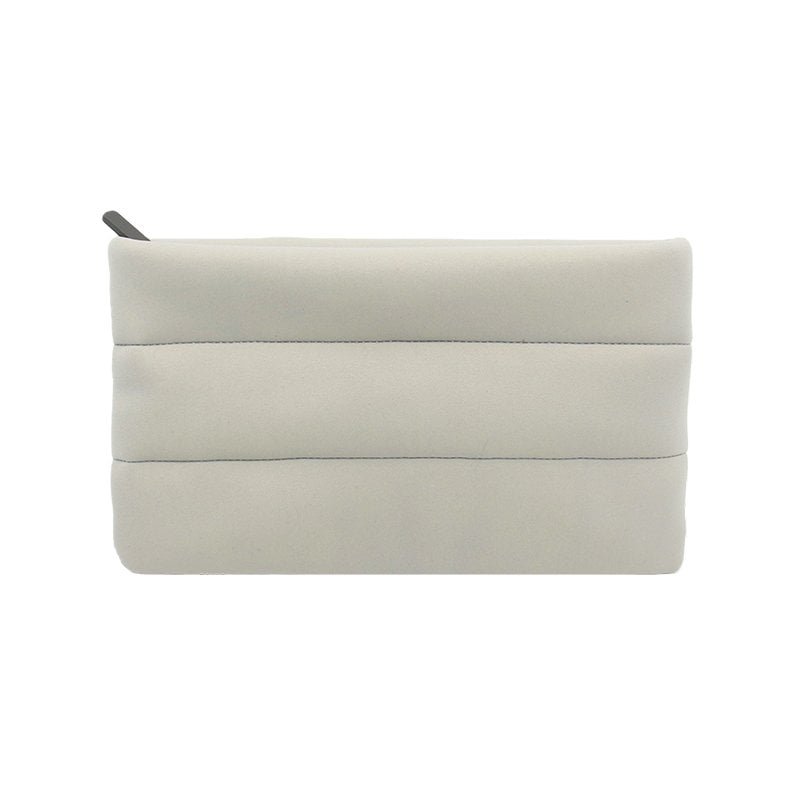
Flat pouches suit samples, boxy bags support bottles, U-openings improve visibility, and clamshell organizers provide full access. Each additional opening or panel increases seam and reinforcement complexity.
Adding Handles, Pockets and Compartments
Reinforce handles because repeated pulling can stretch foam. Use mesh, lining or thin neoprene for pockets, avoid excessive layer buildup, and size elastic loops around real products.
Choosing Sporty Colors and Contrast Trims
Color blocking suits neoprene: black with neon feels athletic, sand with tonal webbing feels wellness-led, and navy with white supports marine care. Approve face fabric, zipper, binding and logo together.
| Design decision | Recommended control | Common mistake |
|---|---|---|
| Thickness | Approve finished laminated thickness and tolerance | Specifying only “3 mm neoprene” |
| Capacity | Load a sample with real products | Using external bag dimensions as internal capacity |
| Opening | Measure usable zipper opening | Making the bag large but the access too narrow |
| Handle | Reinforce with webbing or internal backing | Sewing directly into unsupported foam |
| Water claim | Test complete construction | Assuming the foam makes every seam waterproof |
| Color | Approve all laminated textiles and trims together | Matching colors from digital images only |
Develop a Production-Ready Neoprene Bag
Q&N Bags provides OEM/ODM development for custom cosmetic and toiletry bags, including foam selection, thickness, lining, pockets, printing, logo patches, zipper pullers and retail packaging. Review the custom bag development service or visit the Q&N cosmetic bag factory website before preparing your RFQ.
Branding Options for Neoprene Bags
Screen Printing
Screen printing is suitable for bold one- or two-color logos on smooth laminated jersey. It offers efficient production at scale. Ink flexibility, opacity and adhesion must match the stretch of the material. Large solid prints can alter hand feel or crack if the ink system is too rigid.
Heat Transfer Logos
Heat transfer supports fine detail, gradients and multicolor artwork. Temperature and pressure must be controlled because excess heat can flatten, shrink or mark the foam. Test the logo after bending and compression, not only while the panel is flat.
Rubber Logo Patches
Rubber or TPU-style patches reinforce an athletic identity and provide strong color contrast. They add thickness and may require molds. Attachment can be stitched, bonded or combined, depending on the patch and bag structure. Check edge lifting, stitch distortion and weight.
Woven Labels and Custom Pullers
Woven labels provide consistent textile detail with low surface stress. Custom pullers can carry branding without covering the body fabric, but mold cost and minimum quantities should be considered. Hardware should be corrosion tested when the kit is designed for pool or beach use.
Production Considerations for Neoprene
Cutting and Edge Finishing
Neoprene composites can be die cut, knife cut or digitally cut. Raw edges may remain visible in simple promotional pouches, but binding, folded seams or lining create a cleaner retail finish. Cutting must avoid stretching the fabric away from the foam. Poor lamination or blunt cutting can create frayed textile edges and uneven profiles.
Sewing Thick Foam Materials
Foam compresses under the presser foot and then expands after sewing. This can create uneven feeding, wavy seams or mismatched panel lengths. Needle size, thread, stitch length, presser-foot pressure and feeding method should be adjusted for the final composite. Corner layers should be reduced before production rather than forced through the machine.
Odor and Material Testing
Foam, adhesive, ink and packaging can create odor. Approve an odor limit, ventilation period and sealed-pack check; investigate strong or persistent smell. Test the complete product, including foam, fabric, ink, adhesive and hardware.
For EU sales, REACH Candidate List substances can trigger article obligations. OEKO-TEX STANDARD 100 covers textiles tested for harmful substances, while California programs may require Proposition 65 assessment. These requirements are not interchangeable.
References: ECHA Candidate List obligations, OEKO-TEX STANDARD 100 and California OEHHA Proposition 65 business guidance.
Shape Recovery and Compression
Test recovery after planned carton pressure and storage. ASTM D395 addresses rubber compression set, while retail projects should also record finished-bag dimensions and appearance before compression, after unpacking and after a defined recovery period.
Testing reference: ASTM D395 compression-set methods.
| QC stage | What to inspect | Recommended evidence |
|---|---|---|
| Incoming composite | Thickness, density, color, odor, lamination and defects | Approved swatch and roll inspection |
| Cutting | Panel size, edge quality and textile delamination | First-cut approval |
| Branding | Adhesion, heat marks, logo position and flex durability | Strike-off on final material |
| Sewing | Wavy seams, skipped stitches, corner bulk and feeding | Golden sample and in-line inspection |
| Assembly | Zipper movement, handle strength, capacity and pocket function | Function and loading report |
| Packing | Odor, compression marks, shape recovery and carton pressure | Final inspection and recovery photos |
Neoprene Cosmetic Bag Advantages and Limitations
Water Resistance and Cushioning
Neoprene composites offer useful splash resistance and light cushioning, but neither feature should be overstated. Water can enter through seams and closures. Fragile items can still break under a hard impact. Specify the intended protection level and test the filled bag.
Durability and Easy Cleaning
The textile face can often be wiped clean, but care depends on adhesive, lining, print and hardware. Quince states that its bag is unsuitable for hand or machine washing, showing why finished-product testing must precede care claims.
Weight and Storage Considerations
Neoprene is lightweight relative to rigid cases, yet heavier and bulkier than unpadded woven fabric. Thick panels consume internal space and increase freight volume. Bags can be compressed, but long-term pressure may create creases or reduced recovery.
Sustainability Considerations
CR and SBR are synthetic materials. Reuse does not by itself prove lower impact, so assess material quantity, recycled content, lamination, trims, packaging and likely use, then make only documented claims.
| Advantages | Limitations |
|---|---|
| Soft cushioning without a rigid case | Not impact-proof for fragile products |
| Water-resistant surface for active environments | Finished sewn bag is not automatically waterproof |
| Modern athletic appearance | Material descriptions are often inconsistent |
| Good flexibility and shape recovery | Compression can leave temporary or permanent marks |
| Compatible with bold color and branding | Heat and pressure can damage foam during logo application |
| Reusable for travel and wellness routines | Mixed laminated materials can complicate recycling |
How to Source Custom Neoprene Cosmetic Bags
1. Confirm Thickness and Material Composition
State the foam type, textile faces, thickness, density, color and finish. Ask whether the quotation uses CR, SBR, a CR/SBR blend or an alternative foam. Retain an approved swatch as the bulk-production standard.
2. Test Product Capacity and Protection
Send product dimensions, weights and photos. Load the sample with actual bottles, tools and accessories. Check usable opening, internal clearance, center of gravity and product movement. Add dividers or elastic loops when cushioning alone is insufficient.
3. Approve Logo and Color Samples
Approve a print, transfer, patch or label strike-off on the production composite. Review the sample after bending and packing. Match zipper tape, binding, handle webbing and hardware beside the bag fabric under consistent lighting.
4. Confirm Compliance and Production Standards
Define destination markets, chemical requirements, colorfastness, odor limits, zipper tests, handle strength and inspection criteria before mass production. Work backward from the required arrival date and include sampling, material booking, production, inspection, shipping and customs.
| RFQ item | Information to provide |
|---|---|
| Bag structure | Reference image or drawing: flat, boxy, U-opening or clamshell |
| Finished dimensions | Length × height × depth and measurement method |
| Contents | Product sizes, weights, quantities and intended arrangement |
| Material | CR/SBR preference, thickness, face fabric, lining and color |
| Features | Handle, pockets, loops, dividers, ventilation and reinforcement |
| Branding | Vector artwork, method, size, position and colors |
| Testing | Destination compliance, odor, colorfastness, water and strength needs |
| Commercial details | Quantity by color, packaging, destination and required arrival date |
Request a Custom Neoprene Cosmetic Bag Quote
Send Q&N Bags your reference image, bag dimensions, order quantity, product list, logo file, testing requirements and target delivery date. The development team can recommend foam thickness, structure, lining, branding and packing based on your product and target cost.
Explore the custom OEM/ODM process or contact Q&N Bags for a quotation.
Is a Neoprene Cosmetic Bag Right for Your Brand?
Best Brand Applications
Neoprene is a strong fit for sports beauty, oral care, sun care, swim, travel, wellness, recovery, men’s grooming and active haircare brands. It works especially well when the packaging must communicate movement, flexibility and practical protection. It may be less suitable for natural-fiber positioning, formal luxury gifting or programs requiring a rigid recyclable mono-material package.
Key Questions Before Ordering
- Does the material support the brand’s active or travel positioning?
- Is the foam CR, SBR, a blend or another material?
- Has laminated thickness and density been physically approved?
- Does the bag fit the real products without excessive stretching?
- Is the water-resistance claim supported by a finished-product test?
- Has odor been checked after sealed storage?
- Can the logo withstand bending, compression and cleaning?
- Are all chemical and retail requirements defined for the destination?
Final Sourcing Checklist
Approve four physical references before production: the laminated material swatch, the branded pre-production sample, the sample loaded with real contents and the final packed-carton configuration. These references prevent most disagreements about thickness, color, capacity, logo appearance, odor and shape recovery.
Frequently Asked Questions
Are neoprene cosmetic bags waterproof?
The laminated material is commonly water-resistant, but a sewn bag is not automatically waterproof. Water can enter through needle holes, zipper tape, binding and logo attachments. Use “water-resistant” unless the complete construction passes a defined waterproof test.
What thickness is best for a neoprene cosmetic bag?
About 2.5–3 mm is a practical starting range for many travel and boxy bags. Use thinner material for flat promotional pouches and thicker material for products needing more body. Always approve the finished laminated composite, not only the foam thickness.
Can neoprene bags be customized with a logo?
Yes. Screen printing, heat transfer, rubber or TPU patches, woven labels and custom zipper pullers are common. The best method depends on artwork, stretch, quantity and target appearance. Test adhesion and appearance after flexing.
How do you clean a neoprene cosmetic bag?
Care depends on the foam, lamination adhesive, lining, logo and hardware. Many bags can be gently spot cleaned with mild soap and air dried, but some finished products are not suitable for immersion or machine washing. Publish only instructions validated on the final sample.
Is neoprene safe for cosmetic packaging?
Suitability depends on the complete material and destination requirements. Request testing for applicable restricted substances, odor and colorfastness. Products should be stored in their original containers; the bag is secondary packaging, not a material for direct contact with cosmetic formulas.
Is recycled neoprene more sustainable?
It may reduce virgin-material use, but the claim must identify which layer is recycled and by what percentage. Also evaluate durability, lamination, trims, packaging and likely reuse. Avoid broad environmental claims without supporting evidence.
What MOQ and lead time should buyers expect?
MOQ depends on material availability, custom color, logo, hardware and packaging. Fully customized factory programs are often most economical around 1,000 pieces per design or color. Sampling commonly takes about 7–14 days and mass production about 30–45 days after approval, subject to specification and capacity.
Expert Recommendations and Conclusion
Future active-beauty packaging will likely use lighter structures, removable organization and more precise recycled-content claims. Brands should distinguish recycled face fabric from recycled foam or a verified composite.
Google’s guidance for classic and AI search emphasizes helpful, reliable content and says no special AI schema is required. Product pages should publish useful composition, dimensions, care, testing and capacity details instead of generic claims.
SEO references: Google people-first content guidance and Google guidance for AI features and websites.
Successful neoprene cosmetic bags are defined by the whole system: foam composition, laminated thickness, usable capacity, seam construction, logo durability, odor control and truthful water-resistance claims. When buyers approve these details before bulk production, neoprene can deliver the flexible protection and athletic identity expected by modern beauty and wellness customers.
Final expert recommendation: Do not buy from a material name alone. Approve the exact composite, test the filled bag and write measurable requirements for thickness, odor, recovery, branding and water performance into the purchase specification.
Develop Your Custom Neoprene Beauty Bag
Prepare your reference image, product dimensions, quantity by color, logo artwork, compliance requirements and required arrival date. Q&N Bags can then build a production proposal around your gym, travel, beach or wellness collection.
View Q&N custom bag development or request a custom neoprene cosmetic bag quote.
Aries Gu is the founder of Q&N. With over 17 years of experience in cosmetic bag OEM/ODM source factory. He focuses on quality control, efficient communication, and on-time delivery for global cosmetic bag projects.