The terms toiletry bag and makeup bag are often used as if they mean the same thing. In everyday conversation, that is understandable. Both are small bags designed to hold personal care items, both are used at home and while traveling, and both can look similar at first glance.
Still, they are not exactly the same.
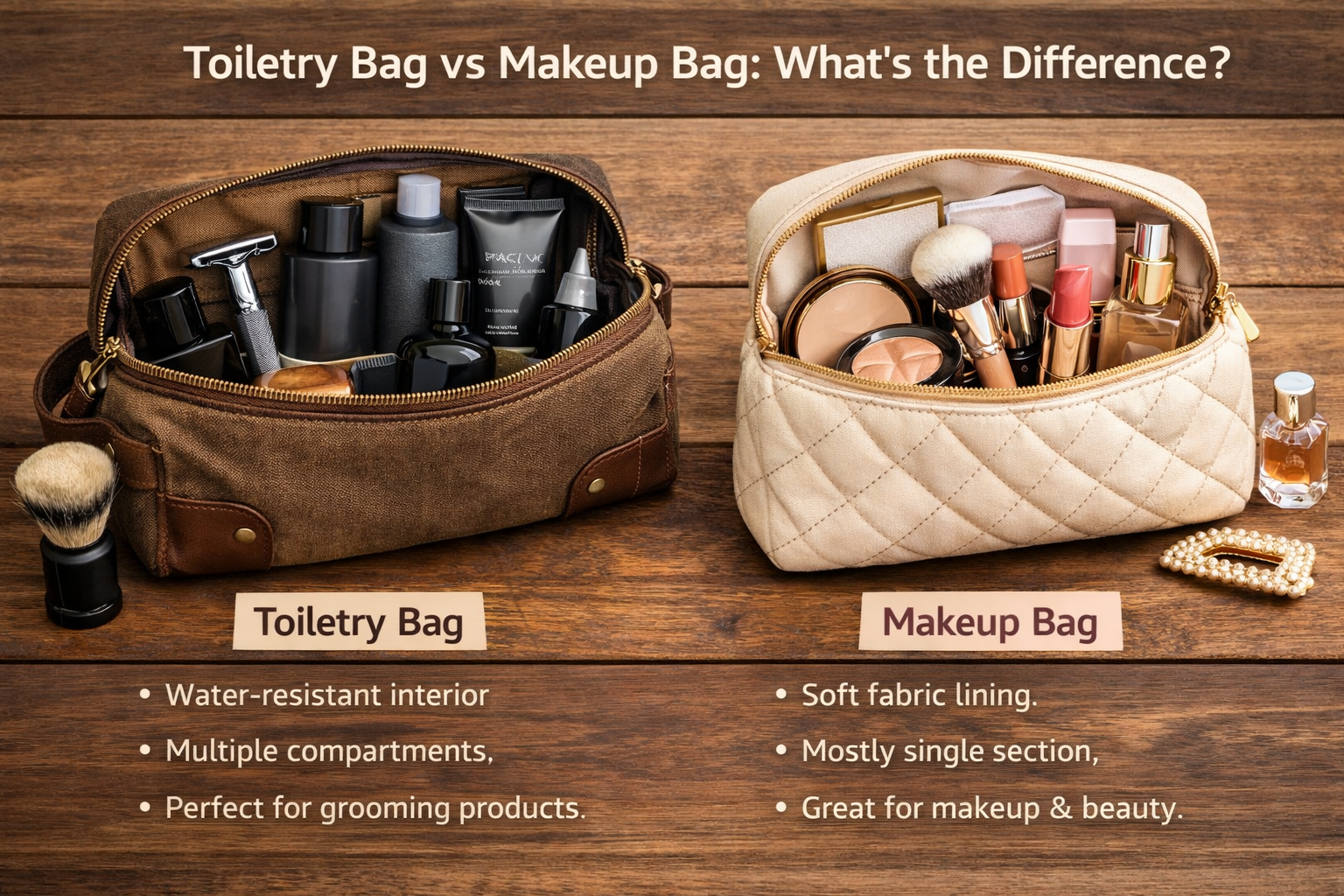
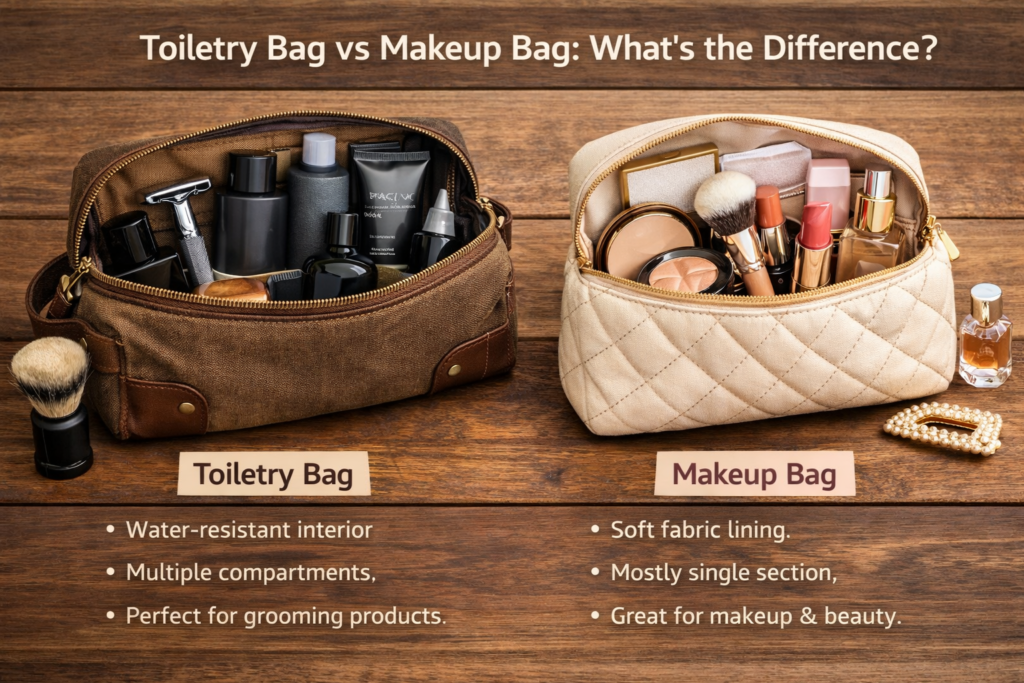
A toiletry bag is usually designed for hygiene and travel essentials such as shampoo, cleanser, toothbrushes, razors, and skincare bottles. A makeup bag, by contrast, is generally made for cosmetics, beauty tools, and small daily touch-up items like lipstick, mascara, compact powder, and brushes.
That difference matters more than many buyers realize. The right bag affects how easily products can be organized, how well they are protected from spills, and how convenient they are to carry in real life.
This guide will help you quickly understand the difference between a toiletry bag vs makeup bag, so you can choose the right option for your own use, your retail assortment, or your private label collection.
What Is a Toiletry Bag?
A toiletry bag is a storage bag made for personal hygiene and grooming products. It is often used for travel, overnight stays, gym visits, and business trips.
The main purpose of a toiletry bag is practical organization. It helps keep items such as shampoo, body wash, toothpaste, razors, deodorant, skincare bottles, and travel-size liquids together in one easy-to-carry place.
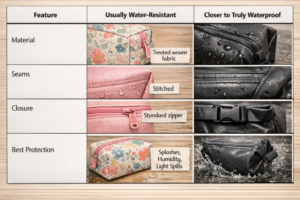
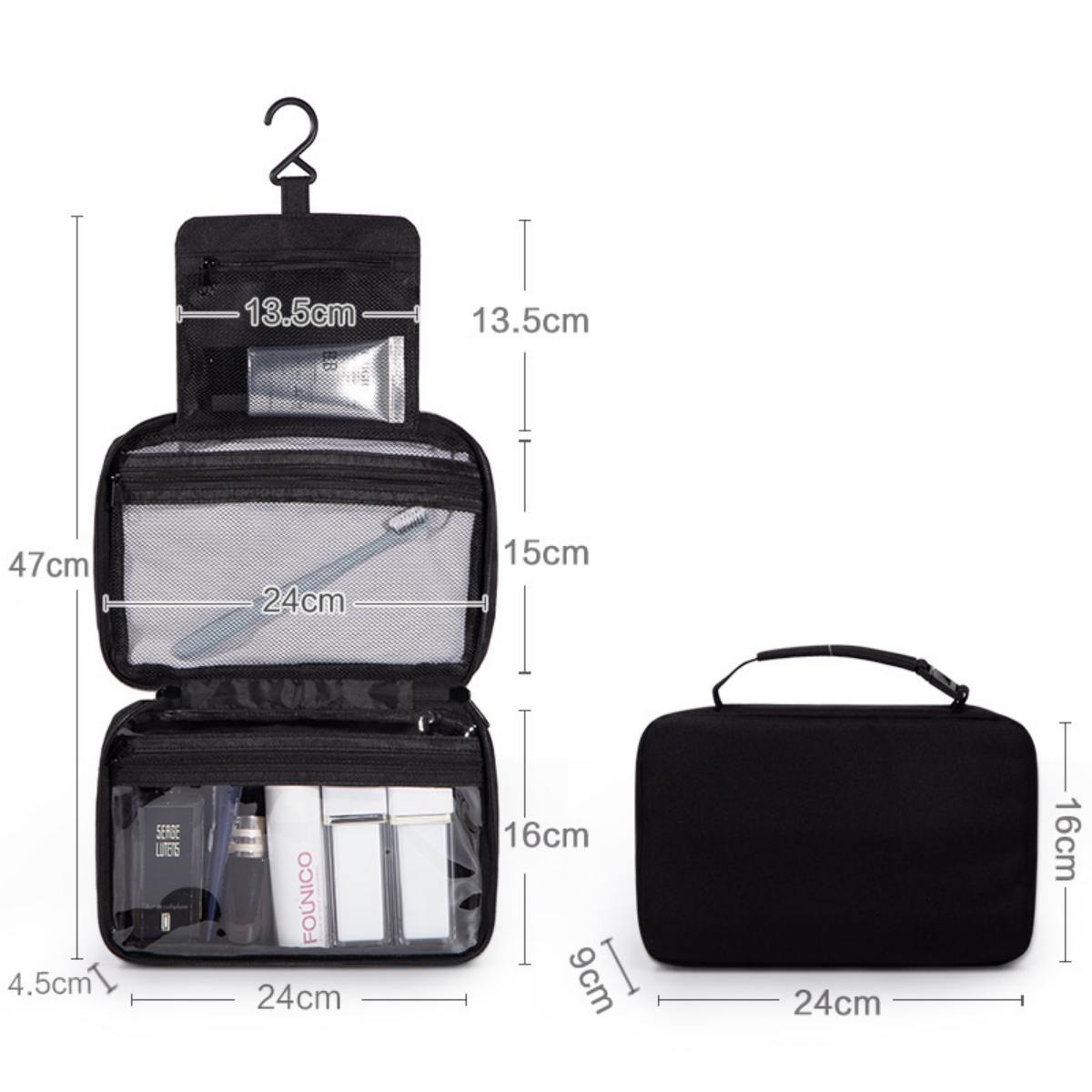
In most cases, a toiletry bag is built with function first. It may include a wider base, more depth, inner compartments, waterproof lining, wipe-clean surfaces, or even a hanging hook. These features make it more suitable for wet environments and products that can leak.
Typical use cases include:
- Packing travel toiletries in a suitcase
- Carrying grooming essentials for work trips
- Organizing bathroom items at the gym
- Storing family travel products in one place
In short, a toiletry bag is usually the better choice when the contents are larger, more varied, or more likely to spill.
What Is a Makeup Bag?
A makeup bag is a smaller, more compact bag designed to hold cosmetics and beauty accessories. Its job is to keep makeup organized, protected, and easy to access.
Common items inside a makeup bag include foundation, concealer, lipstick, blush, eyeliner, mascara, beauty sponges, and small brushes. Some people also use it for compact skincare items or beauty tools, but the core purpose is still cosmetic storage.
Compared with a toiletry bag, a makeup bag is usually lighter and easier to carry inside a handbag, tote, or backpack. It is often chosen for daily use, quick touch-ups, and light travel rather than full grooming routines.
Typical use cases include:
- Carrying daily makeup in a handbag
- Keeping beauty items organized on a vanity
- Packing a small cosmetic kit for short trips
- Holding compact products for touch-ups during the day
A makeup bag often places more emphasis on appearance, portability, and convenience. It may have softer construction, a slimmer silhouette, or a more fashion-oriented look.
Toiletry Bag vs Makeup Bag: The Main Differences
Purpose
The clearest difference between a toiletry bag and a makeup bag is purpose.
A toiletry bag is made for hygiene, skincare, and grooming products. That includes items used before or after washing, showering, or getting ready for the day.
A makeup bag is made for cosmetics and beauty tools. It is better suited to products used for appearance, touch-ups, or color cosmetics.
Of course, there is some overlap. A person may place lip balm, a mini moisturizer, or tweezers in either one. But in general, the toiletry bag handles washroom essentials, while the makeup bag handles beauty essentials.
Size and capacity
A toiletry bag is usually larger and deeper.
That extra space matters because toiletries tend to be bulkier. Bottles, tubes, electric trimmers, shaving items, and skincare containers take up more room than a few makeup items.
A makeup bag is usually smaller and lighter. It is designed for compact products and better suited to carrying only what is needed for daily use or short outings.
If you need to store full-size or travel-size liquids, a toiletry bag usually performs better. If you need only a few small essentials, a makeup bag is often enough.
Structure
Structure is another major difference.
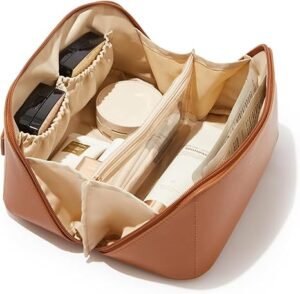
A toiletry bag often focuses on three-dimensional space, compartments, and separation. It may have mesh pockets, elastic holders, zip sections, or upright storage to prevent bottles from rolling around.
A makeup bag usually focuses more on easy access and portability. Some are wide-opening pouches, while others are slim zip bags that can fit into a larger handbag.
This difference affects user experience. A structured toiletry bag supports better organization for mixed-size items. A makeup bag is often faster to open, use, and put away.
Material
Material choices often reflect how the bag will be used.
A toiletry bag tends to prioritize water resistance, stain resistance, and easy cleaning. Coated fabrics, wipeable linings, polyester, nylon, PU, or waterproof interiors are common because toiletries can leak or leave residue.
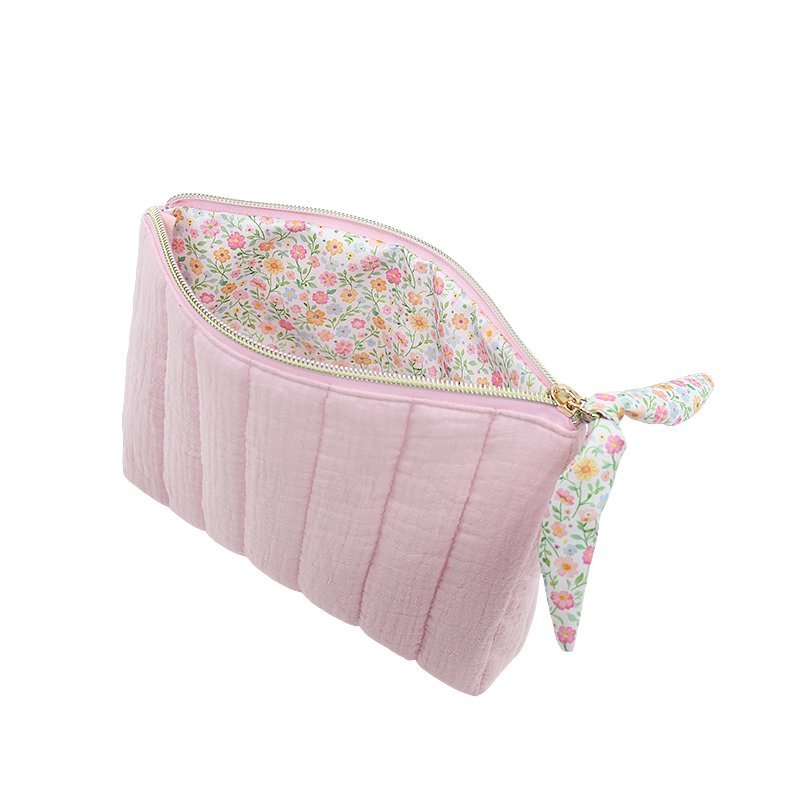
A makeup bag may also use durable materials, but it often gives more attention to appearance, feel, and lightweight construction. Canvas, velvet, quilted fabric, soft PU, or fashion fabrics are more common in cosmetic-focused designs.
That does not mean a makeup bag cannot be durable. It simply means the material priorities are often different.
Portability
A toiletry bag is commonly associated with suitcases, travel bags, and bathroom counters.
A makeup bag is more often associated with handbags, work totes, backpacks, and daily routines.
That is why portability feels different between the two. Toiletry bags are usually designed to carry more. Makeup bags are designed to travel lighter and stay close at hand throughout the day.
Pros and Cons of a Toiletry Bag
Advantages
A toiletry bag has several clear strengths.
First, it offers more capacity. This is useful for people who travel often, carry multiple skincare or grooming products, or prefer to keep everything in one place.
Second, it is better for liquids. Because toiletry bags are often made with waterproof linings and more practical compartments, they are better suited to items that may spill or leak.
Third, it improves organization efficiency. A well-designed toiletry bag allows users to separate razors from skincare, bottles from dry items, and clean products from used tools.
For travelers, that structure can make packing and unpacking noticeably easier.
Disadvantages
The downside is that a toiletry bag can feel too large for simple daily use.
If someone only needs a lipstick, mirror, powder, and a few beauty basics, a full toiletry bag may feel unnecessary. It can also take up more room in a handbag or backpack.
Some designs are also less stylish than makeup bags because they prioritize function over appearance. That is not always the case, but it is still a common difference.
Pros and Cons of a Makeup Bag
Advantages
A makeup bag is popular for good reason.
It is lightweight and easy to carry, which makes it ideal for everyday use. It fits more naturally into handbags, desk drawers, or carry-on totes.
It is also better for organizing small beauty items. Lip products, brushes, compacts, and beauty tools can be stored without the extra bulk of a travel-oriented bag.
Another advantage is convenience. A makeup bag is perfect for daily touch-ups, quick access, and beauty products that need to travel with the user from morning to evening.
Many buyers also prefer the design flexibility of makeup bags. They often come in more fashion-driven shapes, colors, prints, and textures.
Disadvantages
The biggest limitation is capacity.
A makeup bag usually cannot comfortably hold larger toiletries, especially bottles, tubes, or full grooming sets. Even if those items fit, they may be harder to organize.
It may also offer less protection against leaks. Not every makeup bag is made with waterproof lining or stain-resistant interiors, so liquid products can become a problem if packaging fails.
For longer trips or more complex routines, a makeup bag may simply be too small.
Which One Should You Choose?
Choose a toiletry bag if…
A toiletry bag is the better option if you:
- Travel frequently for business or leisure
- Need to carry skincare, hygiene items, or shaving products
- Pack liquid bottles, tubes, or full grooming sets
- Care more about waterproofing, capacity, and organization
- Want one bag that can handle bathroom routines while traveling
For many travelers, a toiletry bag is the more dependable choice because it is built for practical use under less predictable conditions.
Choose a makeup bag if…
A makeup bag is the better choice if you:
- Carry beauty products every day
- Mainly store cosmetics and small beauty tools
- Want something compact for a handbag or tote
- Prefer a lighter, more stylish, more portable option
- Need quick access for touch-ups rather than full routines
For everyday beauty use, a makeup bag usually feels easier, cleaner, and more natural.
Can One Bag Do Both Jobs?
Yes, one bag can do both jobs, but only if the design is right.
A growing number of brands now offer hybrid bags that combine the best features of both categories. These bags may look compact like a makeup bag while still offering waterproof lining, a wider base, and several compartments like a toiletry bag.
This type of design works especially well for short trips, minimal routines, and buyers who want versatility instead of owning multiple bags.
The key factors to look at are:
- Compartments: Can wet and dry items be separated?
- Water resistance: Is the lining easy to wipe clean?
- Size: Is there enough room for the intended products?
- Opening style: Can items be accessed quickly without everything falling out?
If those elements are balanced well, one bag can absolutely serve both functions. Still, for users with heavier travel needs or larger beauty collections, separate bags often work better.
Final Buying Tips
When choosing between a toiletry bag and a makeup bag, do not focus only on the product name. In the market, labels are often used loosely, and the name alone does not tell you how well the bag will perform.
Instead, look at the real use case.
Think about where the bag will be used, what it needs to hold, and how often it will be carried. A travel bag for shampoo, skincare, and razors needs very different features from a daily pouch for lipstick and powder.
Pay attention to:
- Size: Does it match the products inside?
- Structure: Are there enough compartments or sections?
- Material: Is it waterproof, wipeable, lightweight, or more decorative?
- Cleaning difficulty: Can it handle spills, powder, or residue?
- Portability: Will it live in a suitcase or in a handbag?
The best choice is not about which term sounds better. It is about which bag fits the user’s routine.
If you are a retailer, importer, or private label buyer, this distinction matters even more. A well-positioned product line often includes both options: a practical toiletry bag for travel and grooming, and a compact makeup bag for daily beauty use. That gives customers clearer choices and makes your assortment easier to sell.
A simple rule works well: choose a toiletry bag for function-heavy travel needs, and choose a makeup bag for compact beauty essentials and everyday convenience.
If you are developing your next collection, consider offering both—and, where it makes sense, a smart hybrid in between.
Aries Gu is the founder of Q&N. With over 17 years of experience in cosmetic bag OEM/ODM source factory. He focuses on quality control, efficient communication, and on-time delivery for global cosmetic bag projects.