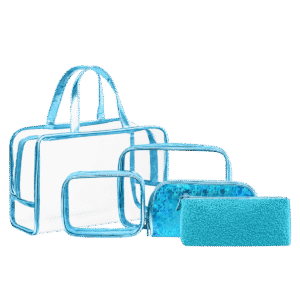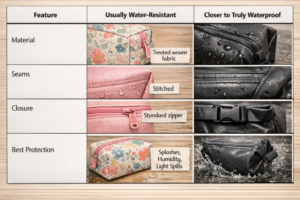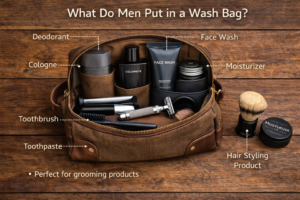
Knowing what to keep in your cosmetic bag sounds simple until your bag becomes heavy, messy, and full of products you rarely use. Many people carry duplicates, oversized bottles, dried-out items, and “just in case” products that make daily touch-ups harder instead of easier. A smart cosmetic bag should not be a tiny version of your bathroom shelf. It should be a curated kit built around your routine, your travel habits, and the kind of maintenance you actually do during the day.
That question matters more than ever. Beauty remains a strong retail category, travel-size formats continue to gain traction, and consumers increasingly expect products and accessories to be portable, practical, and clean. Circana reported that the U.S. prestige beauty market reached $16 billion in the first half of 2025, while mass beauty at mass merchants rose to $34.6 billion. Grand View Research also estimates continued growth in the global cosmetic packaging market, reflecting the importance of portable beauty presentation and storage. In this guide, you will learn what to keep in your cosmetic bag for everyday use and travel, what not to pack, how to organize by purpose, what size bag to choose, and how to keep the entire setup clean and efficient.
Table of Contents
- Why Your Cosmetic Bag Needs a Smart Essentials List
- What to Keep in Your Cosmetic Bag for Daily Use
- What to Keep in Your Cosmetic Bag for Travel
- What Not to Keep in Your Cosmetic Bag
- How to Organize What to Keep in Your Cosmetic Bag by Purpose
- How Big Should Your Cosmetic Bag Be
- Tips to Keep Your Cosmetic Bag Clean and Practical
- Conclusion and Next Step
- FAQ
1. Why Your Cosmetic Bag Needs a Smart Essentials List
Why do so many cosmetic bags become too heavy and disorganized?
Most cosmetic bags become cluttered for one reason: people pack for every possible scenario instead of the situations they actually face. A lipstick turns into five lip products. A single compact turns into powder, bronzer, blush, and a full backup base. Travel leftovers stay in the bag for months. Old samples sit beside daily staples. The result is a kit that looks full but works poorly.
Professional organizers and makeup artists often make the same recommendation in different words: a cosmetic bag should be edited, not merely filled. Byrdie’s beauty organization coverage, which includes advice from a professional makeup artist and a professional organizer, emphasizes that clutter makes routines slower and less intuitive. In practical terms, the more products you carry without a purpose, the harder it becomes to find what you need when you actually need it.
Why is a streamlined cosmetic bag more useful than an overpacked one?
A lighter cosmetic bag is faster to search, easier to clean, less likely to leak, and more realistic for daily use. It also protects product quality. FDA guidance notes that cosmetics can go bad if stored improperly, especially in overly warm or moist conditions, and that contaminated products can become harmful. When you carry fewer items and check them regularly, you are more likely to notice texture changes, odor changes, or products that have simply lived in the bag too long.
| Overpacked Bag | Edited Bag | Which One Works Better? |
|---|---|---|
| Heavy, messy, and slow to search | Light, focused, and easy to use | Edited bag |
| More likely to hide expired products | Easier to monitor and refresh | Edited bag |
| Harder to clean after leaks or powder fallout | Less contamination and easier maintenance | Edited bag |
| Often duplicates products unnecessarily | Built around actual routine needs | Edited bag |
That principle matters for both home users and brands. As consumers buy more portable, hybrid, and travel-oriented beauty products, the cosmetic bag becomes part of the user experience. What you keep inside it should support that experience, not work against it.
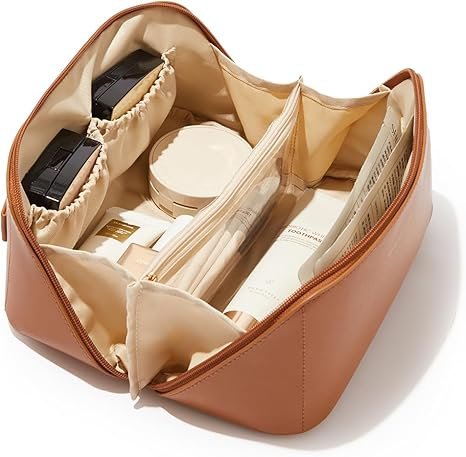
Suggested image alt: “Overpacked cosmetic bag next to a neatly organized essentials-only beauty pouch”
2. What to Keep in Your Cosmetic Bag for Daily Use
Which touch-up products are truly worth carrying every day?
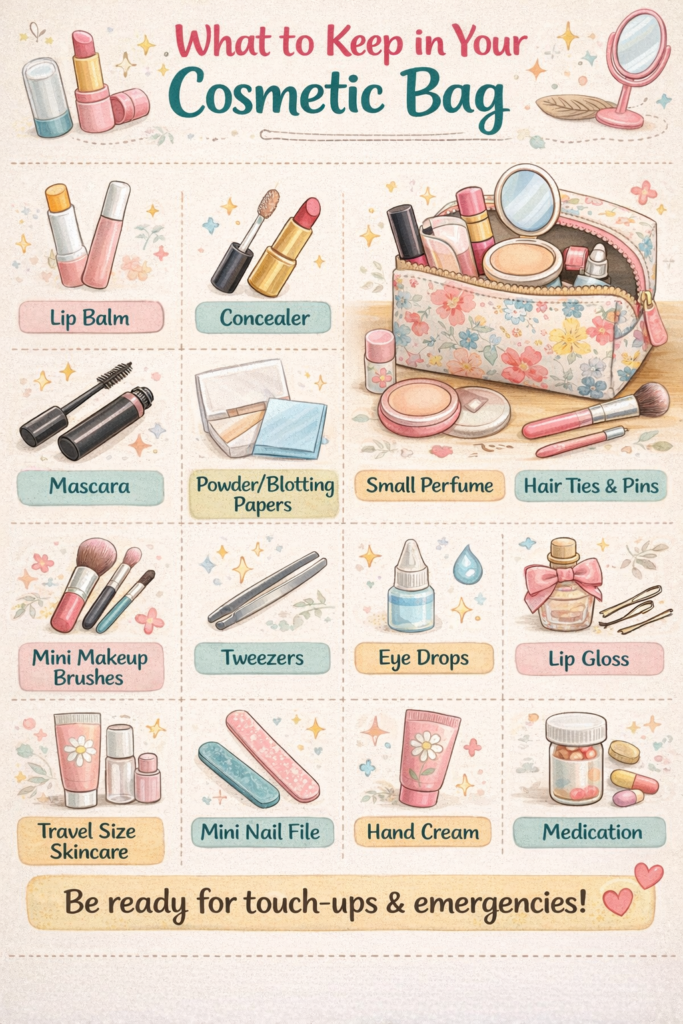
The best daily cosmetic bag essentials are the products that solve the most common real-life beauty problems: shine, fading, dryness, redness, smudging, and small grooming fixes. For most people, that means a compact powder or blotting sheets, a lip product, concealer, and one versatile complexion product if needed. It rarely means your full morning routine in miniature.
Byrdie’s expert-led makeup basics coverage notes that products such as concealer are among the most useful core items because they deliver visible correction without requiring a full-face redo. That is the mindset daily packing should follow: carry products that rescue the look, not products that rebuild it from zero.
| Daily Essential | Why It Earns a Spot | Who Needs It Most |
|---|---|---|
| Pressed powder or blotting sheets | Controls shine quickly | Commuters, office workers, oily skin types |
| Concealer | Covers redness, under-eyes, or small spots | Anyone who needs targeted correction |
| Lip balm, lipstick, or tinted gloss | Restores color and comfort fast | Almost everyone |
| Mini mirror | Makes touch-ups easier anywhere | Useful if you are often away from a bathroom |
Which small tools should stay in a daily beauty bag?
Tools are often more important than an extra product. A compact mirror, cotton swabs, hair ties, and tweezers can rescue a look faster than one more lipstick. Cotton swabs help fix smudges. Hair ties handle heat, workouts, and bad-weather hair. Tweezers are useful for brows, splinters, or tiny wardrobe emergencies. A small folding brush or lash comb can also be practical if your routine includes eye makeup.
The strongest daily kits blend beauty and utility. That is why many people quietly keep a few hygiene and “life support” items beside their makeup. They understand that appearance maintenance is not only about color products.
What hygiene items belong in a cosmetic bag?
Wet wipes, tissues, bandages, and hand sanitizer wipes are some of the most useful items you can carry. They do not make your face look glamorous, but they make the bag function better in real life. A tissue protects products from dust or spills. A bandage saves the day after a blister or paper cut. A small wipe can clean hands before a touch-up or remove surface mess from packaging.
Case Study: InStyle reported spending 384 hours testing makeup bags across airplanes, trains, workdays, and bathroom counters. That kind of real-world testing is a useful reminder: the best cosmetic bag setups are not the most crowded or trend-driven. They are the ones that stay functional across movement, spills, and repeated use.
Example of a smart daily setup
- Pressed powder or blotting sheets
- Concealer
- One lip product
- Mini mirror
- Cotton swabs
- Hair tie
- Tissue pack
- Bandage or two
Suggested image alt: “Daily cosmetic bag essentials including compact powder concealer lip product mirror cotton swabs and tissues”
3. What to Keep in Your Cosmetic Bag for Travel
Which skincare and toiletry items are essential for travel?
Travel changes the goal of a cosmetic bag. Instead of carrying only touch-up items, you need products that help you wash, prep, maintain, and recover your routine in a different environment. That often includes cleanser, moisturizer, sunscreen, lip care, deodorant, toothbrush basics, and a reduced but functional makeup kit. The best travel cosmetic bag balances comfort with size discipline.
When selecting products for travel, prioritize what your skin actually needs under stress. Flights, climate changes, hotel air, sun exposure, and schedule disruption often make hydration, cleansing, and sun protection more important than carrying every possible makeup option.
How should you choose travel sizes and refill bottles?
Travel size works best when it serves one of three purposes: it meets airline carry-on rules, it reduces weight, or it prevents waste from carrying full-size packaging. Choose travel-size products you already know work for your skin. Refill bottles are useful for repeat travel, but only if they are leak-resistant, clearly labeled, and thoroughly cleaned before reuse. A small bottle that leaks over everything else defeats the point of packing efficiently.
Refillable and portable packaging is also part of a broader market trend. Grand View Research estimates the global refillable packaging market at $45.59 billion in 2024, projecting continued growth through 2030. That reflects stronger consumer interest in portability, reusability, and lower-waste packaging systems.
What liquid limits matter for flights?
If you are flying with a carry-on, TSA’s official 3-1-1 liquids rule is the reference point: liquids, aerosols, gels, creams, and pastes are limited to containers of 3.4 ounces or less, all fitting into one quart-sized bag, with one bag per traveler. TSA also notes that some medically necessary liquids may be allowed in larger quantities under specific procedures. This is why travel cosmetic bags should be edited before departure, not repacked in the airport line.
| Travel Cosmetic Bag Item | Keep It? | Best Format |
|---|---|---|
| Cleanser | Yes | Mini tube, solid bar, or refill bottle |
| Moisturizer | Yes | Travel jar or mini tube |
| Sunscreen | Yes | Travel-size tube |
| Foundation | Maybe | Mini bottle or stick formula if needed |
| Multiple full-size bottles | No | Replace with travel sizes or decants |
Expert Tip: Pack by function, not category. Instead of carrying “all skincare” or “all makeup,” ask what you need to cleanse, protect, moisturize, and refresh your appearance. That approach automatically reduces volume.
Suggested image alt: “Travel cosmetic bag packed with mini skincare tubes refill bottles lip balm sunscreen and TSA-friendly liquids”
4. What Not to Keep in Your Cosmetic Bag
Why should you avoid oversized products?
Large bottles, bulky palettes, and rarely used extras take up disproportionate space. They also increase the risk of leakage and crowd out the products that matter most. If you never do a full face at work or on the go, carrying a full-size foundation, brush set, and palette is usually wishful packing rather than useful packing.
There is another problem: heat and moisture. FDA guidance explains that cosmetics may go bad more quickly if stored poorly, including in environments that are too warm or too moist. A crowded cosmetic bag often sits in a warm car, gym locker, bathroom, or suitcase pocket longer than people realize.
Which items are more likely to leak, expire, or contaminate other products?
Liquid foundation, gloss tubes with loose caps, cream products near the end of their shelf life, pump bottles that are not travel-safe, and unprotected tools are among the biggest troublemakers. Mascara deserves special attention. FDA notes that shelf life for eye-area cosmetics is more limited than for many other cosmetics and mentions that some industry experts recommend replacing mascara about three months after purchase because of repeated microbial exposure. That makes old eye products poor candidates for long-term bag storage.
| Item to Avoid | Main Risk | Safer Alternative |
|---|---|---|
| Full-size liquid bottle | Leaks, excess weight | Travel-size or refill bottle |
| Old mascara | Higher contamination risk | Fresh tube stored and rotated intentionally |
| Cracked powder compact | Mess, fallout, wasted space | Replace or depot safely |
| Uncapped tweezers or tools | Damage and hygiene issues | Pouch or sleeve-protected tools |
A good rule is simple: if an item leaks easily, smells off, has changed texture, or never gets used, it does not belong in your cosmetic bag.
Suggested image alt: “Items that should not stay in a cosmetic bag including oversized bottles leaking tubes and expired makeup”
5. How to Organize What to Keep in Your Cosmetic Bag by Purpose
What should a commute cosmetic bag include?
A commute kit should be light and fast. It is not for rebuilding your face. It is for managing shine, dryness, flyaways, or one small emergency before a meeting, lunch, or ride home. Think powder or blotting sheets, lip balm or lipstick, a mirror, a hair tie, and a few hygiene basics.
What belongs in an out-and-about touch-up cosmetic bag?
This version is slightly more capable. Add concealer, a cream blush or multipurpose tint, and one or two tools such as cotton swabs or a mini brush. The focus is still editing, not excess. Choose products that perform double duty. A tint that works on lips and cheeks is usually more useful than two separate products in a small bag.
What belongs in an overnight or short-trip cosmetic bag?
For overnight travel, move from touch-up mode to routine support. Include cleanser, moisturizer, sunscreen, one base product, one lip product, one brow or mascara product if used daily, and a few hygiene or comfort items. This is often where a medium boxy cosmetic bag works best because it can hold both beauty and mini-care items without becoming chaotic.
| Bag Purpose | Recommended Contents | Size Range |
|---|---|---|
| Daily commute | Powder or blotting sheets, lip product, mirror, tissue, hair tie | Small |
| Touch-up while out | Concealer, lip product, mirror, cotton swabs, compact, small tool | Small to medium |
| Overnight or weekend | Mini skincare, sunscreen, essentials makeup, wipes, tools | Medium |
| Extended travel | Full travel routine plus segmented organization | Medium to large |
Pros & Cons of organizing by purpose
Pros
- Reduces dead weight and duplicates
- Makes product rotation easier
- Helps prevent expired items from piling up
- Creates faster, more intuitive routines
Cons
- Requires occasional repacking
- You may need more than one bag size
- Seasonal changes can affect what makes sense
- People who love “options” may find it restrictive
If you are shopping for a more functional organizer or considering a custom layout, it helps to look at bag design features such as wipeable linings, compartments, and travel-friendly dimensions. That is one reason many brands invest in purpose-built pouches rather than generic bags. For examples of structured, customizable cosmetic bag options, see QN Bags.
Suggested image alt: “Three cosmetic bag setups organized by purpose for commuting touch-ups and overnight travel”
6. How Big Should Your Cosmetic Bag Be?
Who is a small cosmetic bag best for?
A small bag is ideal for minimalist users who only need touch-up products. It works best for office carry, handbags, and anyone who prefers only the most practical items: lip care, powder, a mirror, and one or two emergency add-ons.
Why is a medium bag the most common choice?
A medium cosmetic bag is popular because it balances function and portability. It can hold daily products plus a few skincare or hygiene items without becoming bulky. That makes it the most versatile option for commuting, overnight travel, and general daily organization.
When does a large-capacity bag make sense?
A large bag makes sense for multi-step routines, longer trips, professional makeup use, or shared family packing. It can also work well for segmented travel systems where makeup, skincare, and hygiene are grouped together. The risk, however, is that extra space encourages overpacking. Bigger is only better if the structure and contents stay logical.
| Bag Size | Best For | Watch Out For |
|---|---|---|
| Small | Minimal daily carry | May not fit hygiene extras or mini skincare |
| Medium | Daily use plus short travel | Can become cluttered if not edited |
| Large | Travel, pro kits, full routines | Invites duplicate or unnecessary packing |
From a product-development perspective, size also shapes perceived value. A bag that opens cleanly, protects contents, and is easy to wipe down usually feels more premium than a larger but floppy alternative. If your interest is not only personal organization but also sourcing or designing a more practical cosmetic bag, a manufacturing-oriented reference such as QN Bags can help show what size, shape, and structure options exist.
Suggested image alt: “Small medium and large cosmetic bags compared by capacity and best use case”
7. Tips to Keep Your Cosmetic Bag Clean and Practical
How often should you clean a cosmetic bag?
A monthly reset is a good baseline for most daily users, with faster spot cleaning whenever there is visible powder fallout or a leak. Allure’s long-running organization advice recommends emptying the bag and wiping it down about once a month. That general rhythm also makes sense from a product-safety standpoint. FDA says cosmetic products can become harmful if contaminated with harmful microorganisms, and AAD advises washing makeup brushes every 7 to 10 days to reduce harmful bacteria on tools that touch the face.
How can you avoid foundation, lipstick, or liquid leaks?
Use tightly closed travel containers, keep liquid items upright when possible, and place the most leak-prone products in a secondary pouch. Do not store half-broken caps and hope for the best. For flights, keep all liquids together so you can monitor them more easily. For daily bags, reducing the number of liquid products is often the simplest fix.
Which materials are easiest to clean and maintain?
Wipeable linings, coated materials, and smoother synthetics are usually easier to clean than absorbent fabrics. That does not mean fabric bags are a bad choice. It means the ideal material depends on what you carry. If your cosmetic bag holds powders and a lip balm, soft fabric may be fine. If it carries serum, foundation, or sunscreen, easier-clean surfaces become more valuable.
Clean-and-practical checklist
- Remove expired or rarely used products once a month
- Wipe out powder and residue before it builds up
- Wash brushes regularly, ideally every 7 to 10 days
- Label decanted liquids for travel
- Replace damaged caps, cracked compacts, and old mascara
A practical cosmetic bag is not just about contents. It is also about material, layout, and maintenance. Consumers increasingly want bags that feel intentional and easier to live with, which helps explain why structured, easy-clean, and travel-aware cosmetic bags continue to perform well in both retail and private-label development.
Suggested image alt: “Cleaning a cosmetic bag with makeup brushes removed and wipeable lining visible”
8. Conclusion: Build a Cosmetic Bag That Fits Real Life
The smartest answer to what to keep in your cosmetic bag is not “more.” It is “what works.” A strong cosmetic bag includes the products that solve daily problems, the tools that make those products usable, and the hygiene basics that keep everything cleaner and more practical. It leaves out oversized duplicates, high-risk leakers, and old products that no longer deserve the space.
For daily use, focus on touch-up essentials. For travel, prioritize skincare basics, sun protection, portability, and liquid-rule awareness. For both, organize by purpose instead of habit. That is how your cosmetic bag becomes faster to use, easier to clean, and more supportive of your actual routine.
Looking ahead, portable beauty will likely keep growing alongside travel-size demand, refillable formats, and function-led accessories. That means the cosmetic bag itself matters more than ever. If you are ready to upgrade from a random pouch to a better-designed option, or if you are building a custom beauty bag for your brand, explore cosmetic bag ideas and manufacturing options at QN Bags.
Clear CTA: Audit your current bag today. Remove anything expired, bulky, or unused. Then rebuild it around one simple question: what do I actually need to keep in my cosmetic bag for the way I live and travel now?
Explore Cosmetic Bag Options
FAQ
1. What are the essentials in a cosmetic bag?
For most people, the essentials are a lip product, powder or blotting sheets, concealer, a mirror, cotton swabs, and a few small hygiene items such as tissues or bandages.
2. What should I keep in a small makeup bag?
Keep only high-value essentials: one lip product, one complexion rescue item, a mirror, and one or two practical extras such as a hair tie or tissue pack.
3. What should I pack in a travel cosmetic bag?
Pack cleanser, moisturizer, sunscreen, your most-used makeup basics, travel bottles or minis, and small hygiene items. For flights, make sure liquids follow the applicable carry-on rules.
4. How often should I clean my cosmetic bag?
A monthly full clean is a good rule for most people, with immediate spot cleaning after spills. Brushes and tools should be cleaned more often.
5. What is the difference between a cosmetic bag and a toiletry bag?
A cosmetic bag usually focuses on makeup, small touch-up items, and beauty tools. A toiletry bag is often broader and may include toothbrush items, shower products, deodorant, and full hygiene essentials.
6. Should I keep mascara in my everyday cosmetic bag?
You can, but rotate it intentionally. Eye-area products have more limited shelf life than many other cosmetics, so avoid keeping an old tube in your bag indefinitely.
7. What type of cosmetic bag is easiest to maintain?
A bag with a wipeable lining, simple compartments, and a size that matches your actual routine is usually the easiest to keep clean and practical.
Suggested external source placements for your CMS:
- Introduction / market context: Circana — U.S. beauty industry growth in the first half of 2025
- Introduction / trend context: Grand View Research — cosmetic packaging market
- Travel section: TSA — 3-1-1 liquids rule and travel tips
- Safety section: FDA — Using Cosmetics Safely; Shelf Life; Microbiological Safety and Cosmetics
- Cleaning section: American Academy of Dermatology — how to clean makeup brushes and when to toss makeup
- Organization section: Byrdie and Allure expert-backed organization guidance
- Product-use case: InStyle — tested makeup bags in real-world travel and daily settings
Tip: Add these as contextual links, editorial source notes, or author references rather than interrupting the article flow with too many visible citations.
Aries Gu is the founder of Q&N. With over 17 years of experience in cosmetic bag OEM/ODM source factory. He focuses on quality control, efficient communication, and on-time delivery for global cosmetic bag projects.