Updated for 2026 | A practical sourcing and design guide for beauty brands, hair accessory labels, retailers, promotional buyers, and private-label product teams.
A satin cosmetic bag can make a beauty or hair accessory collection feel more polished before the customer even opens it. The smooth surface, soft drape, and light-reflective finish naturally suit scrunchies, headbands, bridal gifts, skincare minis, and limited-edition sets.
This guide covers satin selection, bag structure, branding, packaging, defect prevention, and the sourcing details needed to turn the pouch into a valuable part of the set.
Market conditions support this approach. Statista projects the U.S.
Table of Contents
- What Is a Satin Cosmetic Bag?
- Why Satin Works for Beauty and Hair Accessory Sets
- Best Uses for Satin Cosmetic Bags
- Satin Fabric Options for Cosmetic Bags
- How to Design a Satin Cosmetic Bag
- Logo Options for Satin Cosmetic Bags
- Common Production Challenges with Satin
- How to Package Satin Cosmetic Bag Sets
- How to Order Custom Satin Cosmetic Bags
- Are Satin Cosmetic Bags Suitable for Your Collection?
- Frequently Asked Questions
- Expert Conclusion and Future Trends
What Is a Satin Cosmetic Bag?
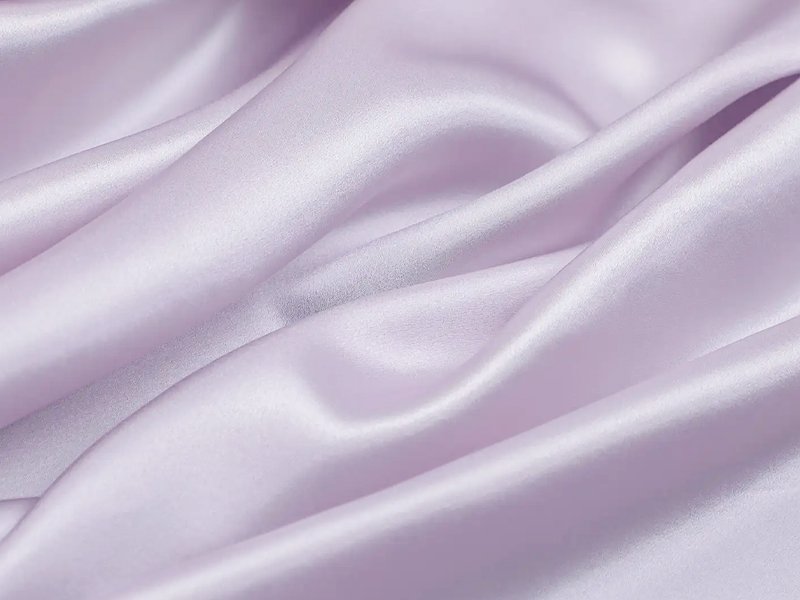
A satin cosmetic bag is a makeup or accessory pouch made with a satin-weave outer fabric. “Satin” describes the weave and surface construction rather than one single fiber. Long yarn floats create fewer visible interlacing points, allowing light to reflect more evenly. The result is the familiar smooth face, fluid hand feel, and soft sheen.
Satin Fabric Characteristics
For cosmetic bags, satin provides three visual advantages: a clean surface, strong color depth, and a premium hand feel. These features make it especially effective for soft-sided pouches and coordinated gift sets. However, the same long floats that create the sheen can catch on rough hardware, fingernails, hook-and-loop tape, or unfinished carton edges.
Fabric weight controls structure. Lightweight satin usually needs lining, medium-weight polyester satin is easier to stabilize, and heavy satin adds body but also seam bulk.
Polyester Satin vs. Silk Satin
Polyester satin and silk satin are not interchangeable. Silk is a natural protein fiber; satin is a weave. Silk can be woven in satin, while most commercial satin cosmetic bags use polyester because it offers broader color availability, easier care, more predictable production, and a price better suited to wholesale quantities.
| Factor | Polyester Satin | Silk Satin |
|---|---|---|
| Typical positioning | Premium-looking, scalable, commercial | Luxury, niche, high-value gifting |
| Cost | Lower and more stable | Significantly higher |
| Color matching | Broad custom-dye and stock-color options | Possible, but usually costlier and less forgiving |
| Care | Generally easier; depends on finish and trims | More delicate; may require specialist care |
| Batch consistency | Usually easier to manage at volume | Requires tighter shade and surface control |
| Best fit | Hair sets, bridal programs, retail gifts, GWP | Prestige gifts and small luxury collections |
Satin Cosmetic Bags vs. Standard Fabric Bags
Compared with cotton canvas, twill, nylon, or plain-weave polyester, satin is chosen primarily for presentation rather than rugged performance. Canvas feels natural and structured. Nylon is durable and travel-friendly. Plain polyester can be economical and stable. Satin is the stronger choice when the collection depends on softness, femininity, romance, celebration, or coordinated hair-care styling.
Why a Satin Cosmetic Bag Works for Beauty Sets
Smooth and Luxurious Appearance
Gloss changes how customers read a product. Satin catches highlights around folds, piping, gathers, and embroidery, giving a relatively simple pouch more visual depth. Matte satin creates a quieter, modern luxury effect. Glossy satin produces a stronger occasion-led impression that works for holiday, bridal, and feminine collections.
Strong Gift and Retail Presentation
A functional bag can replace disposable filler while adding a reusable component to the set. Instead of placing scrunchies, clips, or skincare minis into a standard carton alone, the brand can position the satin pouch as a secondary product. This supports value-based messaging such as “three accessories plus a reusable beauty pouch.”
Grand View Research estimates the U.S. beauty and personal care market at US$109.56 billion in 2025 and projects growth to US$196.33 billion by 2033. Market estimates vary, but the direction is clear: competition will remain intense. A gift-ready container helps brands compete through presentation without reformulating the core beauty product.
External research: Grand View Research, U.S. Beauty and Personal Care Products Market.
Easy Coordination with Scrunchies and Headbands
Satin is already established in hair accessories. A brand can use the same or closely matched fabric for the cosmetic pouch, scrunchies, sleep masks, heatless curlers, headbands, or bow clips. This creates a material story across the collection and reduces the “assembled from unrelated items” look.
Public market example: Kitsch repeatedly builds satin scrunchie ranges around coordinated palettes, prints, and multipacks. Slip uses a similar collection strategy with silk pillowcases, sleep masks, and scrunchies in matching colors and limited-edition gift formats.
Case-study references: Kitsch satin scrunchie collection; Slip limited-edition gift set.
Suitable for Premium and Feminine Branding
Satin suits bridal, sleep-care, fragrance, wellness, and feminine beauty identities. Sophisticated options include espresso, burgundy, pearl, champagne, sage, navy, and muted lavender.
| Brand Direction | Recommended Satin | Hardware | Logo Direction |
|---|---|---|---|
| Modern premium | Matte, medium-weight satin | Brushed gold or tonal zipper | Small embroidery or woven label |
| Bridal and romantic | Pearl or soft-gloss satin | Light gold or pearl puller | Fine embroidery or metal plate |
| Holiday glamour | Deep glossy satin | Polished gold or silver | Metal plate or heat transfer |
| Clean wellness | Low-luster recycled polyester satin | Tonal nylon zipper | Woven label with restrained claims |
Best Uses for Satin Cosmetic Bags
Scrunchie and Hair Accessory Sets
This is the most natural application. The bag can hold three to eight scrunchies, a soft headband, a sleep mask, or a compact heatless curling set. The exact capacity depends on elastic volume and how compressed the accessories may be during transit.
Do not size the bag using flat product dimensions alone. Scrunchies create irregular volume. Pack the intended set into a temporary sample, then allow enough ease for the zipper to close without crushing the contents or pulling the top seam.
Bridal and Wedding Gift Sets
Satin connects immediately with formalwear, bridesmaid dresses, bows, ribbons, and celebration packaging. Personalized initials, names, wedding dates, or role labels can make the pouch feel bespoke. For wholesale programs, individual personalization can complicate production, sorting, and packing, so buyers should distinguish between one repeated wedding logo and unique names on every piece.
Skincare and Makeup Gift Boxes
A lined satin pouch works well for sheet masks, lip products, mini creams, brushes, and compact makeup. Products that may leak should be separated from the satin surface with a wipe-clean lining, internal sleeve, or individual primary packaging. Satin itself should not be treated as waterproof unless the finished construction has been tested for that purpose.
Holiday and Limited-Edition Collections
Seasonal programs benefit from color, texture, and urgency. A burgundy satin cosmetic bag with matching scrunchies can become a winter gift.
| Set Type | Suggested Bag Format | Key Construction Detail | Commercial Role |
|---|---|---|---|
| 3–5 scrunchies | Small flat or softly gathered pouch | Light lining; smooth zipper guard | Retail accessory set |
| Headband + scrunchies | Medium boxy pouch | Light padding for shape | Premium hair-care bundle |
| Bridal proposal set | Envelope, drawstring, or zip pouch | Personalized logo area | Event gifting |
| Skincare minis | Boxy lined cosmetic bag | Wipe-clean inner fabric | Holiday or discovery set |
| Sleep-care collection | Soft vanity pouch | Matched satin/silk-like palette | High perceived-value bundle |
Satin Fabric Options for Cosmetic Bags
Matte Satin
Matte satin has a restrained surface reflection. It is often the safest choice for premium minimalist brands because it photographs with fewer harsh highlights and makes embroidery or metal branding easier to read. A medium-weight matte satin with lining can create a soft but controlled pouch.
Glossy Satin
Glossy satin produces stronger contrast and a more celebratory feel. It can also show wrinkles, pressure marks, seam distortion, and lighting differences more clearly. Brands should review glossy fabric under daylight, warm retail lighting, cool LED lighting, and phone-camera flash before approving a color.
Recycled Polyester Satin
Recycled polyester satin can support material-reduction goals, but it should not be marketed with vague claims such as “planet-friendly” without evidence. Textile Exchange reported that recycled polyester production increased from roughly 8.9 million tonnes in 2023 to 9.3 million tonnes in 2024, while its share of the overall polyester market fell from 12.5% to 12% because virgin polyester grew faster.
External research: Textile Exchange Materials Market Report 2025. For U.S. environmental marketing, review the FTC Green Guides summary.
Printed and Custom-Dyed Satin
Printing gives a brand more visual control, while custom dyeing creates a solid color closer to a Pantone target. Neither method guarantees a perfect screen-to-fabric match. Satin’s reflective surface changes color perception by viewing angle. Approve a physical lab dip or strike-off, define the lighting condition, and keep one signed reference for bulk inspection.
How to Design a Satin Cosmetic Bag
Choosing the Right Shape and Size
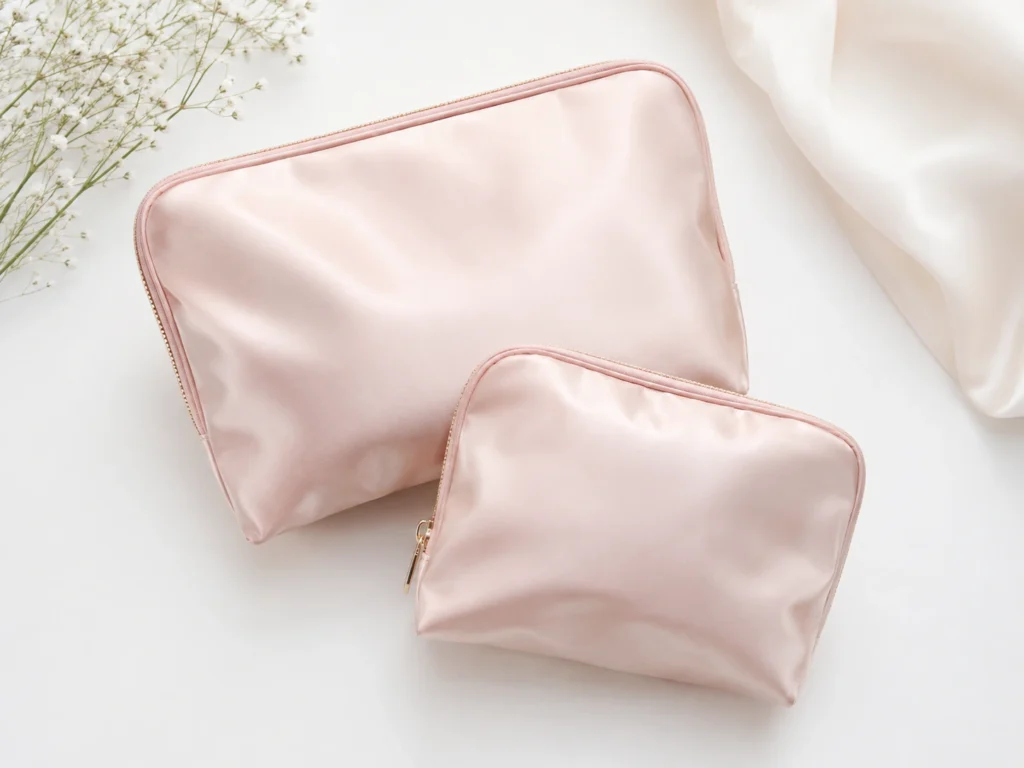
Flat pouches are economical and suit slim items. Boxy pouches hold bottles and bulky scrunchies. Half-moon bags feel soft and feminine. Drawstring satin bags work for bridal or promotional gifting but offer less spill protection. Vanity cases provide stronger presentation but require more components, labor, and packing volume.
A reliable capacity process uses the real contents, not a guess:
- List every item and its packed dimensions.
- Arrange the complete set in the intended orientation.
- Measure the occupied length, width, and height.
- Add ease for seam allowance, lining, padding, and zipper access.
- Test the set in a physical sample before approving bulk production.
Adding Lining and Light Padding
Lining improves opacity, protects the satin from makeup residue, hides seam allowances, and increases perceived quality. A smooth polyester lining is common. A wipe-clean coated lining is more practical for skincare or cosmetics. Light foam or batting can make the bag hold its shape, but excessive padding may fight the natural drape and create bulky seams.
Selecting Zippers and Metal Hardware
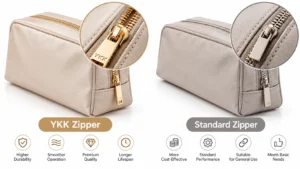
Fine satin and rough hardware are a risky combination. Zipper teeth, puller edges, rivets, and metal plates should be checked for burrs. A zipper guard can reduce internal rubbing. For softer collections, tonal nylon zippers keep the finish quiet. For premium gifting, light gold, silver, pearl, or custom pullers can strengthen the theme.
Coordinating the Bag with Hair Accessories
| Coordination Method | Best For | Risk | Control Step |
|---|---|---|---|
| Same fabric, same dye lot | Luxury matching sets | Fabric allocation shortages | Reserve all material before cutting |
| Same color, different satin weights | Structured bag + soft scrunchies | Visible shade difference | Approve side-by-side swatches |
| Solid bag + printed accessories | Seasonal collections | Weak visual connection | Repeat one hero color |
| Tonal color family | Modern lifestyle brands | Set may appear accidental | Use a defined palette board |
Logo Options for Satin Cosmetic Bags
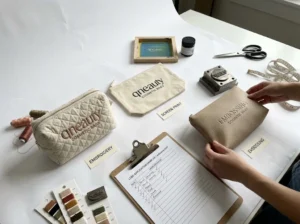
Embroidery
Embroidery feels tactile and premium, but dense stitching can pull, ripple, or puncture lightweight satin. Use suitable backing, test stitch density, and avoid overly small text. Fine line artwork may need simplification. A tonal embroidery can look refined; high-contrast embroidery creates stronger shelf visibility.
Heat Transfer Printing
Heat transfer supports detailed artwork and multiple colors. The production team must test temperature, pressure, dwell time, and film compatibility because excessive heat can flatten shine, mark the surface, or alter color. Approve both appearance and adhesion after flexing.
Woven Labels
A woven label is one of the safest logo options for delicate satin. It can be inserted into a side seam or applied as a small patch. Labels work well for minimalist branding and can carry brand, fiber, care, or origin information when designed correctly.
Metal Logo Plates
Metal plates create a premium focal point but add weight and abrasion risk. Rounded edges, protective backing, stable attachment, and anti-tarnish expectations should be confirmed. Always test whether the plate pulls the fabric when the bag is filled.
| Logo Method | Visual Effect | Satin Compatibility | Main Watchpoint |
|---|---|---|---|
| Embroidery | Crafted, premium | Good after testing | Puckering and needle holes |
| Heat transfer | Detailed, colorful | Good with process control | Heat marks and adhesion |
| Woven label | Clean, understated | Very good | Edge softness and placement |
| Metal plate | Luxury, visible | Moderate | Weight, abrasion, attachment |
Common Production Challenges with Satin
Fabric Slippage During Sewing
Satin layers can shift during cutting and sewing. This affects panel alignment, zipper straightness, piping consistency, and finished size. Stable cutting, controlled stacking, appropriate presser-foot pressure, operator handling, and temporary stabilization can reduce movement.
Visible Needle Marks and Seam Puckering
Needle penetration is more visible on a smooth reflective surface. Once a hole is made outside the seam allowance, it may not recover. Seam puckering can result from thread tension, feed imbalance, stitch density, fabric structure, or shrinkage differences.
Coats recommends reducing needle-thread tension as far as possible while maintaining a balanced stitch and using smooth, low-friction thread to help reduce puckering. In practice, the correct needle size, stitch length, seam construction, backing, and machine setup must be tested on the actual satin—not assumed from a previous polyester project.
Technical reference: Coats, Eliminating Seam Puckering.
Snagging and Surface Damage
Color Differences Under Different Lighting
Satin is highly angle-sensitive. A shade that looks warm champagne under incandescent light may appear gray under cool LEDs. Buyers should approve physical swatches under a defined light source and understand that monitors cannot reproduce fabric sheen reliably.
Expert factory checkpoint: Create a “golden sample” that includes the approved outer satin, lining, zipper tape, hardware, logo, label, and packaging. Bulk inspection should compare the complete item with this sample, not compare individual materials with isolated digital references.
| Defect | Likely Cause | Prevention | Inspection Method |
|---|---|---|---|
| Wavy zipper | Fabric stretch or uneven feeding | Stabilize seam; control feeding | Lay flat and compare with sample |
| Seam puckering | Tension, stitch, needle, feed imbalance | Machine trial on actual material | View under side lighting |
| Snagged face | Rough tools, hardware, or packing | Surface protection and burr checks | 100% visual check |
| Shade mismatch | Different dye lots or light sources | Reserve lot; approve physical standard | Controlled-light comparison |
| Logo distortion | Dense embroidery or excess heat | Logo-process test | Measure and inspect flatness |
How to Package Satin Cosmetic Bag Sets
Individual Polybag Packaging
A clean individual bag protects satin from dust, moisture, handling marks, and contact with rough carton surfaces. The pouch should be packed in its intended shape. Overfolding may create persistent creases. If reducing plastic is a brand objective, discuss alternative protective materials, but test abrasion and humidity performance before replacing the standard solution.
Printed Belly Bands
A belly band can display the set name, contents, barcode, care information, and brand story while allowing customers to see the satin. The band must not be so tight that it dents the fabric or crushes gathered scrunchies. Use rounded internal edges and test movement during shipping.
Gift Boxes and Display Packaging
Gift boxes protect shape and improve presentation, but increase cost and shipping volume. Any insert should hold the set securely without rubbing the satin.
Barcode and Retail Label Requirements
Confirm the exact barcode format, label size, placement, country-of-origin wording, carton marks, and retailer-specific compliance before the packaging sample is approved. For U.S.
External compliance reference: U.S. FTC Clothing and Textiles Guidance.
How to Order Custom Satin Cosmetic Bags
Confirm Material and Color
Start with the target finish: matte, soft sheen, or glossy. Then confirm fiber composition, weight, backing, stretch, recycled-content requirements, print or dye method, and color standard. Request physical swatches whenever possible.
Define Set Contents and Bag Capacity
Provide a complete contents list with measurements, weights, and photos. Explain whether the customer should store all items in the bag after opening. This affects zipper opening, depth, lining, padding, and internal pockets.
Approve Samples and Packaging
Review the sample as a retail unit—not only as an empty bag. Place the real contents inside, close the zipper repeatedly, inspect satin under different lighting, test the logo, check packaging pressure, and simulate carton packing. Confirm changes in writing and approve one final reference.
Confirm MOQ and Delivery Schedule
MOQ depends on fabric availability, custom dyeing, printing, logo process, hardware, packaging, and color count. Q&N Bags states that many custom projects are typically based on about 1,000 pieces per style and color , with samples often taking 7–14 days and bulk production commonly taking 30–45 days after sample approval and deposit.
For a faster and more accurate quotation, prepare:
- Reference image, sketch, or tech pack with finished size and intended contents
- Satin type, finish, color, recycled-content request, lining, and padding
- Logo artwork, zipper, puller, hardware, labels, and internal details
- Packaging, barcode, carton marks, quantity per design and color
- Destination country, shipping preference, and required arrival date
Explore Q&N’s custom cosmetic bag manufacturing process, browse custom bag product options, or review the private-label cosmetic bag sourcing guide before sending your specification.
Commercial Project Brief
Send Q&N Bags your bag shape, size, quantity, color, logo, set contents, packaging, and target delivery date for a feasibility and quotation review.
Request a custom satin cosmetic bag quote
Is a Satin Cosmetic Bag Right for Your Collection?
Advantages and Disadvantages
| Pros | Cons |
|---|---|
| Premium appearance without the cost of leather or silk | More vulnerable to snagging and surface marks |
| Coordinates naturally with scrunchies and headbands | Can show seam puckering and needle holes |
| Strong for bridal, holiday, and gifting programs | Color changes visually under different lighting |
| Available in matte, glossy, printed, and recycled options | Usually requires lining or stabilization |
| Photographs well when lighting is controlled | Not the best choice for rugged or wet travel use |
Best Product Categories
Satin is strongest for hair accessories, beauty sleep products, bridal gifts, fragrance minis, feminine skincare sets, makeup brush kits, wellness gifting, and limited editions. It is less suitable for heavy bottles, sharp tools, wet bathrooms, gym use, or products that demand strong abrasion resistance unless the design includes protective structure and lining.
Final Buyer Checklist
- Does satin reinforce the brand story and target price?
- Will the bag hold the complete set without distortion?
- Has the fabric been approved physically under relevant lighting?
- Is the logo process proven on the actual satin?
- Are hardware edges and zipper components snag-free?
- Does the lining suit makeup, skincare, or hair products?
- Has the finished set been tested inside its retail packaging?
- Are environmental and material claims documented and specific?
- Are barcode, labeling, carton, and retailer requirements confirmed?
- Does the production schedule include time for revisions and shipping?
Frequently Asked Questions About Satin Cosmetic Bags
Are satin cosmetic bags durable?
They are suitable for normal beauty storage and gifting when made with stable polyester satin, lining, reinforced seams, and smooth hardware. They are less abrasion-resistant than nylon, canvas, or PU.
Is polyester satin or silk satin better for a cosmetic bag?
Polyester satin is usually better for commercial production because it is affordable, color-consistent, and easier to maintain. Silk satin fits small luxury projects but increases cost and care requirements.
Can a satin cosmetic bag be customized with a logo?
Yes. Common options include embroidery, heat transfer, woven labels, printed patterns, and metal plates. Test the chosen process on the actual satin before approval.
How do you clean a satin cosmetic bag?
Care depends on the fiber, dye, lining, padding, logo, and hardware. For many lined polyester satin bags, tested spot-cleaning instructions are safer than a generic machine-wash claim.
Can satin cosmetic bags use recycled polyester?
Yes, subject to availability, MOQ, shade, performance, and documentation. Specify the recycled-content percentage and avoid broad environmental claims that cannot be substantiated.
What is the usual MOQ for custom satin cosmetic bags?
MOQ varies with fabric, color count, logo, hardware, and packaging. Many fully customized factory projects start around 1,000 pieces per style and color.
What information is needed for a satin cosmetic bag quotation?
Provide size, quantity, bag shape, satin finish, color, lining, zipper, logo artwork, set contents, packaging, destination, and required delivery date.
Conclusion: Build a Better Satin Cosmetic Bag Set
A satin cosmetic bag is most effective when material, structure, accessories, branding, and packaging are developed as one system. The best result is not simply shiny fabric sewn into a pouch. It is a correctly sized, lined, tested, and retail-ready component that strengthens the value of the full beauty or hair accessory collection.
Before ordering, test the actual contents, approve satin in physical lighting, confirm the logo method on production fabric, and inspect the finished bag inside its final packaging. These steps reduce the defects that most often damage satin projects: puckering, snags, shade disputes, crushed sets, and mismatched accessories.
Ready to develop a custom satin beauty or hair accessory set? Visit Q&N Bags and send your reference design, size, quantity, logo, target color, set contents, packaging details, destination, and required arrival date for a project review and quotation.
Aries Gu is the founder of Q&N. With over 17 years of experience in cosmetic bag OEM/ODM source factory. He focuses on quality control, efficient communication, and on-time delivery for global cosmetic bag projects.