A toiletry bag with handles looks simple, but the handle can become one of the highest-stress parts of the entire product. A handle that is too short can be uncomfortable to carry. A handle that is too long can make a compact wash bag feel unbalanced. Poor attachment design can cause stitching to tear out even when the handle material itself is strong.
For beauty brands, retailers, promotional buyers and private-label programs, handle design should therefore be treated as part of the bag structure rather than as a decorative add-on. The correct solution depends on where the handle is placed, how much the bag will carry, what material is used, how the handle connects to the body and how the finished bag will be tested.
This guide explains the most common handle styles, top-handle versus side-handle layouts, handle materials, reinforcement methods, carry comfort and durability testing. It also shows what buyers should include in an OEM toiletry bag with handles specification before sampling and bulk production.
Planning a custom handled wash bag? Q&N supports custom materials, sizes, zippers, pullers, linings, handles, structures, logos and retail packaging. Buyers can review the custom cosmetic bag product options before preparing a development brief.
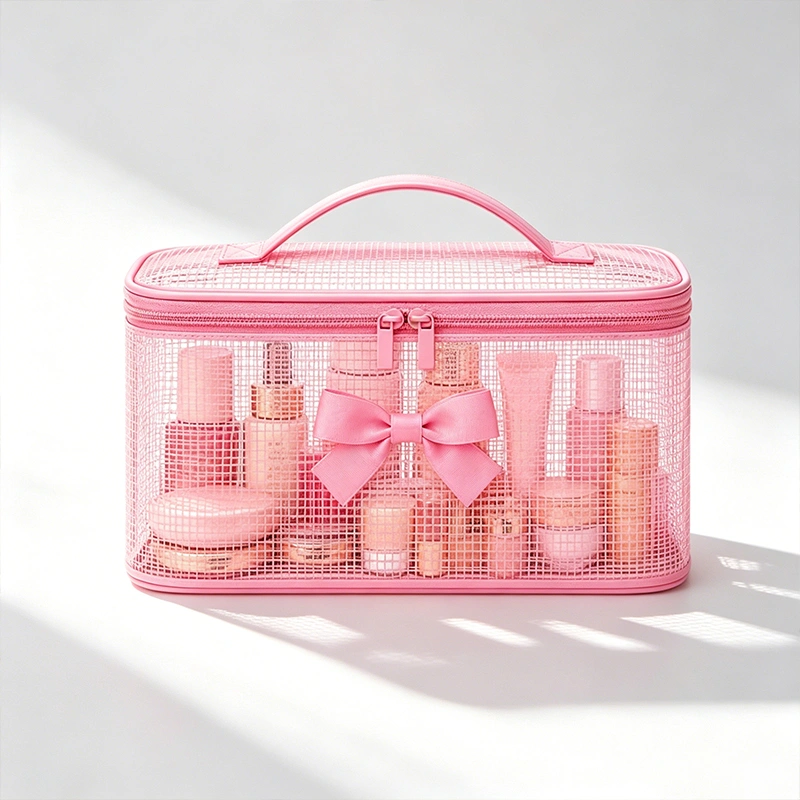
Different Handle Styles for Toiletry Bags
Top Carry Handles
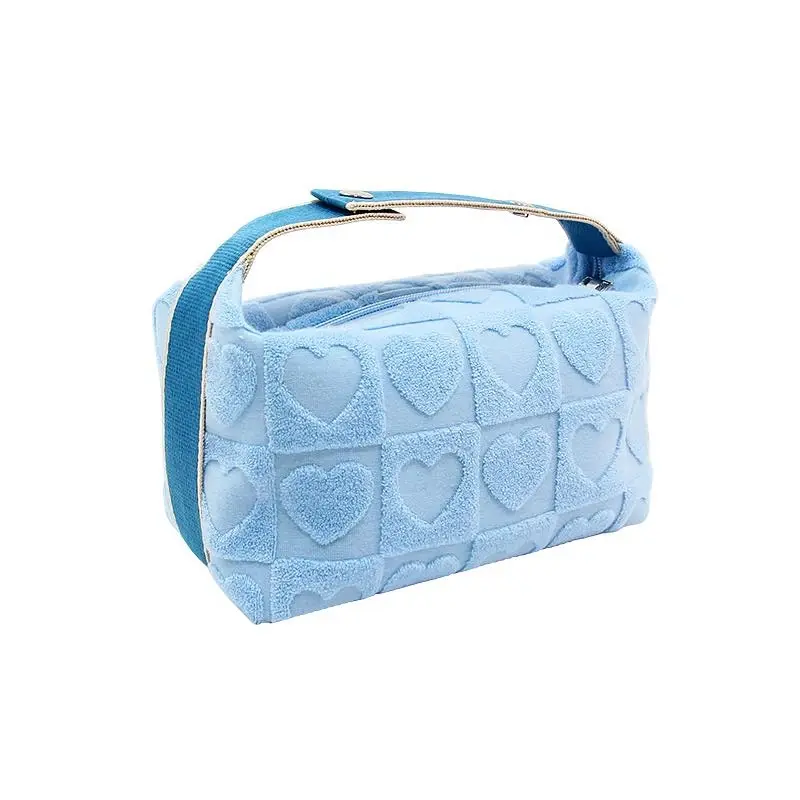
A top handle sits on the upper panel and supports upright carrying on vanity cases, boxy toiletry bags and travel organizers.
Its main advantage is balance. A centered handle can reduce tilting when carrying bottles, grooming products or travel-size containers.
The challenge is reinforcement: the attachment must transfer load into the body rather than pull only on the decorative top layer.
Side Handles
A side handle is attached to one end and is common on compact Dopp kits because it is easy to grab from luggage or a shelf.
It keeps the top panel clear for branding or double zippers, but the end panel must resist distortion because the load shifts away from the handle.
Loop Handles and Wrist-Style Handles
A short loop can carry, hang or pull a lightweight travel pouch while using less material than a full handle.
Buyers should define whether a wrist-style loop carries the loaded bag or only helps retrieve and hang it, because the required reinforcement differs.
Dual Handles
Large vanity bags may use two short handles to distribute load across more attachment points.
Dual handles require precise symmetry and add sewing operations.
Top Handles vs. Side Handles
How Load Direction Changes the Bag
Top and side handles create different load paths and stress patterns.
Top handles concentrate force on the upper panel; side handles transfer it through the end panel and nearby seams. Soft panels can twist, while excessive reinforcement can add bulk.
Which Position Is Better for Bottles and Jars?
A centered top handle generally keeps upright bottles more level, while a side handle suits compact bags whose contents can tolerate tilting.
Glass skincare or fragrance containers need more balance than flexible grooming products.
Access and Zipper Interference
Handle placement must not block the zipper: top handles can obstruct sliders, while side handles can interfere with wraparound openings.
When developing a travel wash bag with handle, open and close the sample while holding the handle. This simple user test often reveals conflicts that are not obvious in a flat technical drawing.
Retail Appearance and Branding Space
Top handles make the product look more like a small case or vanity bag. Side handles create a more compact, utility-oriented profile. Brands can use this difference to support product positioning.
| Design Factor | Top Handle | Side Handle |
|---|---|---|
| Carry balance | Usually more centered | Contents may shift toward one end |
| Best visual effect | Vanity case, structured, premium | Compact, practical, Dopp-kit style |
| Zipper interaction | Must avoid top zipper path | Must avoid side or wraparound opening |
| Primary stress area | Top panel and reinforcement | Side panel and adjoining seams |
| Logo space | May reduce top-panel branding area | Leaves top/front panels relatively clear |
Handle Materials and Construction
Self-Fabric Handles
A self-fabric handle matches the main bag and works with PU, nylon, polyester, canvas and quilted materials.
Judge finished width after folding: thick PU can become bulky, while thin nylon may need internal webbing.
Nylon and Polyester Webbing Handles
Webbing is stable, flexible and practical for travel-focused designs, either exposed or partly covered by the main fabric.
Specify webbing width, weave, thickness, color and hand feel; equal-width webbings can differ greatly in stiffness and strength.
PU Leather Handles
PU handles suit premium skincare and fragrance bags. Soft PU may need internal webbing, while thick PU can become bulky at short radii.
Because PU retains needle holes, approve the attachment before bulk production; rework can leave permanent perforations.
Padded Handles
Padded handles improve comfort for heavier contents and can use internal foam or quilting.
Keep attachment ends flat enough for secure stitching because padding increases seam bulk.
Rope and Cord Handles
Rope or cord adds a lifestyle look, but the ends require secure termination and pull-out testing.
| Handle Material | Strengths | Limitations | Typical Brand Position |
|---|---|---|---|
| Self fabric | Coordinated appearance | Performance depends on outer material and reinforcement | Broad use from promotional to premium |
| Nylon/polyester webbing | Stable, practical, travel friendly | Can look technical or casual | Travel, sport, utility, grooming |
| PU leather | Premium visual effect | Can crease, show needle holes or require internal support | Skincare, fragrance, luxury gift sets |
| Padded fabric | Comfortable under higher load | More bulk at attachment ends | Large vanity bags, puffer collections |
| Rope/cord | Distinctive lifestyle detail | End termination and pull-out strength require attention | Travel, wellness, resort-inspired ranges |
Reinforcement at Handle Stress Points
Why the Attachment Point Usually Fails Before the Handle Material
Strong webbing does not guarantee a strong handle assembly; the body fabric, seam or reinforcement may fail first.
Test the handle, stitching, body fabric and reinforcement as one loaded assembly.
Reinforcement Patches
A reinforcement patch spreads force over a wider area and can sit behind the handle base between outer material and lining.
Choose reinforcement compatible with the body; rigid board can show through thin fabric, while woven reinforcement may add less bulk.
Box-X Stitching and Bar Tacks
Box-X patterns and bar tacks are common methods for securing webbing and strap ends, but they should not be copied mechanically from backpacks or luggage. The right pattern depends on the outer material and available attachment area.
Dense stitching in a thin PU or coated film can perforate the material and create a tear line. The sample should therefore be evaluated under load rather than judged only by the number of stitches.
Extending the Handle Into a Structural Seam
Extending the handle into a structural seam can transfer load away from a small surface attachment.
On a side-handle Dopp kit, the side-panel seam can help share the load.
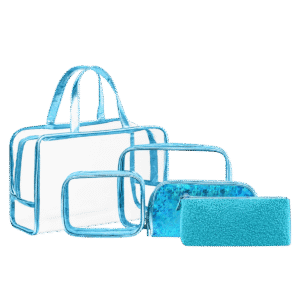
Reinforcing Handles on Clear PVC, TPU or EVA Bags
Clear films show stitch holes and stress whitening, so fabric tabs, compatible welding or wider reinforcement may perform better than a narrow direct attachment.
The correct method depends on film type and whether construction is sewn, welded or fabric-trimmed.
| Stress Area | Typical Risk | Possible Engineering Response |
|---|---|---|
| Handle base | Stitch pull-out | Internal patch, wider attachment, suitable stitch pattern |
| Thin fabric panel | Tearing around needle holes | Backing reinforcement and controlled stitch density |
| Soft padded panel | Handle twists or sinks into foam | Flat reinforcement layer beneath padding |
| PU panel | Visible perforation or edge tearing | Wider base, backing and pre-production load test |
| Clear film | Stress whitening, tearing or visible holes | Fabric tabs, compatible welding or reinforced attachment |
Q&N’s custom service page describes reinforced stitching on key panels, material inspection and assembly checks as part of its cosmetic-bag production process. For a handle-critical design, the reinforcement method should still be specified and approved on the actual sample.
Handle Length and Carry Comfort
Measure the Finished Handle, Not Only the Cut Strip
Specify finished handle length, rise or drop, width and attachment spacing after folding and sewing.
For short handles, usable hand clearance matters more than raw strip length.
Short Handles
Short handles keep small Dopp kits and vanity cases compact.
Too little clearance can make fingers rub the zipper or cause a stiff handle to stand awkwardly.
Long Handles
Long handles are easier to grab but can swing, twist or look oversized.
Longer straps also create more movement during quick lifts, increasing dynamic load at the attachment.
Width, Edge Finish and Hand Feel
A narrow strap concentrates pressure; a wider strap spreads load but may look disproportionate.
Rough webbing edges, sharp PU folds or exposed seams can also reduce comfort.
Test the Handle With the Intended Contents
Load the sample to its expected use weight, lift it repeatedly and check comfort and balance.
This does not replace durability testing, but it can reveal usability problems early.
How to Test Handle Durability
Static Loaded Handle Testing
SATRA TM241 is specifically designed to evaluate luggage handles and their attachment under static loading. The method loads the product with a defined mass, lifts it by the handle for a defined period and visually assesses damage. SATRA states that the method applies to handles on suitcases, bags, briefcases, holdalls and rucksacks.
For a toiletry bag, a buyer does not need to copy a luggage test load blindly. The important principle is to define the intended product load, an appropriate safety margin and a repeatable test procedure before production.
External reference: SATRA TM241: Luggage handle strength — static loading.
Repeated Lifting Tests
SATRA TM247 evaluates handle strength under repeated lifting. The bag is loaded, lifted by the handle and returned to a support surface for a defined number of cycles. Damage is assessed during and after the test.
Repeated lifting can reveal gradual failure such as elongated stitch holes, shifting webbing or panel deformation.
External reference: SATRA TM247: Luggage handle strength — repeated lifting.
Dynamic or “Snatch” Loading
Real users do not always lift a bag slowly. SATRA TM243 evaluates a more dynamic condition in which loaded luggage is lifted, allowed to fall through a defined distance and the fall is arrested by the handle.
A cosmetic bag carries less weight than luggage, but sudden force can still exceed a gentle static lift; heavier grooming kits may justify a controlled dynamic check.
External reference: SATRA TM243: Luggage handle strength — snatch test.
Material Tensile Strength Is Not the Same as Handle Attachment Strength
ASTM D5034-21(2025) is an active standard for determining breaking strength and elongation of most woven and nonwoven textile fabrics using the grab test. It can be useful when a buyer needs data on a fabric or handle material.
Material tensile strength does not prove attachment strength; stitching or the bag panel may fail first.
External reference: ASTM D5034-21(2025): Breaking Strength and Elongation of Textile Fabrics.
Build a Practical Factory Handle-Test Specification
| Test Type | What It Evaluates | Useful for Toiletry Bag Development |
|---|---|---|
| Loaded static hold | Handle and attachment under sustained weight | Yes, especially for skincare and grooming kits |
| Repeated lifting | Fatigue from repeated use | Yes, for reusable retail products |
| Dynamic/snatch test | Sudden load on handle attachment | Useful for heavier or higher-risk designs |
| Material tensile test | Strength of fabric/webbing itself | Useful as supporting material data |
| Visual post-test inspection | Stitch elongation, tearing, distortion and hardware movement | Essential after all handle tests |
After testing, inspect stretched holes, loose threads, distortion, reinforcement movement, seam opening and permanent elongation.
Custom Handle Options for Private Label Brands
Match the Handle to the Brand Positioning
Match the handle to positioning: webbing for utility, padded tonal handles for soft beauty, and PU for premium skincare or fragrance.
Coordinate the handle with the bag, zipper and logo.
Custom Color and Pantone Coordination
Approve handle and body colors together because webbing, PU and fabric may reproduce the same Pantone target differently.
Logo on the Handle
Woven labels, printing, embossing or debossing can brand the handle while keeping the main panel minimal.
Keep rigid branding away from the grip area so it does not reduce comfort or create a weak point.
What Bulk Buyers Should Confirm Before Ordering
Define the Intended Load
Tell the manufacturer what the bag will carry; a makeup pouch and a full-size grooming kit create different handle loads.
If sold empty, provide an estimated loaded weight or the intended product set.
Specify Handle Dimensions Clearly
Specify finished length, width, attachment spacing and exact position relative to the zipper or side panel.
Specify the Attachment Construction
Do not specify only “one handle.” Define material, reinforcement, attachment concept and hardware, then approve any alternative on the sample.
Approve the Bag in a Loaded Condition
Load the pre-production sample and check balance, zipper access, comfort, distortion and reinforcement.
Illustrative manufacturing scenario: A buyer develops a compact PU toiletry bag with a side handle. The first sample looks correct when empty, but the side panel twists noticeably when the bag is loaded with bottles. Instead of simply increasing the handle thickness, the manufacturer extends the attachment area and adds internal panel reinforcement. The revised sample is then retested under load. This is an illustrative product-development example, not a reported customer case.
Confirm Inspection Criteria Before Shipment
Include handle dimensions, alignment, stitching, reinforcement and attachment strength in QC, with any load test defined before production.
| Buyer Specification | Details to Confirm |
|---|---|
| Handle type | Top, side, loop, dual, hanging or detachable |
| Material | Self fabric, webbing, PU, padded construction, rope/cord |
| Dimensions | Finished length, width, hand clearance and attachment spacing |
| Reinforcement | Patch, backing, seam capture, bar tack, box-X or approved alternative |
| Intended load | Actual product set, target loaded weight or use-case range |
| Durability test | Static, repeated-lift, dynamic or buyer-specific method |
| Branding | Color, logo, label, hardware or custom handle detail |
| QC | Alignment, stitching, pull-out, distortion and post-test appearance |
MOQ, Sampling and Bulk Production
Handle design can affect material minimums and development time. Stock webbing and self-fabric handles are usually simpler to source than custom-woven straps, molded connectors or special hardware.
Q&N’s current About page states that its regular MOQ is usually 1,000 pieces per style, with the final MOQ depending on material, color, size, logo method and packaging. It lists regular sampling at 7–14 days and bulk production at 30–45 days after sample approval and deposit, subject to order and customization details. Confirm the current requirement for the exact handle construction before placing an order.
See Q&N’s current manufacturing and ordering information.
Frequently Asked Questions About Toiletry Bags with Handles
Is a Top Handle or Side Handle Better for a Toiletry Bag?
Neither is universally better. A top handle generally supports more balanced upright carrying, while a side handle is convenient for grabbing a compact Dopp kit from luggage or a shelf. The right choice depends on bag shape, contents and zipper layout.
What Is the Best Handle Material for a Travel Wash Bag?
Nylon or polyester webbing is practical for durable travel designs. Self-fabric handles create a coordinated appearance, while PU can support premium positioning. The final choice should consider load, comfort, branding and reinforcement.
How Should a Toiletry Bag Handle Be Reinforced?
The reinforcement should spread load beyond the handle’s visible attachment area. Possible methods include internal patches, wider strap bases, structural seam capture and appropriate bar-tack or box-X stitching. The construction should be validated on the actual material.
How Long Should a Toiletry Bag Handle Be?
There is no universal length. Specify enough hand clearance for the intended carry style without making the handle look oversized or interfere with the zipper. Approve the finished handle on a fully loaded sample.
How Do You Test the Durability of a Toiletry Bag Handle?
Use a defined loaded test. Static lifting checks sustained load, repeated lifting evaluates fatigue, and dynamic testing can evaluate sudden force. SATRA TM241, TM247 and TM243 provide recognized luggage-handle test approaches that can inform a buyer’s performance requirement.
Does Strong Webbing Guarantee a Strong Handle?
No. The handle can fail where it is sewn to the bag even if the webbing itself is very strong. The attachment, body material and reinforcement must be tested together.
Can Handle Style Be Customized for a Private Label Toiletry Bag?
Yes. Buyers can customize handle location, dimensions, material, color, padding, attachment method, hardware and branding. The design should be reviewed with the bag structure and intended load before sampling.
Final Recommendations for an OEM Toiletry Bag with Handles
A well-designed toiletry bag with handles should carry its intended contents without distorting the bag, interfering with the zipper or creating uncomfortable pressure on the user’s hand. The strongest solution is not always the thickest strap. Load must travel from the handle through the attachment and reinforcement into the main bag structure.
Before approving bulk production, confirm:
- The handle position matches the intended carrying direction.
- The finished length and width provide comfortable hand clearance.
- The handle material suits the bag’s brand positioning and expected load.
- The attachment area is reinforced appropriately.
- The zipper remains easy to operate while holding the handle.
- The fully loaded sample stays balanced and retains its shape.
- The agreed durability test reflects realistic use.
- Handle stitching, alignment and post-test appearance are included in final QC.
Google’s current Search guidance emphasizes useful, expert-led, non-commodity content for both traditional Search and generative AI features. For product-development pages, explaining real manufacturing variables—such as attachment load, reinforcement, test method and carry balance—provides more buyer value than simply listing handle styles. See Google’s guide to optimizing for generative AI features.
Request a custom handle review: Send your product type, finished dimensions, reference photos or tech pack, intended contents or loaded weight, handle preference, material requirements, logo file, target quantity, packaging requirements, delivery country and target delivery date through the Q&N contact page. The team can review the handle structure together with the bag before sampling and quotation.
Aries Gu is the founder of Q&N. With over 17 years of experience in cosmetic bag OEM/ODM source factory. He focuses on quality control, efficient communication, and on-time delivery for global cosmetic bag projects.